
This destination for culture and recreation is walkable and bike-friendly. The community of Inglewood provides space to educate and preserve the environment with our shared heritage.
Home to nature reserves, iconic institutions and heritage buildings, including 400 constructed before 1914. The footprint of heritage and character buildings includes Edwardian commercial examples like the prominent Burn Block.
Inglewood was designated as Canada’s Greatest Community by the Canadian Institute of Planners in 2014.


There are over 240 businesses in the area. This includes shops, restaurants, live music venues, craft breweries, and one of the Best Outdoor Basketball Courts in the city.
It is the heart of Calgary’s Music Mile. It hosts numerous festivals. These include JazzYYC, Sunfest, Car Free Sundays, Inglewood Night Market, Fringe Festival, Bleak Midwinter Film Festival, and other events.

TRANSPORTATION AND CALGARY’S OLDEST COMMUNITY
The first main street was established in the early 1880s. Originally known as Atlantic Avenue, it runs through the heart of the community. The City of Calgary recently updated the CPKC Rail bridge. They also completed a new bridge over the Elbow River connecting what is today 9th Avenue.
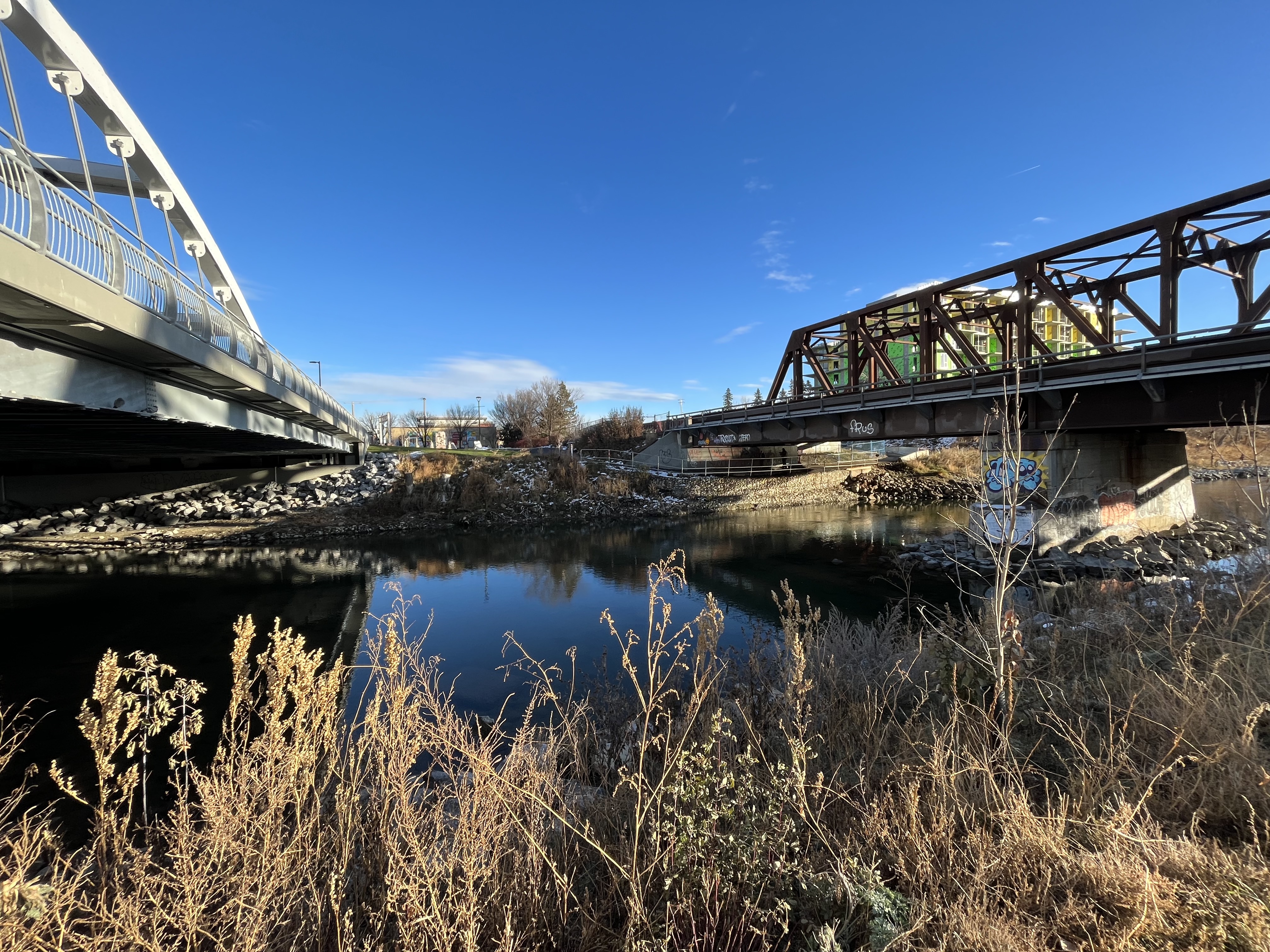


The City is investing in the future and preparing to install the Green Line LRT bridge. They are evaluating the potential of the pathway on the east side of the Elbow River. This area lies between the Bow River and the McDonald Bridge. Upgrading and reopening this pathway would enhance accessibility. It would also improve connectivity between Inglewood and Ramsay, the future LRT station, and the River Walk.
THERE IS AN OPPORTUNITY TO ENGAGE WITH THE CITY AND GIVE YOUR FEEDBACK: https://engage.calgary.ca/EastElbowPath
Bridging the Elbow River has always had a significant impact on this community. When the Canadian Pacific Railway arrived in 1883, it facilitated the Emergence of Calgary as an urban centre.

When the CPR bypassed land speculators and placed its station west of the fort. Many businesses relocated from the east side of the river. This effectively moved the settlement to where downtown Calgary sits today.
THE ORIGINAL EAST CALGARY
Fort Calgary is also located in the East Village. The oldest building in the city remains in its original location. It is in the first East Calgary, located on the other side of the river. The Hunt House is a tiny log cabin built around between 1876 and 1881. It is located between the bridges for heavy and active transportation. It is also behind the more prominent Deane House.
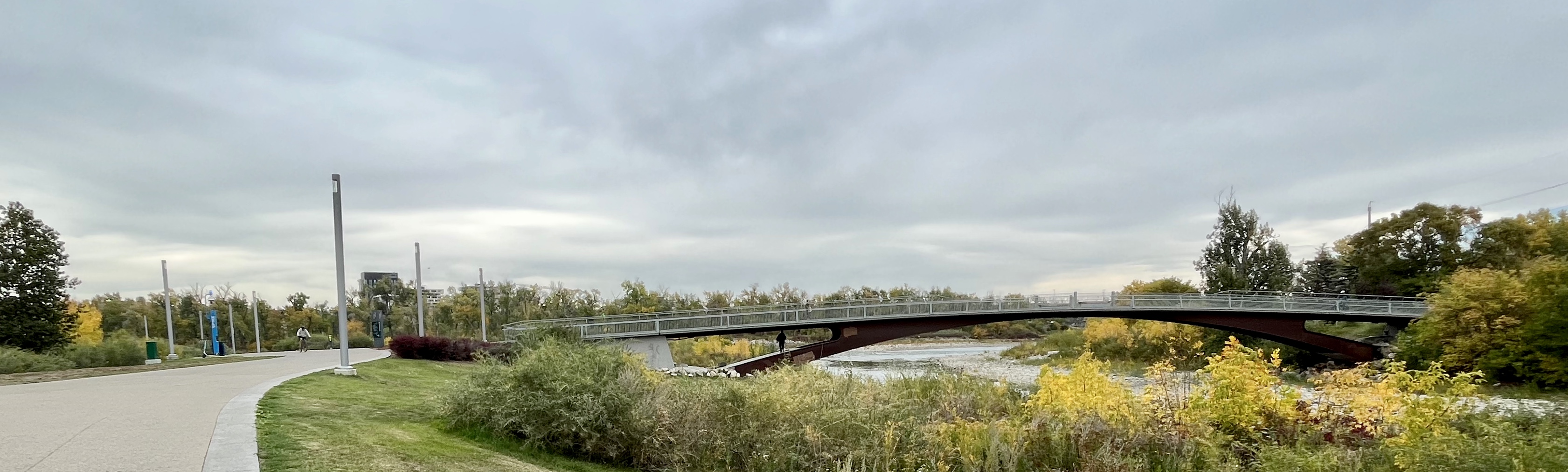
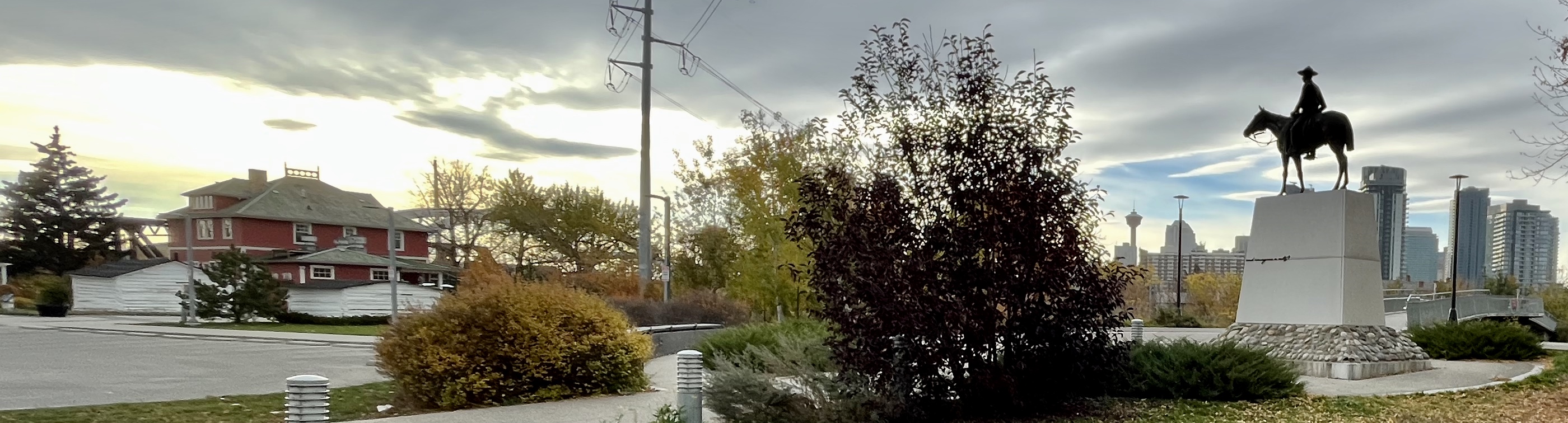
It was constructed as a residence for employees at the Hudson’s Bay Post. Which later moved to the Hudson Block on the west side of the river. It became part of the story Behind Stephen Avenue.

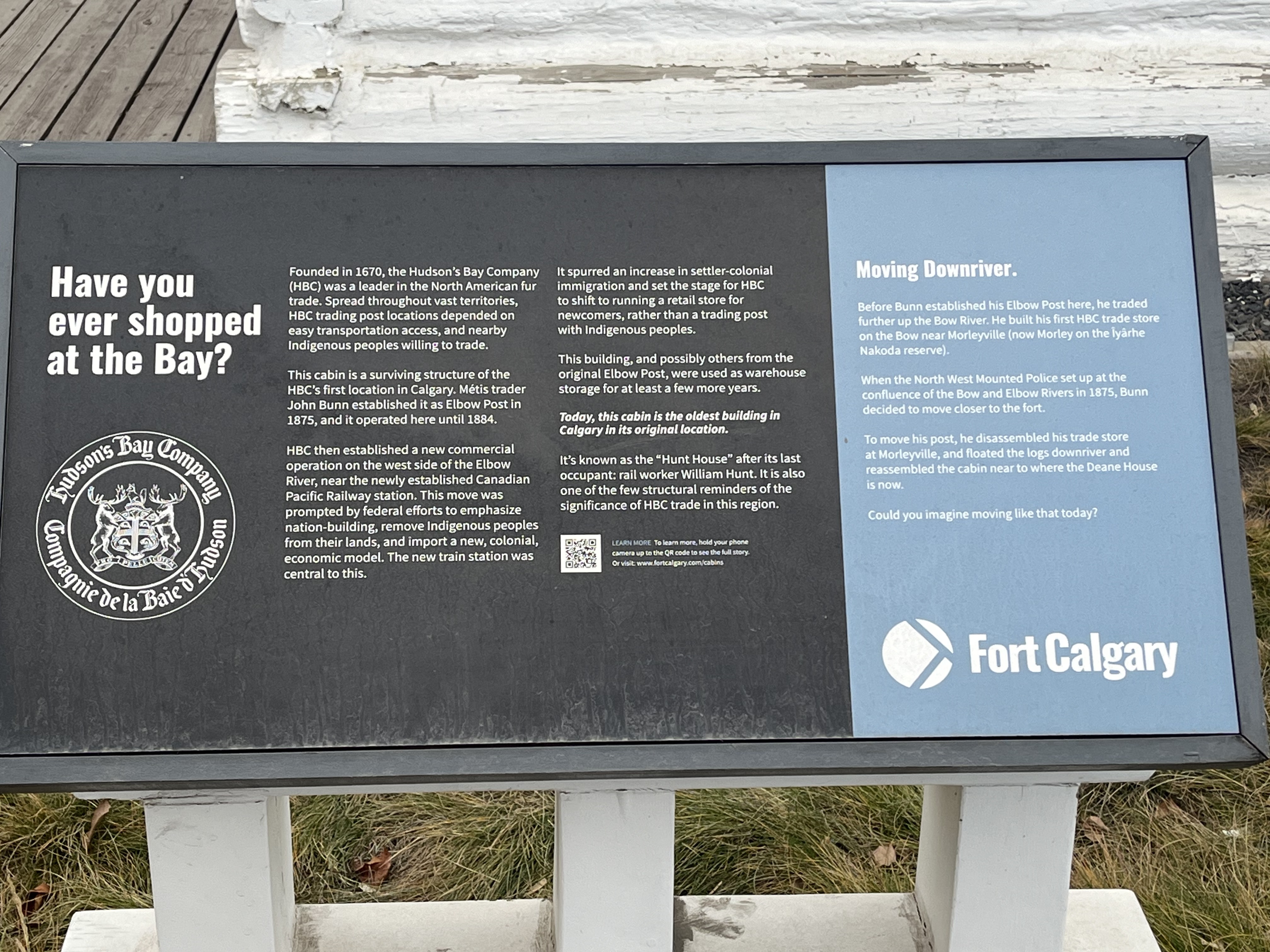
The first person to live there was likely a Métis interpreter for the HBC. We know the last resident was William Hunt. He was a local rail worker. He lived there for decades until he died in the mid-1970s.

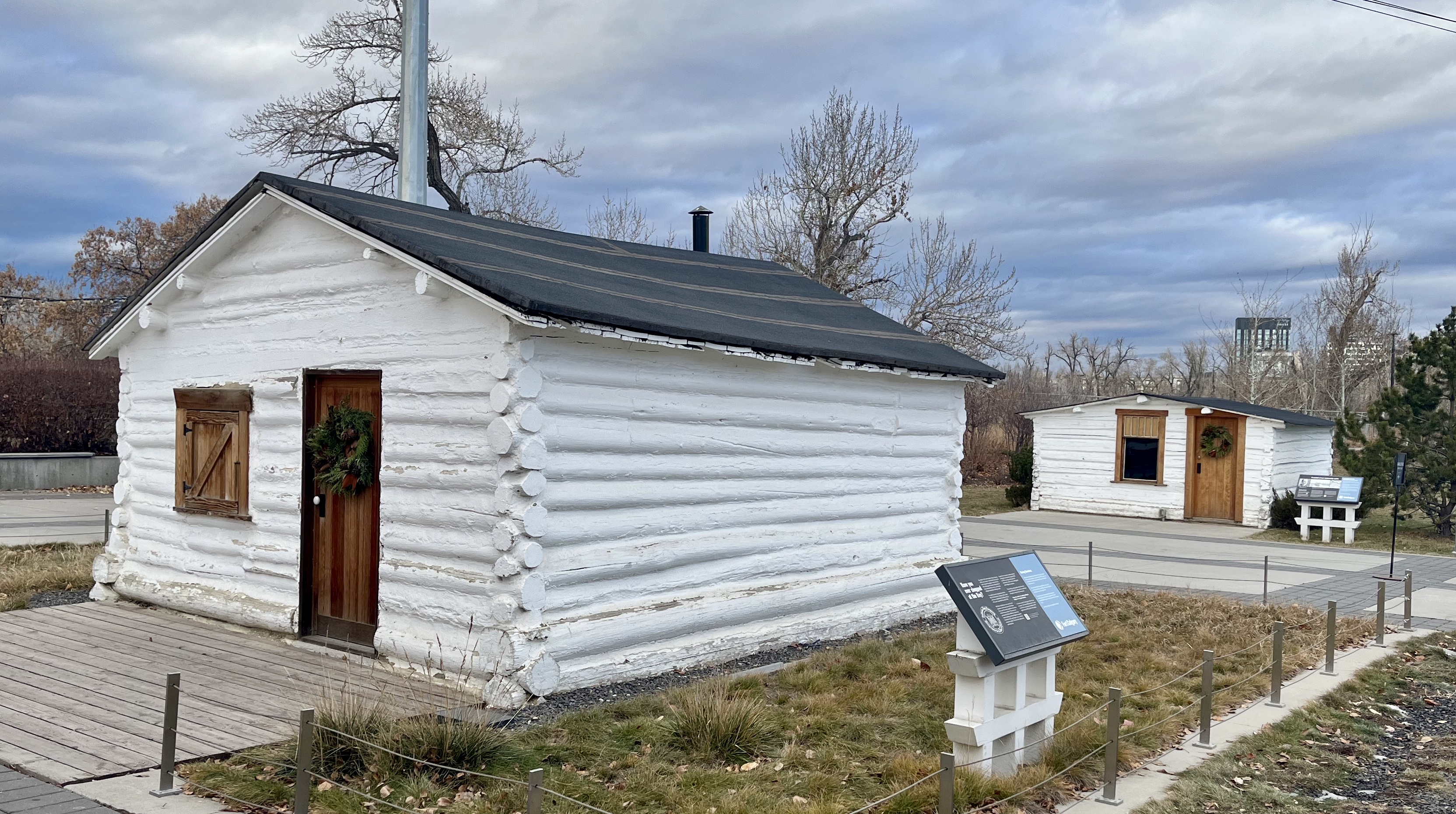
It later passed into city hands. It is now owned by Fort Calgary. They found the $400,000 needed to research and preserve Hunt House in 2015 (Credit: CBC).
Two Old Schools also contribute to the historic status of 9th Avenue and exemplify the Sandstone Construction Era.
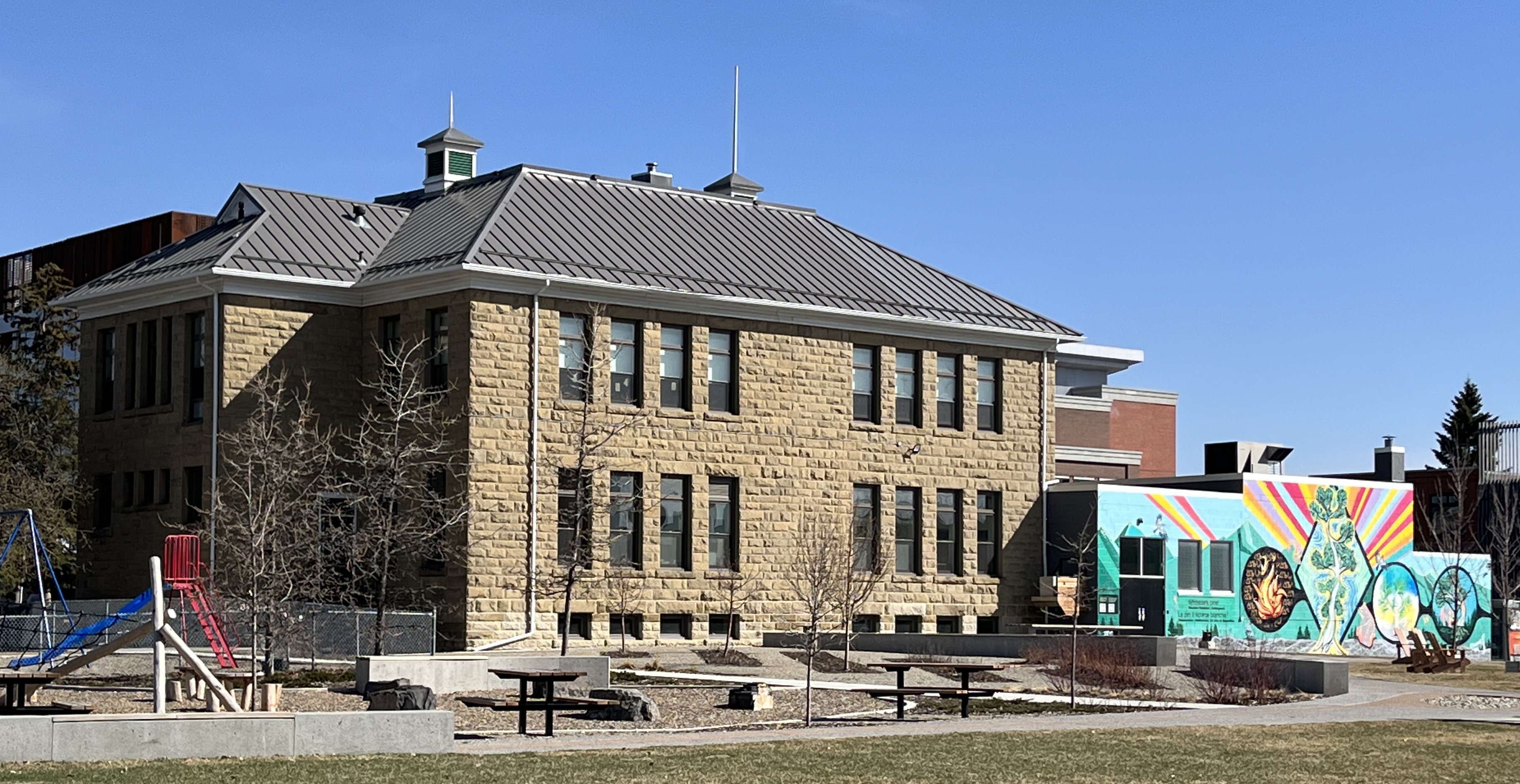
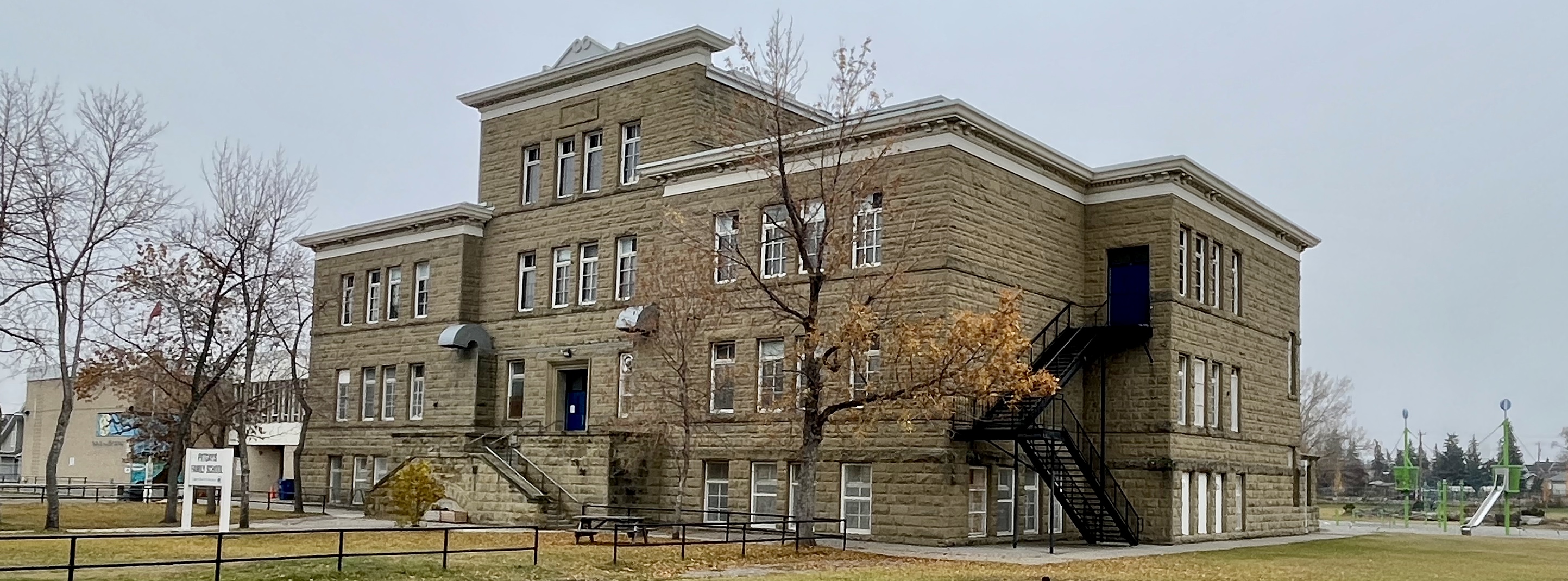
One block away is the first, the 1902 New East Ward (Alexandra) School. It is significant as the second sandstone school in the city and shows the progression from the earlier one-room schoolhouse. The other honours Colonel Walker, whose home provided the community the name, Inglewood.

Walker arrived as a member of the northwest mounted police in 1874 and became one of the largest landowners. His log cabin floated away in the flood of 1897. In 1910, he built a red brick home called Inglewood. He subdivided the land in 1911, becoming the community by the same name.
INGLEWOOD BIRD SANCTUARY
This 2.3 km trail takes about 30 min to complete. The loop is a popular destination for birding, hiking, and snowshoeing.
In 1883, Colonel James Walker settled the land that is now the Inglewood Bird Sanctuary. Colonel Walker’s son Selby applied to the Federal government in 1929 to have 59 acres on the west side of the Bow River designated as a Federal Migratory Bird Sanctuary. As a result, the first Canadian Bird Sanctuary was born.

It was designated to protect waterfowl in their breeding ground. Most of the birds that nest in the sanctuary are songbirds, known as passerines. The forests that border the Bow River attract large numbers of mixed flocks in the late summer. In the winter, over 5000 mallards use the open water. Birders can find a more comprehensive list here.
270 species of birds, 21 species of mammals and 347 species of plants have been recorded at the Sanctuary and Nature Centre.
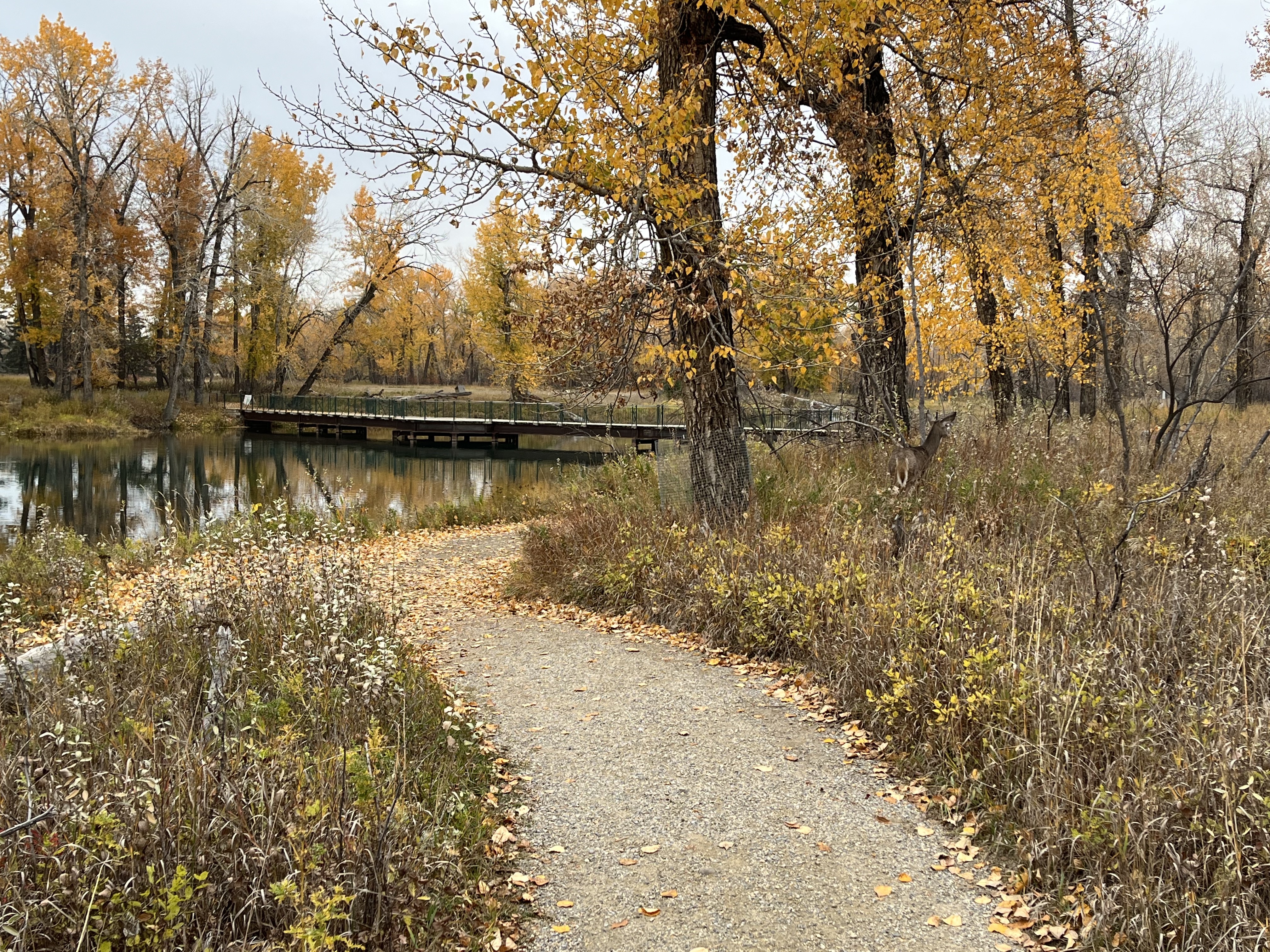
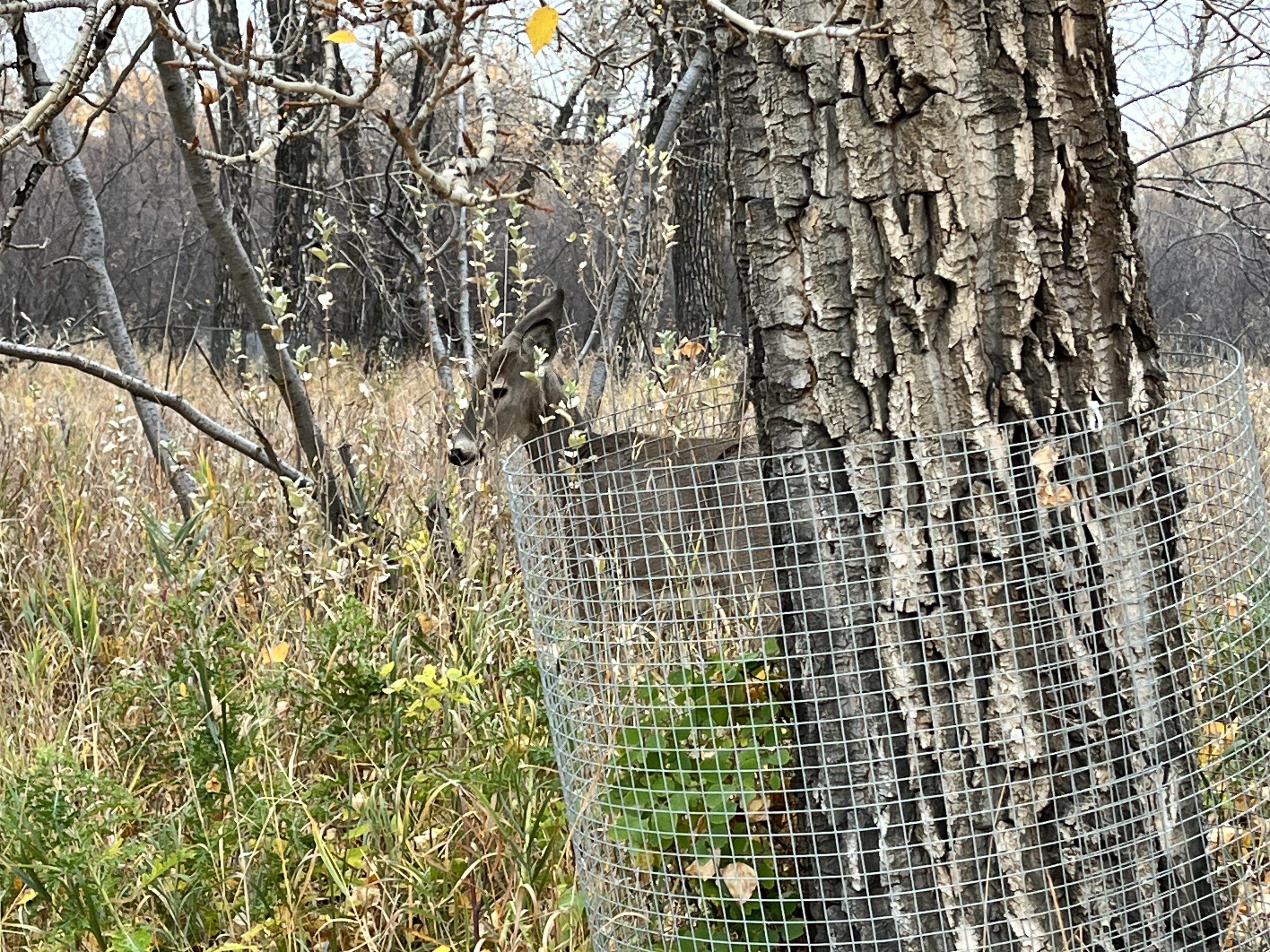
Visit The City of Calgary, Inglewood Bird Sanctuary self-guided walk.
CONNECTIONS
The lagoon is a habitat for fish. It is enjoyed by birds, wildlife, and parkgoers. The lagoon was at risk because of poor water quality due to aging infrastructure.
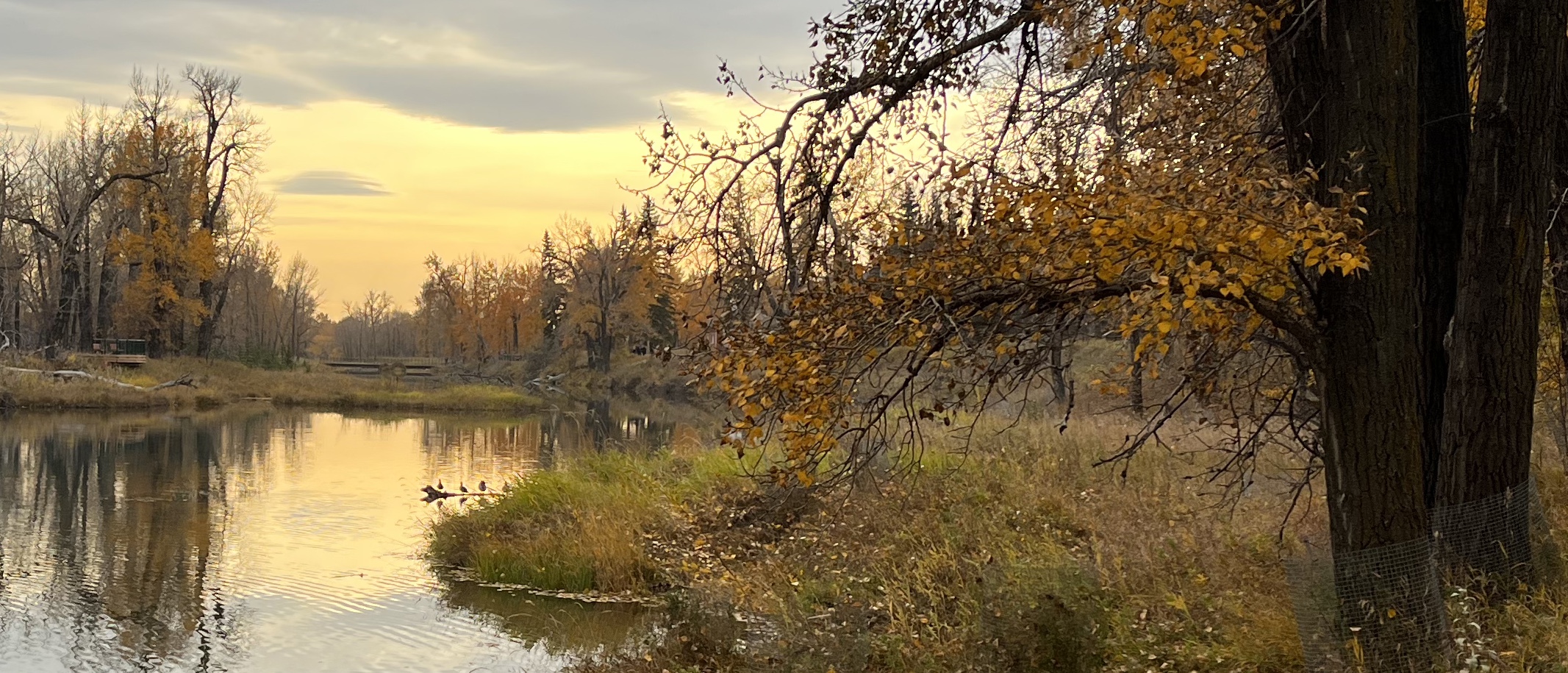
Over the last three years, artist Tim Knowles worked closely with the project team of engineers, hydrologists and ecologists. This collaboration designed a functional public art piece. It is part of a new channel flowing from the Bow River into the stagnant lagoon. The channel then passes out through a water meadow.
Along with other control measures, Log Jam was unveiled in October, reconnecting the lagoon to the Bow River. Learn more about the Inglewood Bird Sanctuary Reconnection Project.


In the background is the TD Outdoor Learning Centre. Installed after the 2013 flood by Calgary Parks, with the help of the TD Bank Group. The heavy timber structure is an outdoor classroom for programs to enhance and grow the appreciation of nature.


BEND IN THE BOW
The City of Calgary is working on creating a new regional park in Inglewood called Bend in the Bow. It will include the Inglewood Bird Sanctuary, the Inglewood Wildlands, Pierce Estate Park, and River Passage Park, including Harvie Passage. The park will also feature the open spaces between these areas to create a large green space.

Pearce Estate Park is unique for its diversity of uses. It is home to the Sam Livingston Fish Hatchery and the Bow Habitat Visitor Centre. The park also features a 15-hectare reconstructed interpretive wetland, ponds, streams, picnic sites, and a playground. Additionally, there are nature trails and outdoor spaces for both active and passive use.
The park is next to and complemented by the Harvie Passage. Reconstructed in 2018, after an extensive post-flood rebuild, it improved safety and navigability around the Bow River weir.
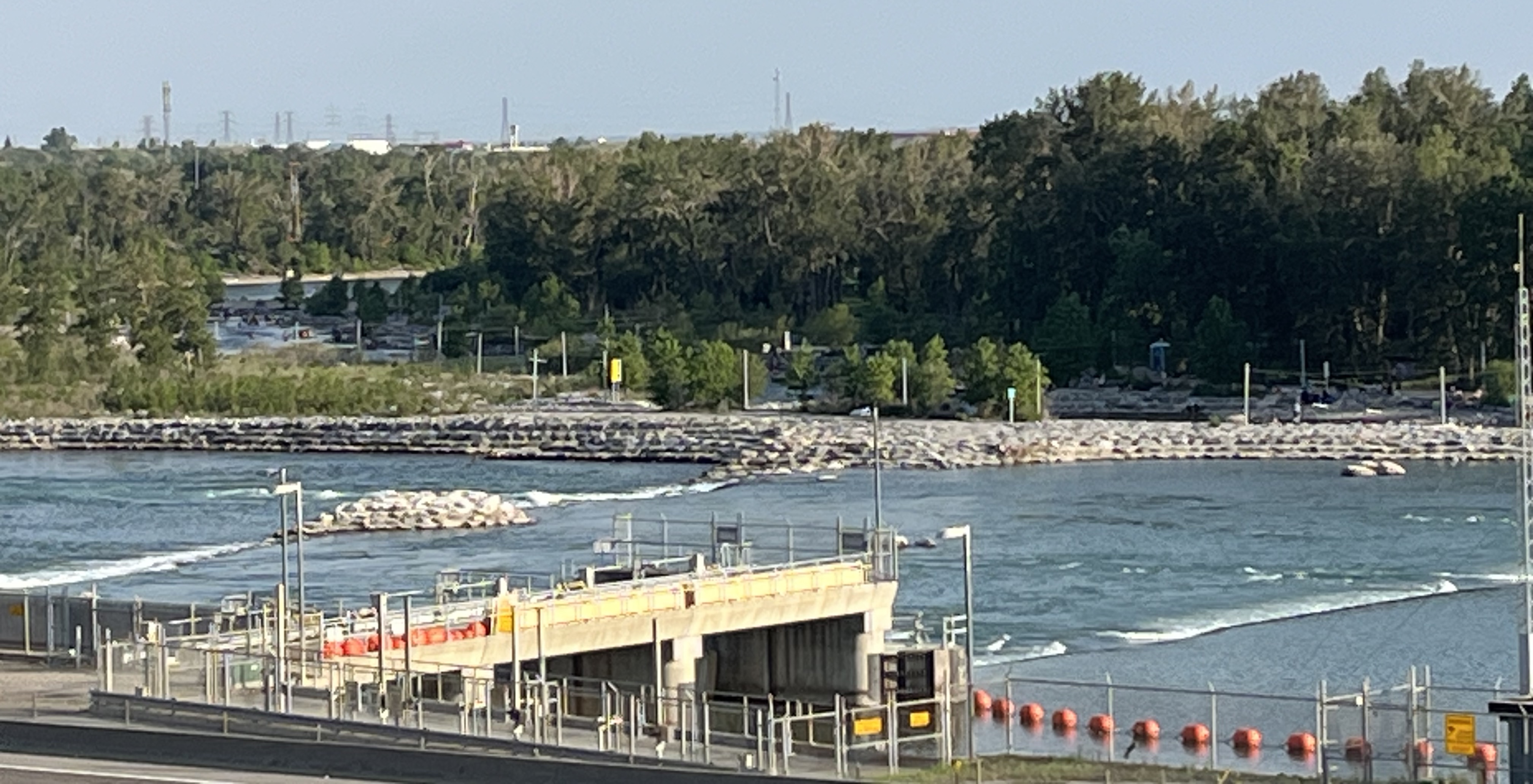

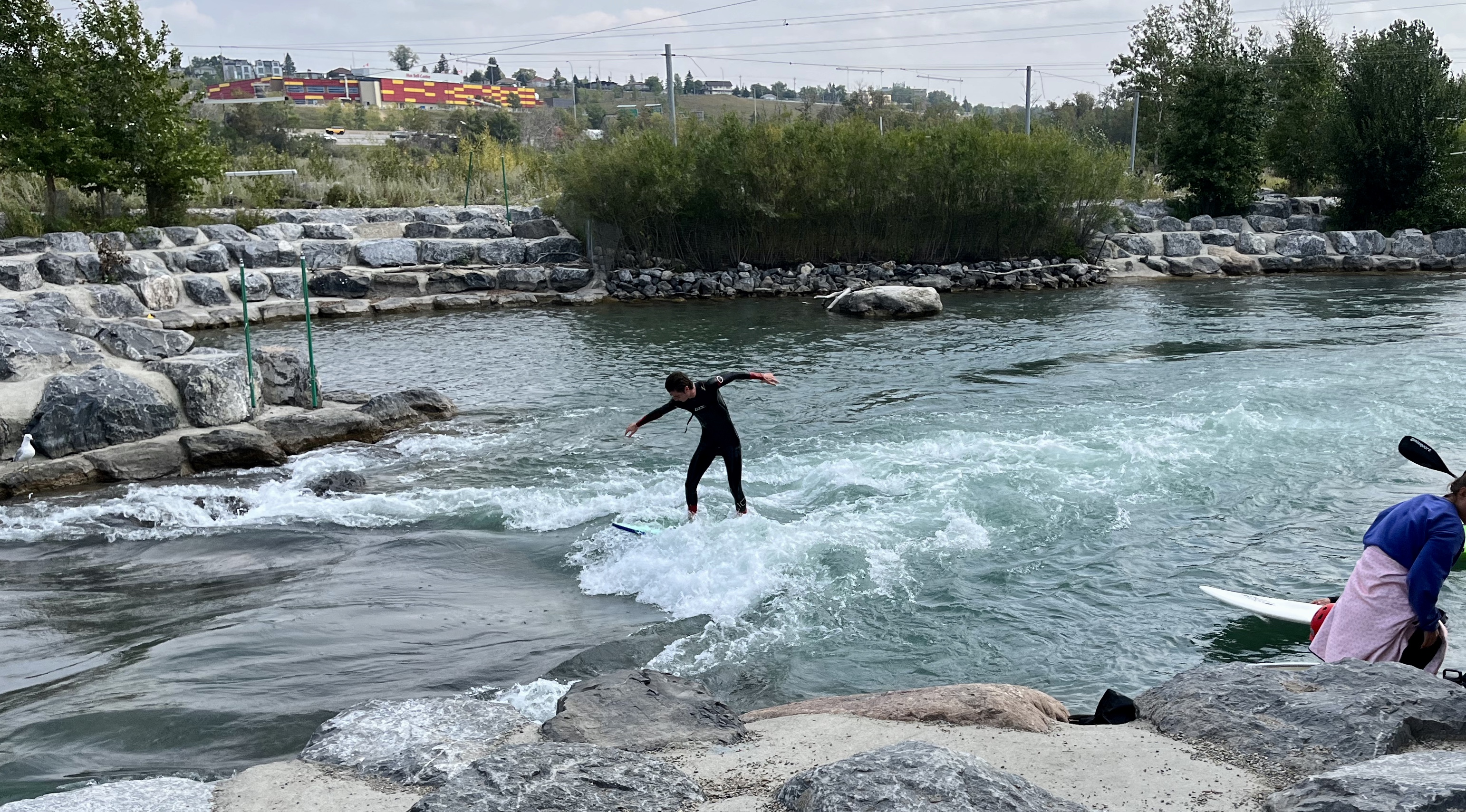
The low water channel has become the preeminent Canadian Whitewater course. Drawing hundreds of visitors on hot summer days to take advantage of recreational opportunities. It’s a space for canoeing, kayaking, stand-up paddle boarding, surfing, rafting and casual tube floating.
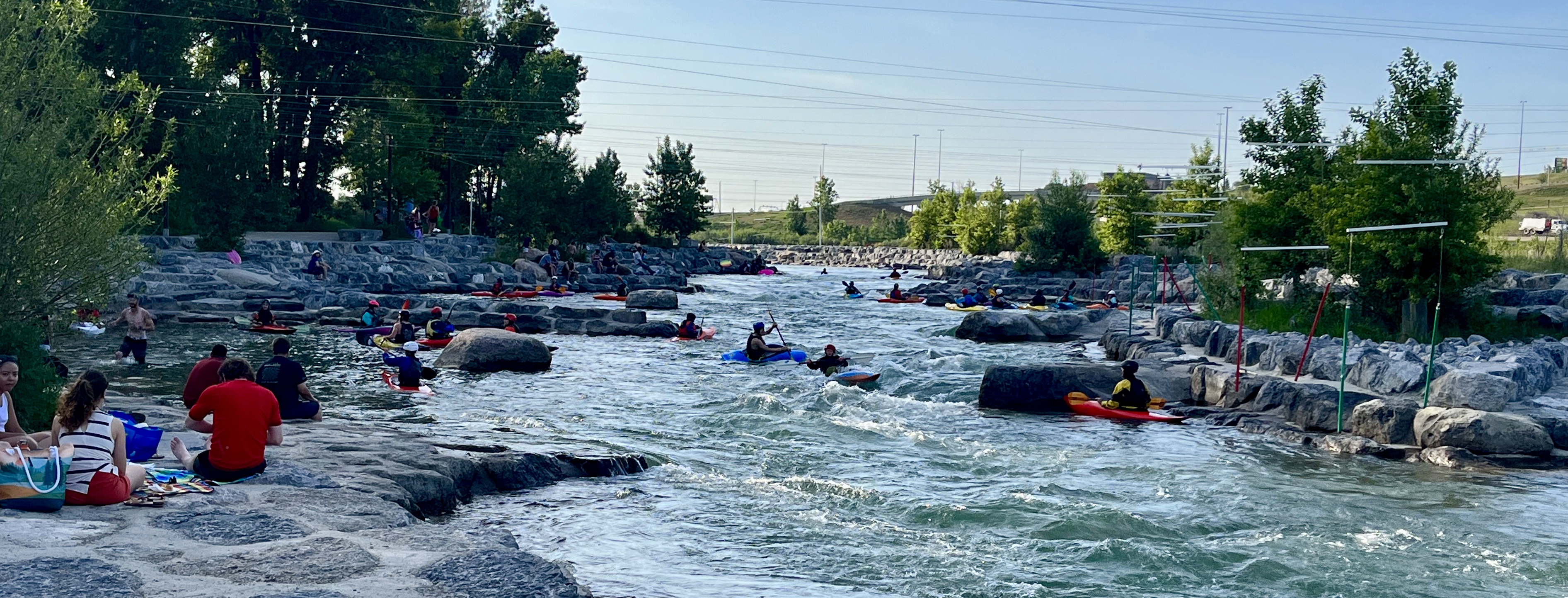
The passage has two separate channels that serve a variety of skill levels. The right, low water channel separates Pearce Estate Park from Divide Island. It is classified as Class 2 whitewater. The channel features pool-drop elements on the top and bottom. It has a meandering middle section. The left high-water channel is more challenging and classified as high-volume Class 3+ whitewater, only recommended for experienced whitewater paddlers.
A Community Development Committee recently convened. As a result, the Harvie Passage Facility Enhancement Plan will move ahead as part of the Bend in the Bow Redevelopment plan. There is an opportunity for public engagement; click here to provide feedback.
WHERE TO GO FROM HERE
The confluence of the Bow and Elbow Rivers is a traditional place for gathering and ceremonies for Indigenous people. It is known as Mohkinstsis or “Elbow” in the Blackfoot language.
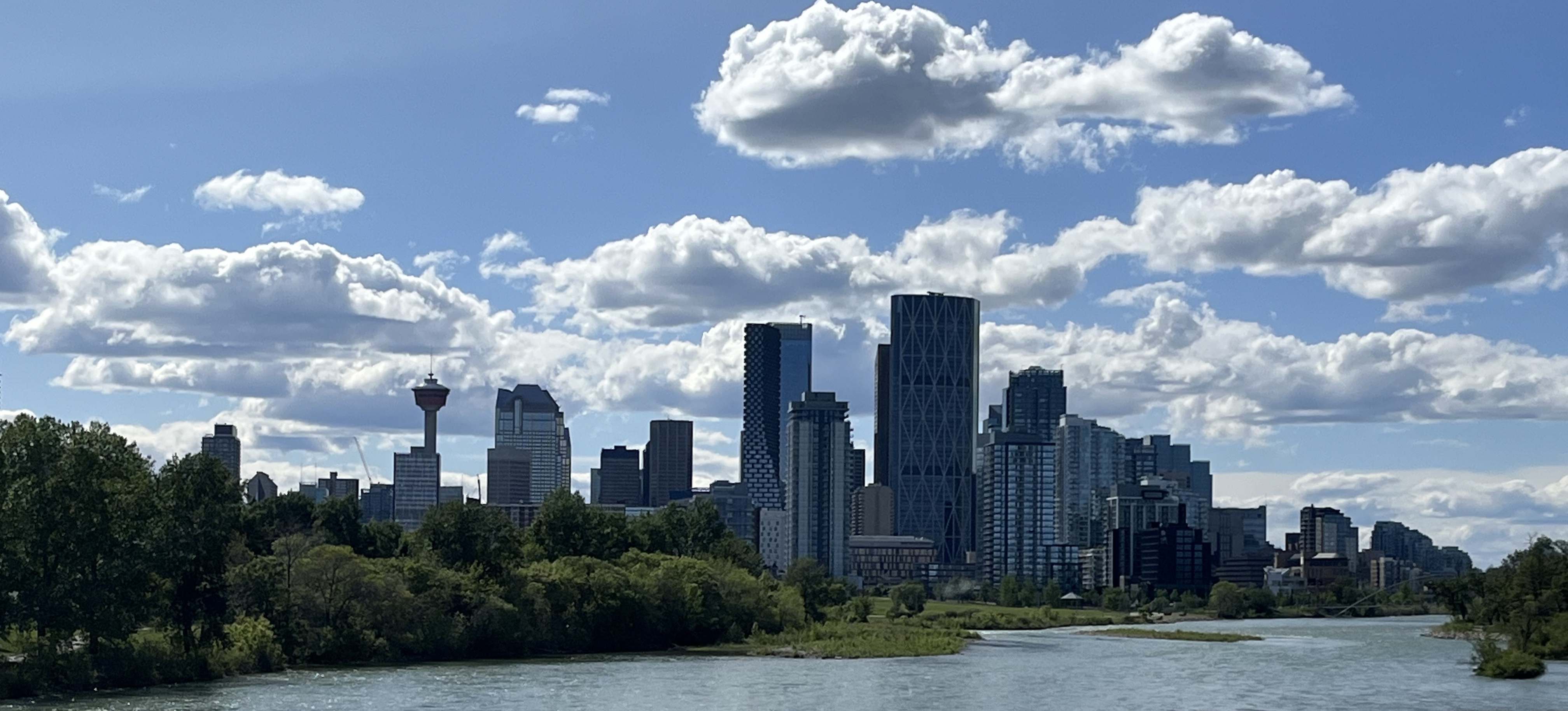
Explore the 9 km journey from the East Village along the Elbow River Where Calgary Comes Together. This guide identifies spaces that reflect the city’s heritage and cultural connection to the land.

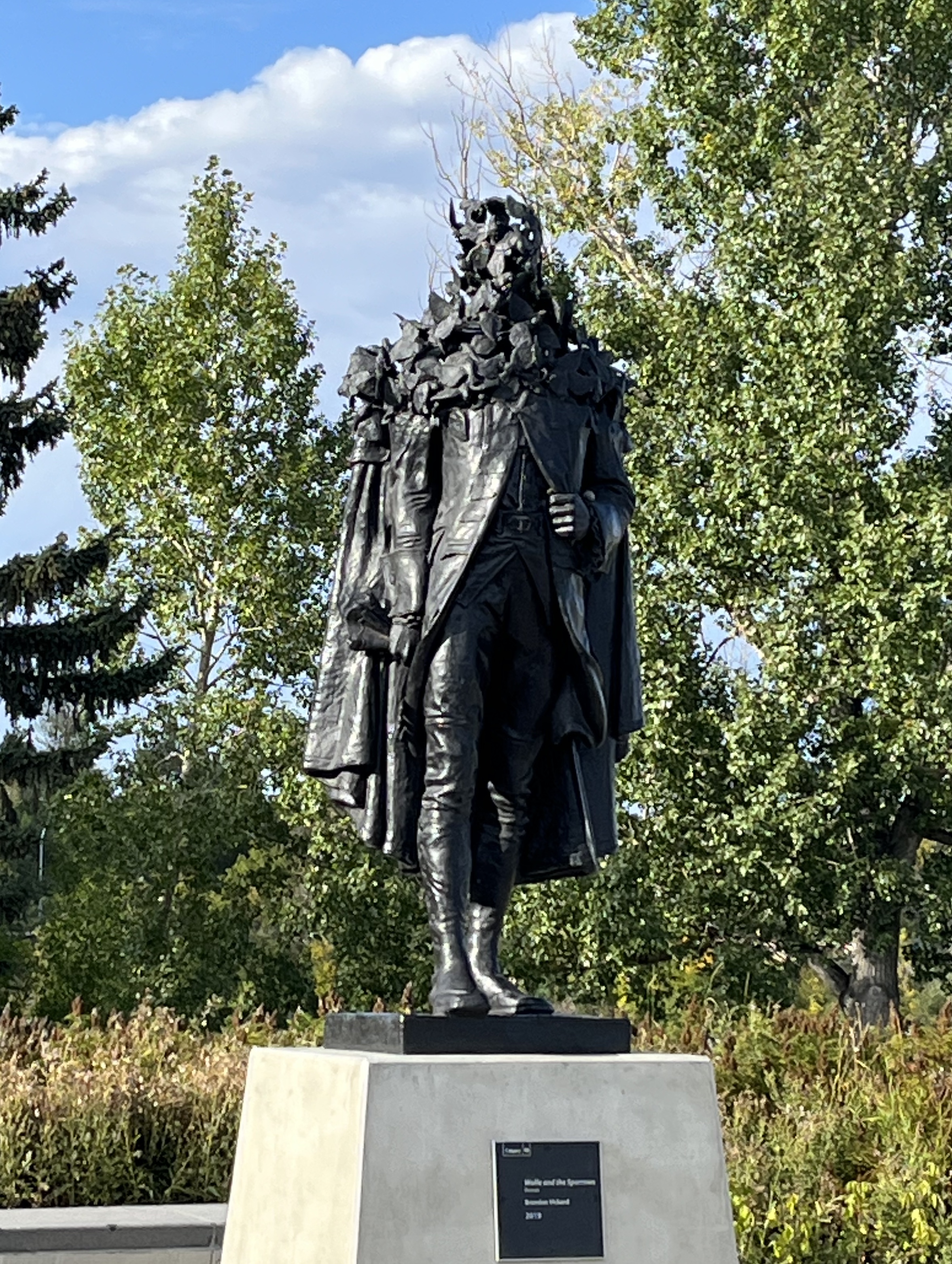
Monumental Wolfe Ride
At the gateway to Inglewood stands a public art installation. You will find it on the southwest corner of 12th Street Bridge. Artist Brandon Vickerd created it in 2019. The piece takes inspiration from a bronze monument by John Massey Rhind (1898). Located in South Mount Royal Park, the original was a gift to The City, from Glenbow founder Eric Harvie. Both pieces depict British Army General James Wolfe, with Vickerds’ interpretation distorted by a flock of sparrows.
Running, walking, or wheeling to these two public art pieces covers just under 8 km. It will take about 25 minutes by bike.
It includes features along the Elbow River – Where Calgary Come Together and The Best 5 km Urban Hike. It explores the historic residential community of Mount Royal and the Retail and Entertainment District. It features lookouts of the city skyline, green space, heritage buildings, public art, and urban design.
The map is coming soon.
 The Urban Explorer