
Reader Rock Garden is an internationally praised garden and a national historic site. This hidden gem is a must-see destination for bikers riding the pathway around Stampede Park. Its connection to Union Cemetery makes it a great place to explore with your feet or imagination for Halloween.
Originally a bare hill on the prairie, where many thought little would grow. It became an instrumental space for testing gardening principles and educating people about the horticultural potential of the area.
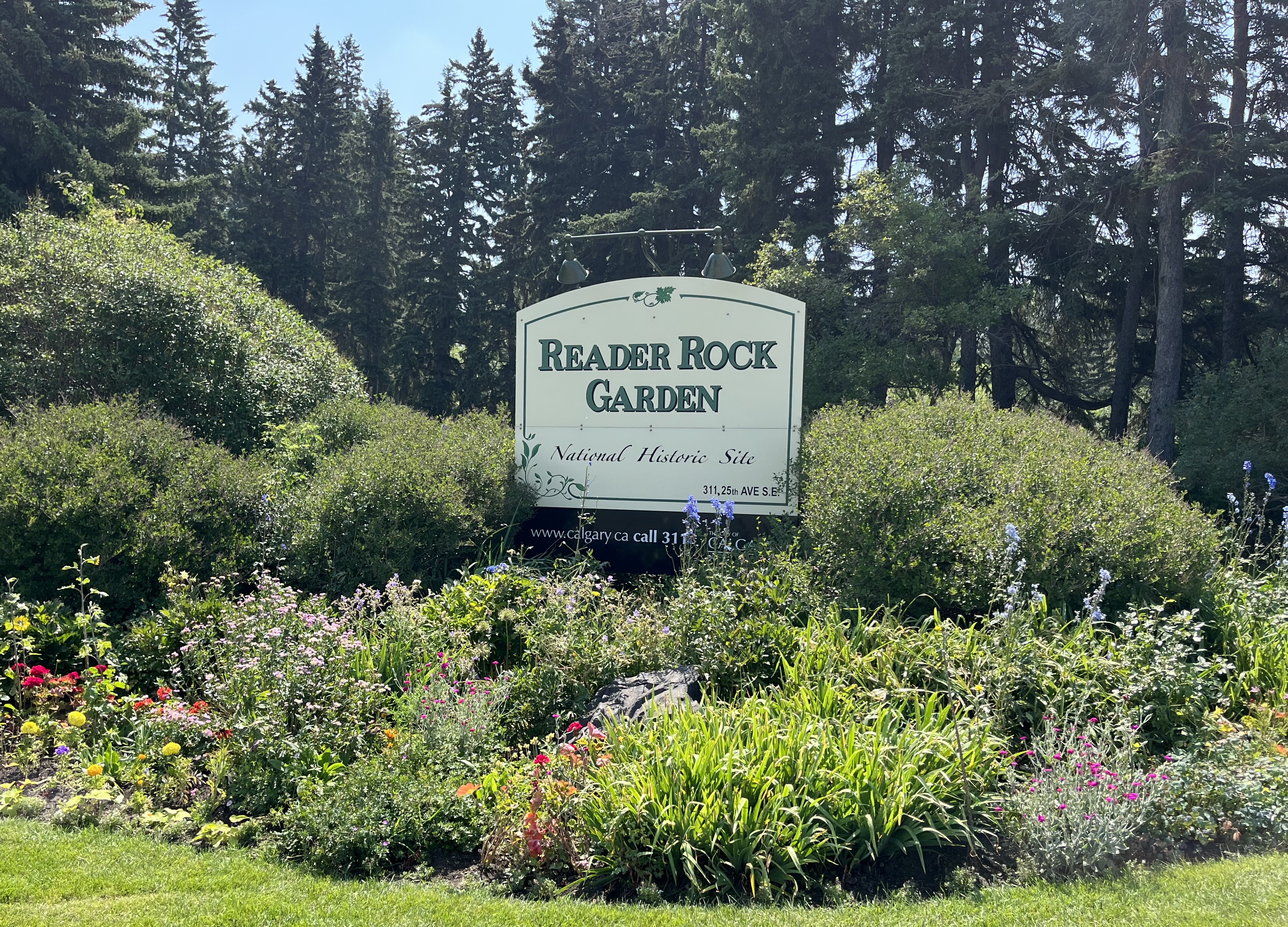
It was a showcase demonstrating the possibilities for the future of Calgary’s parks and gardens. A testament to the dedication of a man whose contribution made their existence possible.
WILLIAM READER
William Roland Reader was the city’s most influential Parks Superintendent, serving from 1913 to 1942. Reader was internationally renowned, acquiring seeds and plants from around the world.
Testing varieties of over 4,000 plant species to see what could survive in the harsh climate. Through his passion and skill, he turned Calgary into what became known as the “garden city of the West.”
We can serve ourselves, our home, and our community at the same time…..by employing our best effort to make the earth lovier, to tidy up neglected places, to plant trees, and to set out plants whose blossoms will refresh the weary-minded.
William Reader – From plaque in garden: A View to a Vision
His legacy includes the development of parks, recreational areas and the beautification of streetscapes. Examples of tree-lined streets planted by Reader include the poplars on Memorial Drive and several streets in Mount Royal.
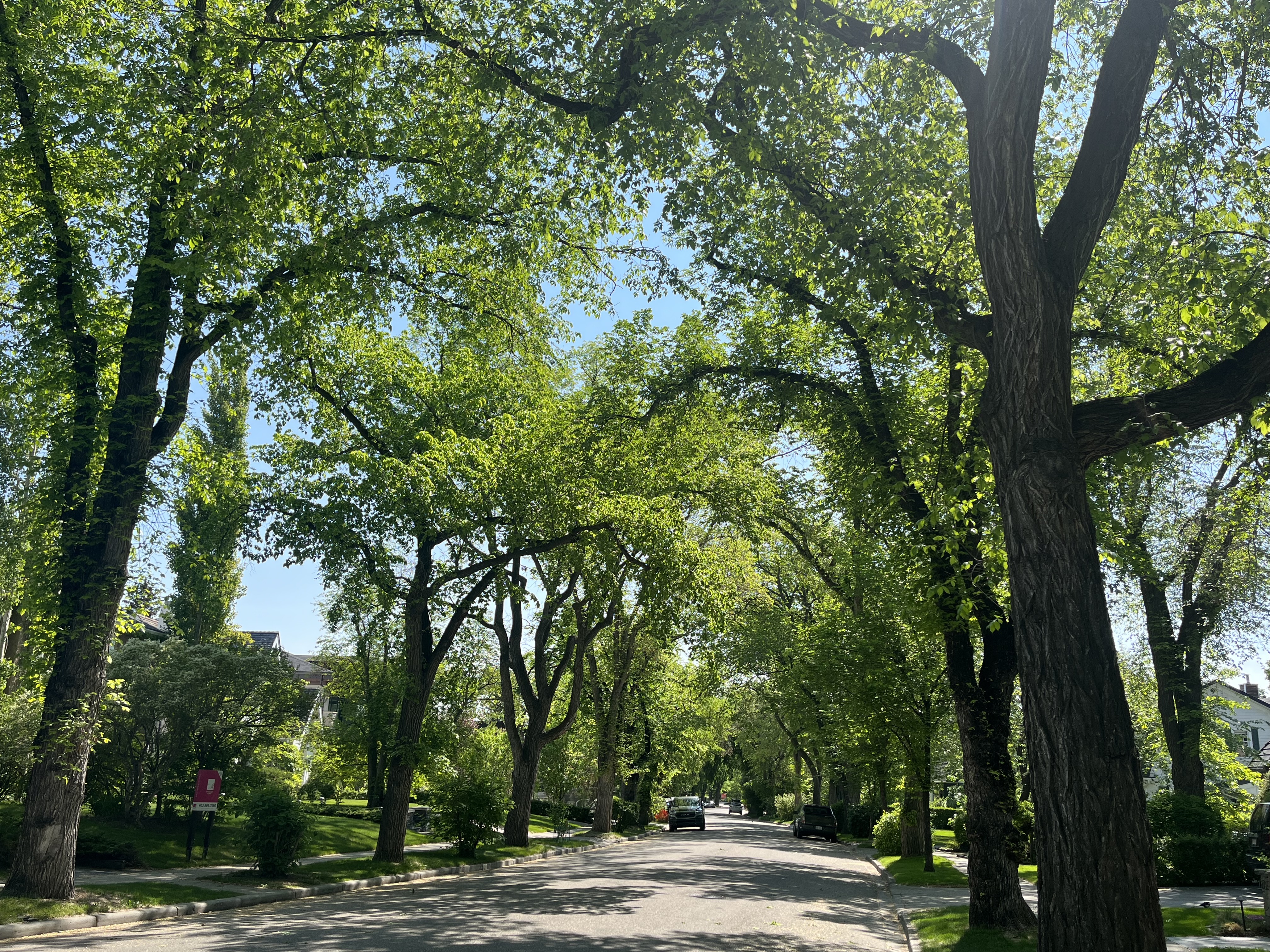
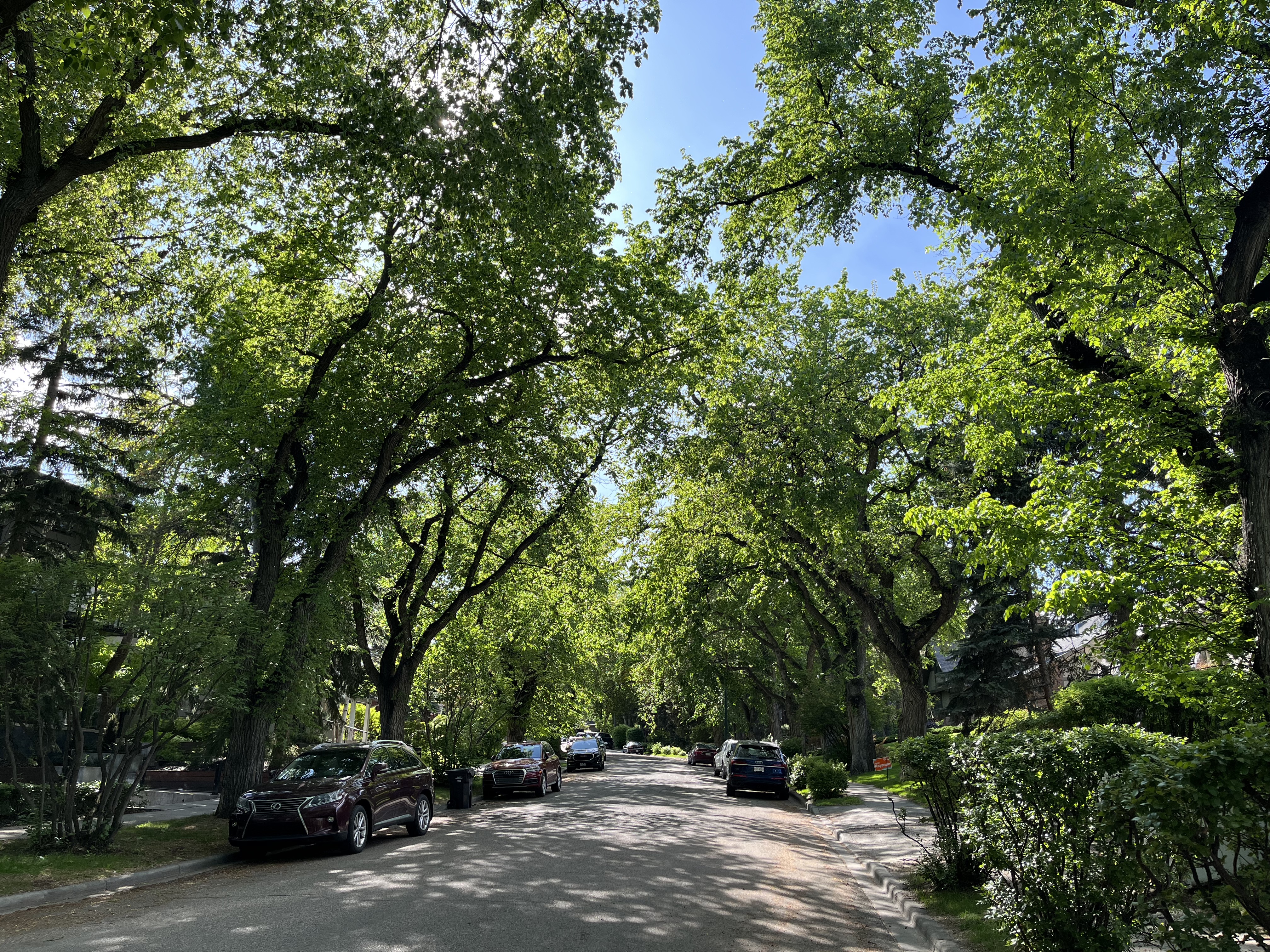
In 1929, he planted 53 American Elm trees and 24 Dogwood shrubs along Frontenac Avenue. In 1930, Reader planted 22 Green Ash trees and 10 Honeysuckle shrubs along Montcalm Crescent. He planted 30 American Elm trees and 42 Cotoneaster shrubs on Montreal Avenue. He also planted 10 Green Ash trees and 6 Honeysuckle shrubs along Quebec Avenue (credit: Mount Royal Community Association).
The trees are almost a century old now and add character to the historic residential community of Mount Royal. Explore this area on the Best 5K Urban Hike. It features lookouts of the city skyline, green space, heritage buildings, public art, and urban design.
READER ROCK GARDEN
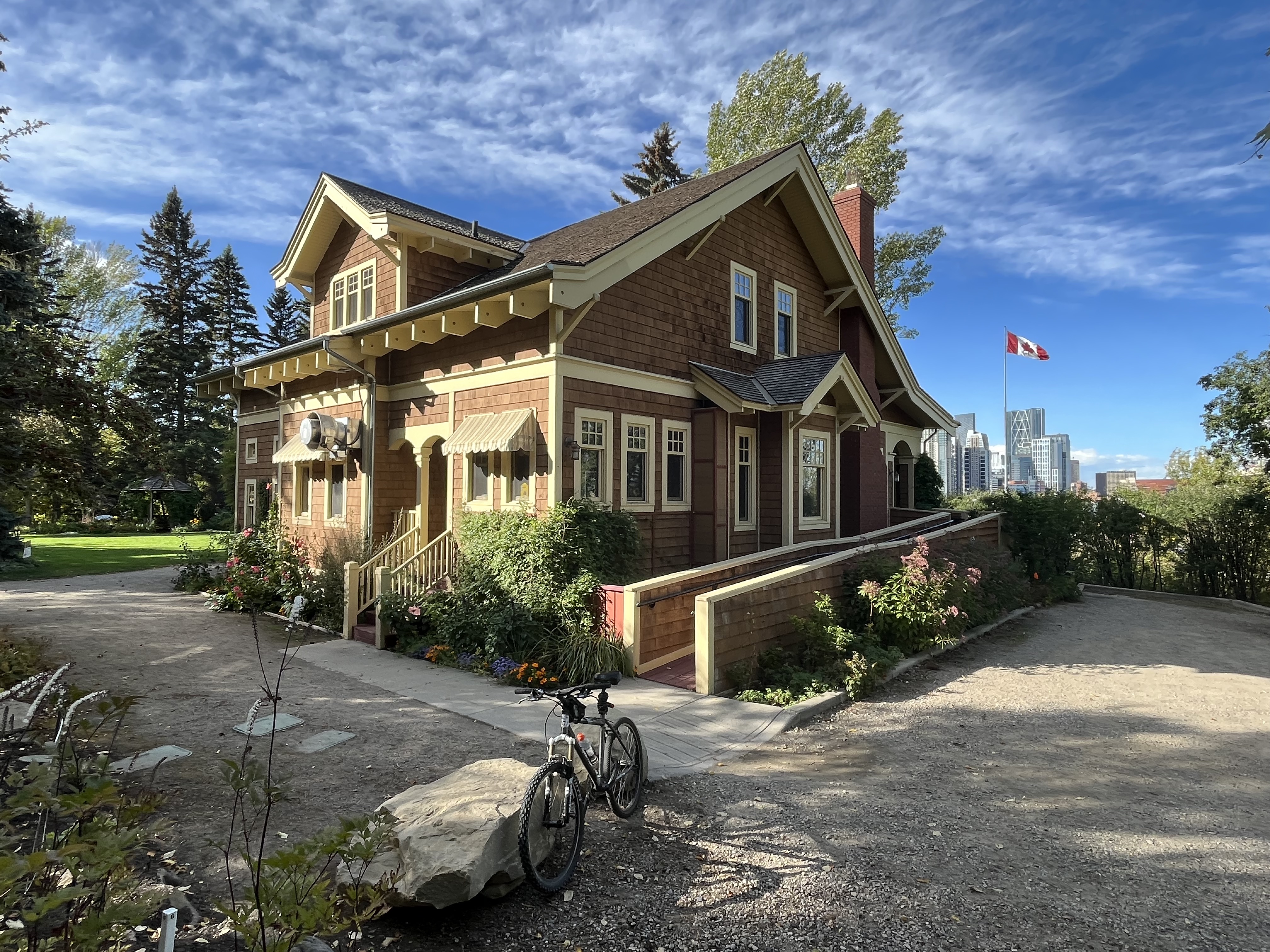
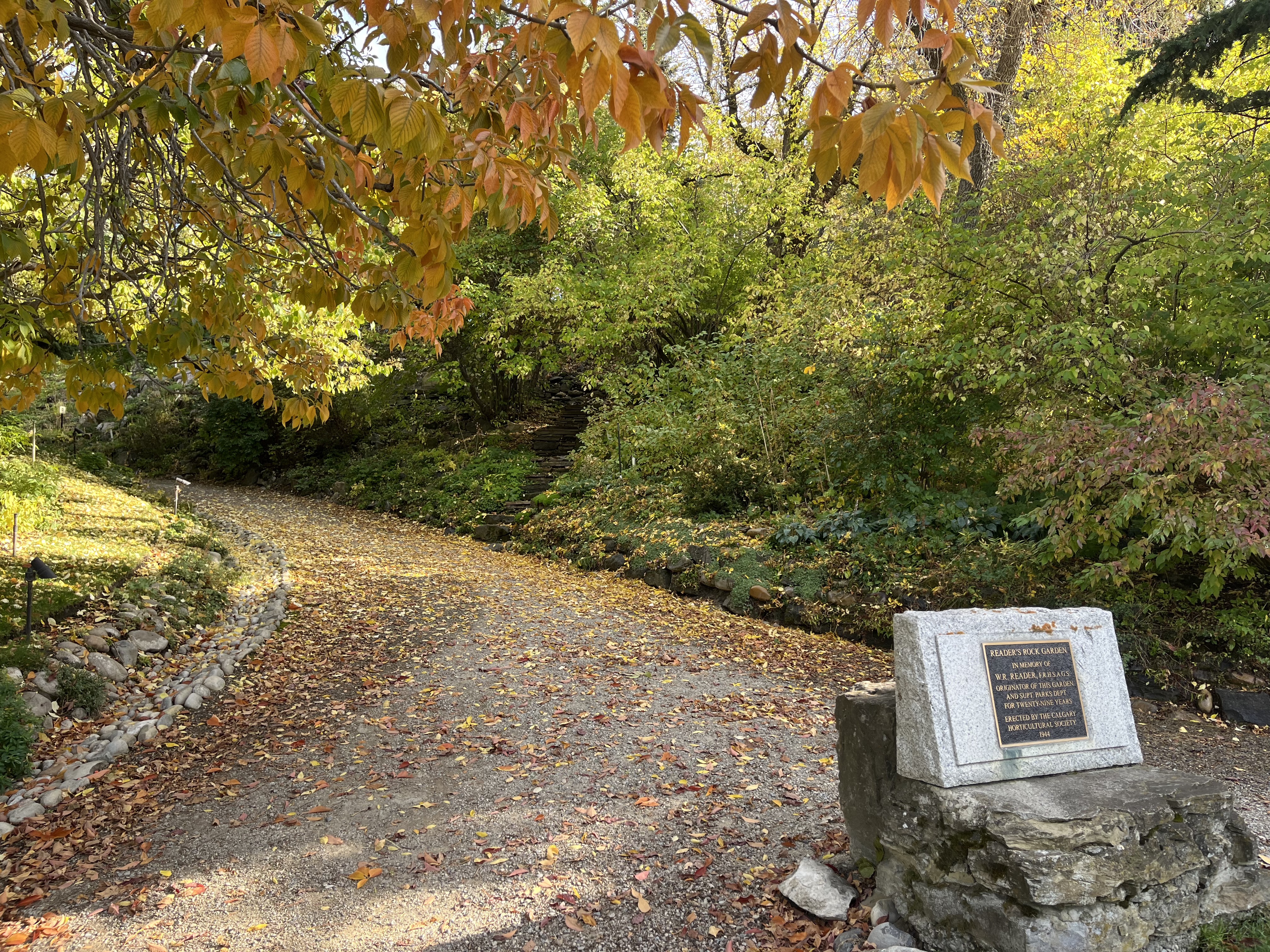
Readers’ crowning achievement was Reader Rock Garden. Historically, it was the private residence of the Superintendent of Parks and Cemeteries.
The original house was constructed in 1912. The accompanying 1.65 hectares of gardens were created one year later. A replica of the residence was reconstructed in 2005, home to Reader’s Garden Café today.
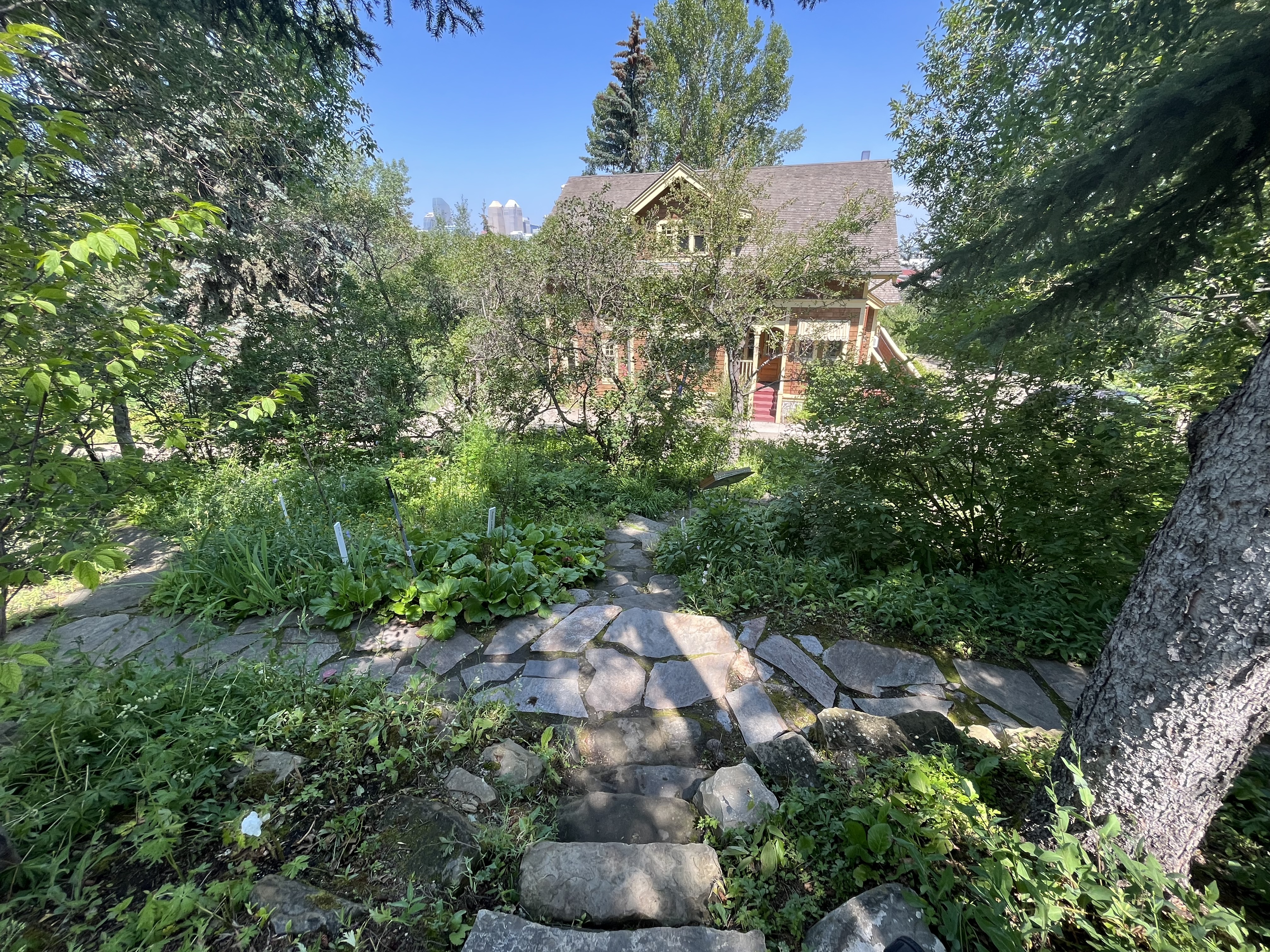
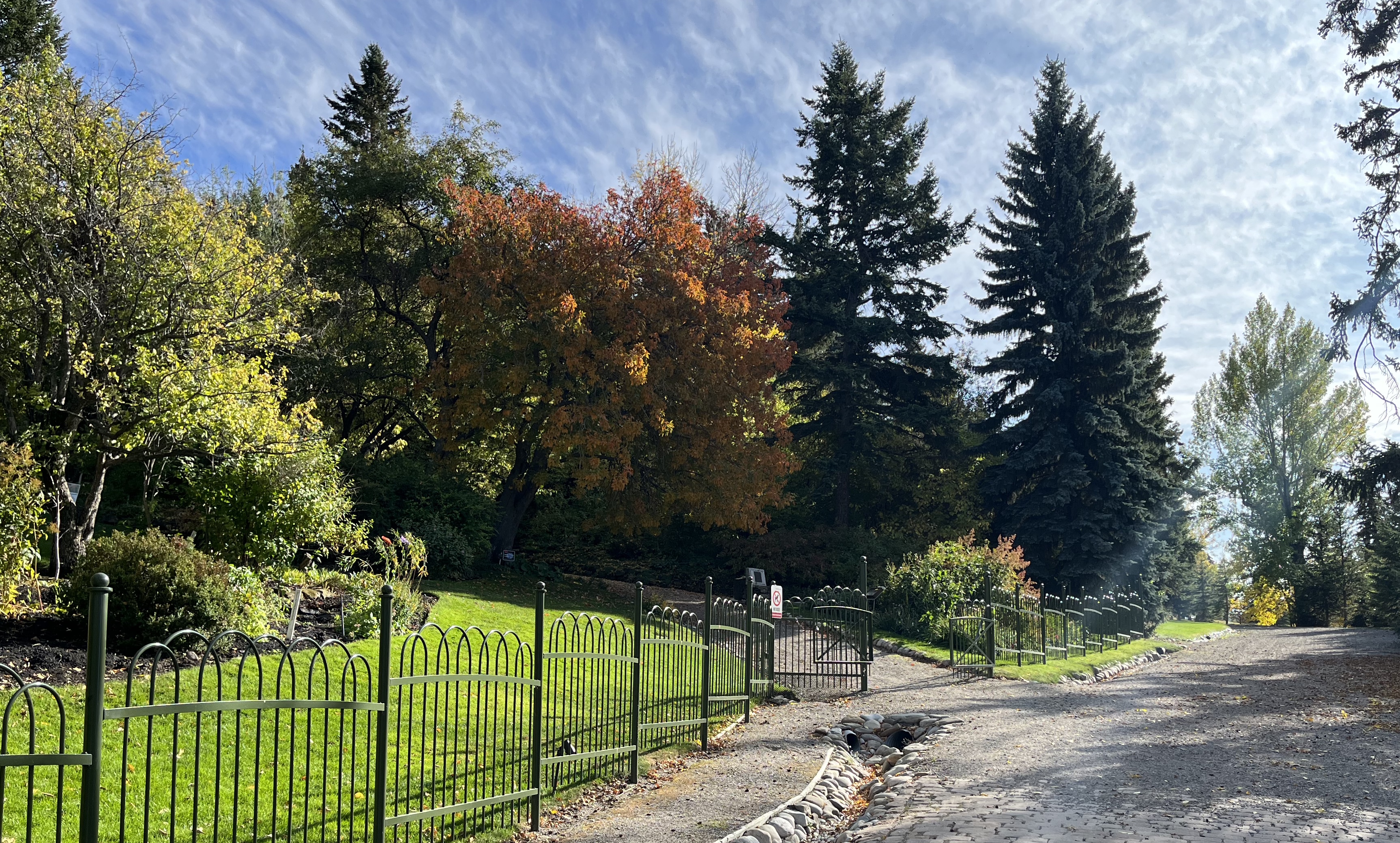
Reader laid out a network of walls, pathways, bridges, and water features. He simulated different environments and kept meticulous records of these areas.
He created an intricate series of different types of gardens, including the West Garden, South Slopes, Upper Garden, High Rockery, and Western Slopes. The West Rockery alone featured 650 different plant species. Visit the City of Calgary website to learn more about these spaces or inquire about booking for your private event.
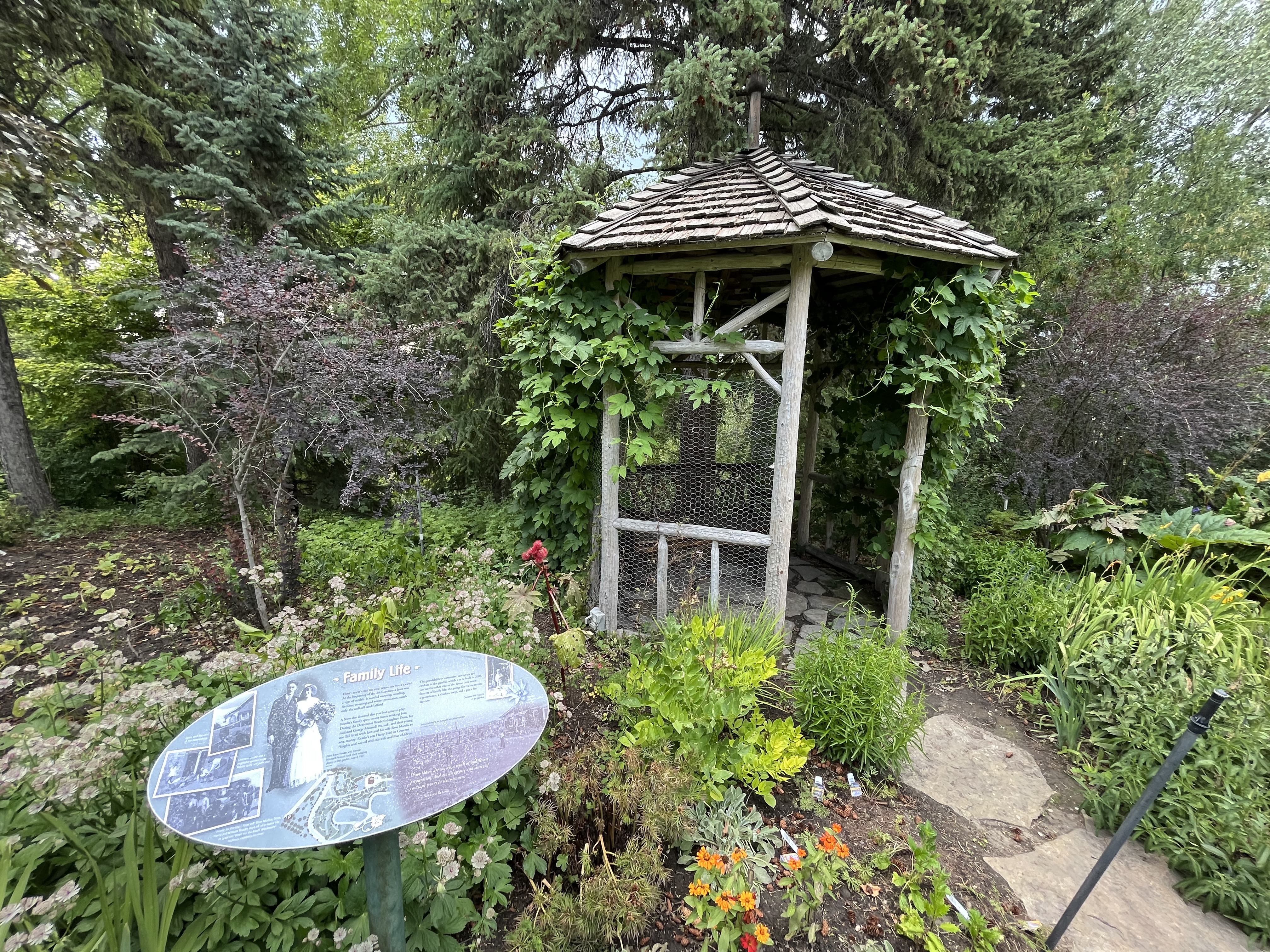
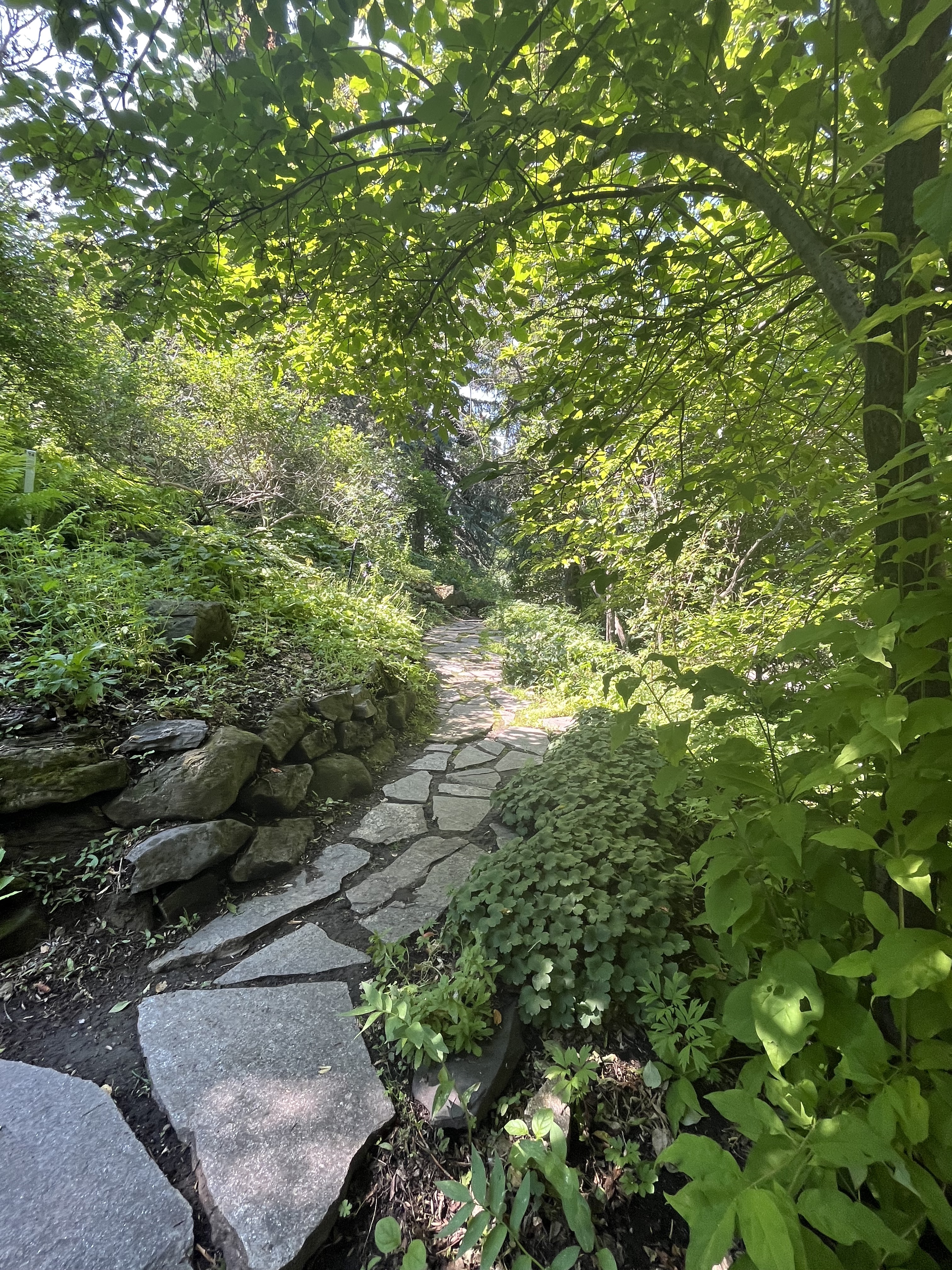
Why should there not be as many types of gardens as there are types of people. Nature never repeats herself, and he is a poor gardener indeed who is unable to give distinctive character to the domain under his care.
William Reader – Plaque on the south slopes
HONOURING THE PAST
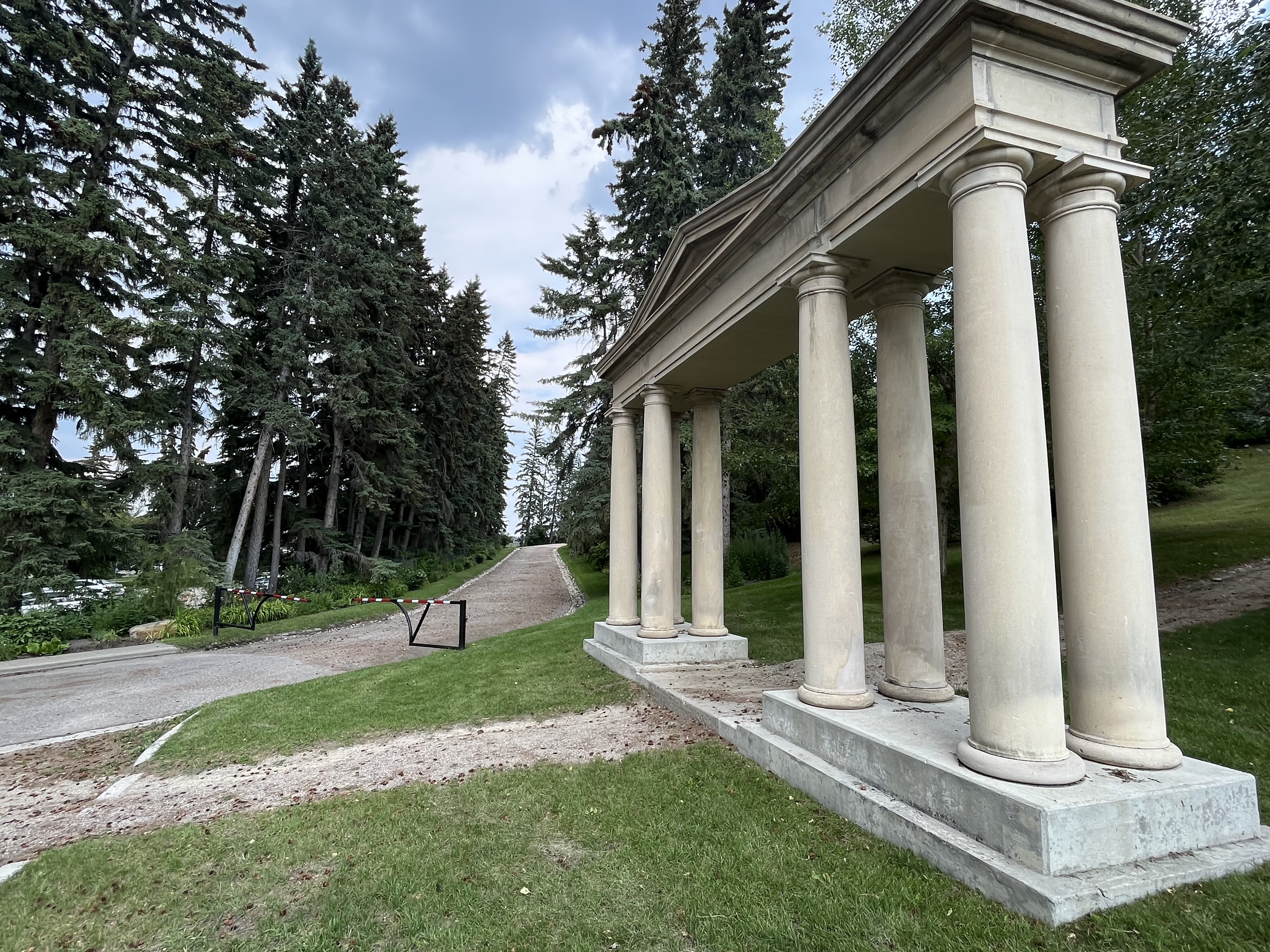
Following his death in 1943, the park was named Reader Rock Garden in 1944 to honour his contributions to the city. On the other side of the hill, is Union Cemetery, home to 21,200 early pioneers, city founders and lesser-known figures finding prominence like John Ware.
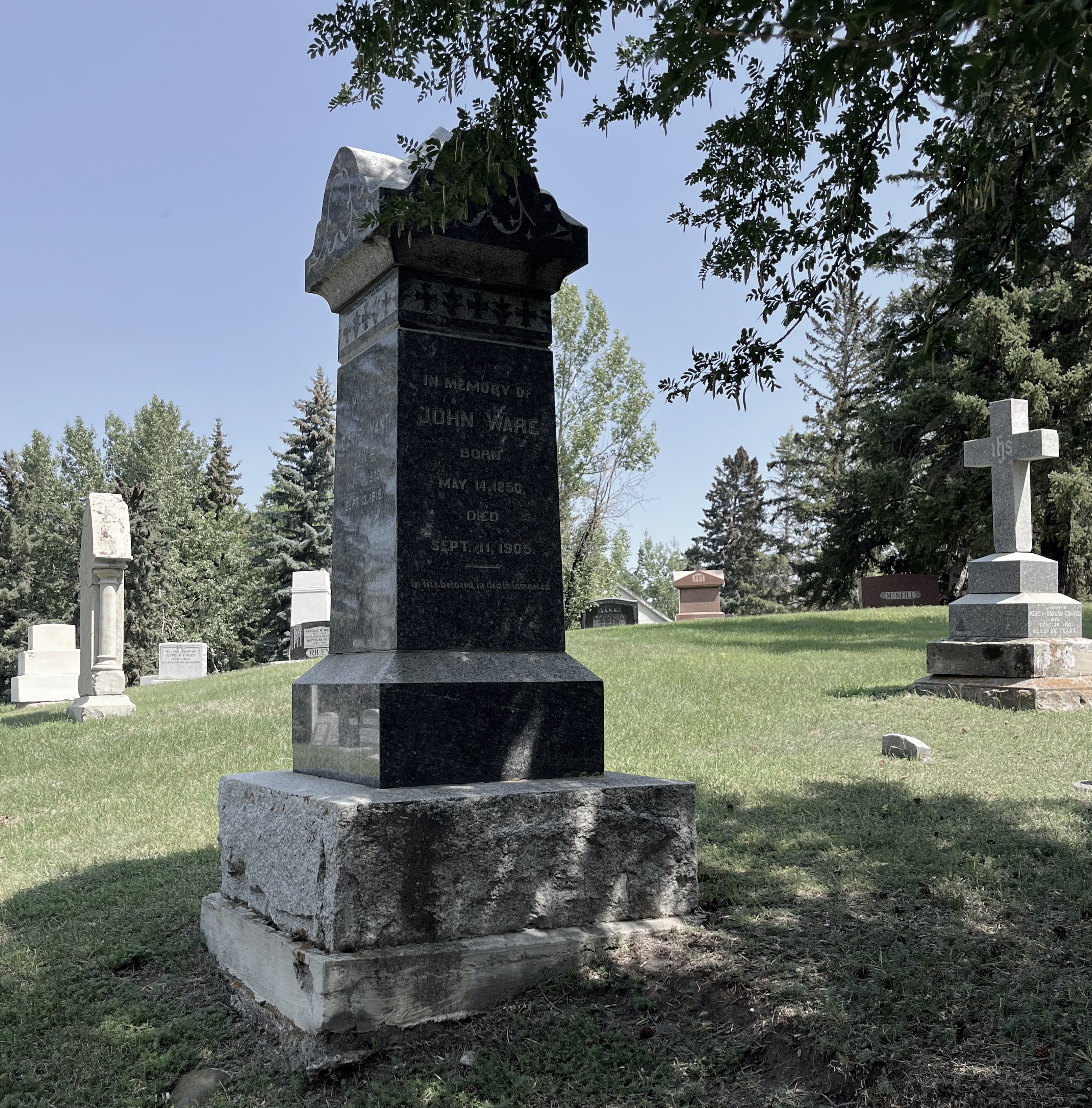
From May through October, The City offers free guided walking tours to honour our heritage and tell the stories of those who came before us.
ON THE OTHER SIDE
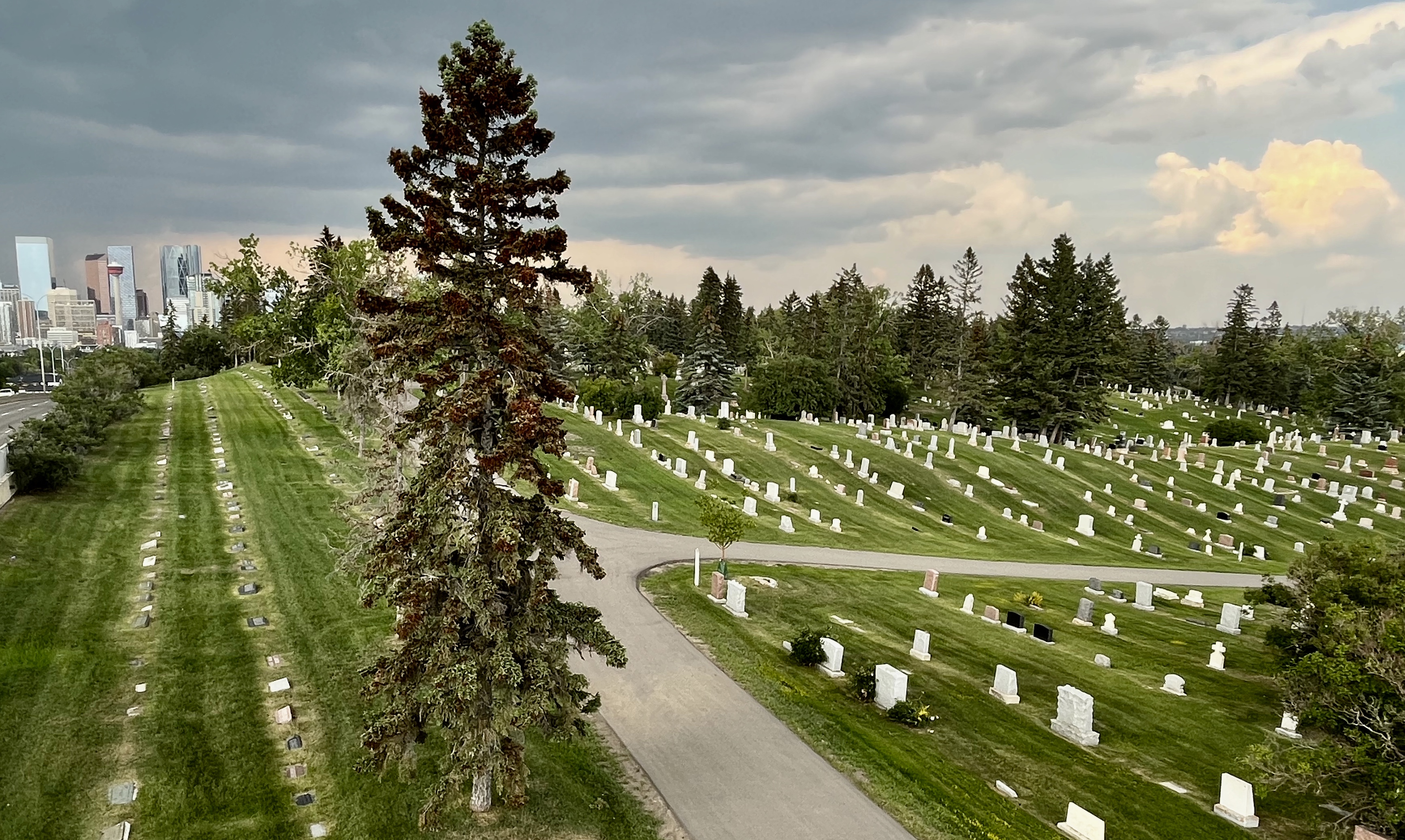
There is a reason tours of the cemetery stop before the end of October in Calgary. It is a long-forgotten urban legend, dating from before William Reader’s arrival in 1913. It is the unreal story of the Reader’s Rock Garden.
Halloween Urban Legend
SEEDS OF DISCONTENT
In 1883, the introduction of the railway ripped a scar across the land as it united a new nation. In 1884, Calgary was incorporated as a thriving town with over 1,000 people and boasting 30 major buildings. One of the first tasks of the new council was to find land for a cemetery. The only existing graveyard was at the Roman Catholic mission.
In 1885, a plot of about 50 acres at Shaganappi Point was chosen, unsanctified land for non-Catholics. Overlooking the river valley, it appeared to be a perfect spot, but there was a problem.
Shortly after the first burial in this new cemetery in September, labourers noticed the rocky, sandstone soil conditions were not just making digging graves difficult. There was something else wrong at the cemetery. The site always appeared cast in the shadow of a fast-growing forest. This happened even though the barren prairie landscape consisted of few trees.
THE READER’S ROCK GARDEN
Rumours were not the only thing coming to the surface; the souls of the loved ones buried in the ground, now seen as unholy, seemed to haunt the site. That was until the last day of October when the shadow cast beyond the cemetery over the countryside, including the town.
The names of the citizens now abandoned in Shagannpi Point echoed as a whisper over the townsite as if being read from the tombstones of the deceased. Then silence as the prairie was quiet for months, with locals afraid to even speak of the event, only referring to the shadow as the “Reader” and the cemetery as the “Rock Garden.”
AWAKENING
The Reader rose up one year later, forming from the shadow of the trees cast over the rock garden, long legs leading to a figure that resembled a spider. It loomed large over the town, blocking the setting sun in the background.
Madness consumed anyone exposed too long to the darkness cast by its shadow. The names of the recently deceased resonated down every street. On every wall, something appeared to crawl. The veil that presides over this realm and another grew thin. Few details of what transpired over the next couple of days have survived, but on Nov 6, the town burnt to the ground.
BALANCE
Sometime following, a gathering was held, everyone attended but never spoke of it. At its end, the community understood, that the spirits that called this area home could craft their power from the energy of this space.
Like a guardian charged with maintaining balance, ensuring all living things could thrive together. To be part of this ecosystem, the residents would have to live harmoniously with their surroundings and each other or suffer the consequences.
PEACE
During the construction boom that followed to rebuild the town, the council mandated that churches, schools and other public buildings of significance be constructed of sandstone to foster a connection to the land and show reverence. There was peace and the area prospered as a farm and ranching community, honouring the land and the environment through their way of life, architecture and celebrations.
In August 1890, Union Cemetery was established on a hill by the Elbow River, a challenging location since the river had no bridge back then. The Shaganappi Point Cemetery was closed, and in 1892, the long process of moving the 75 burials to the new cemetery began, unsuccessfully searching for all the remains until 1912. (Vol I. Readers Rock Garden 1894-1912)
Shaganappi became the site of the first public golf course in 1915, haunting golfers while beginners learn the game to this day.
NEXT STEPS – WHERE TO GO FROM HERE
Reader Rock Garden is a destination on the 9 km journey from the Glenmore Dam, along the Elbow, to the confluence with the Bow. It is a celebration of space where people have traditionally come together and reflects how cultures often develop through a connection to the land. Explore Mohkinstsis | The Elbow – Where Calgary Comes Together.
 The Urban Explorer