
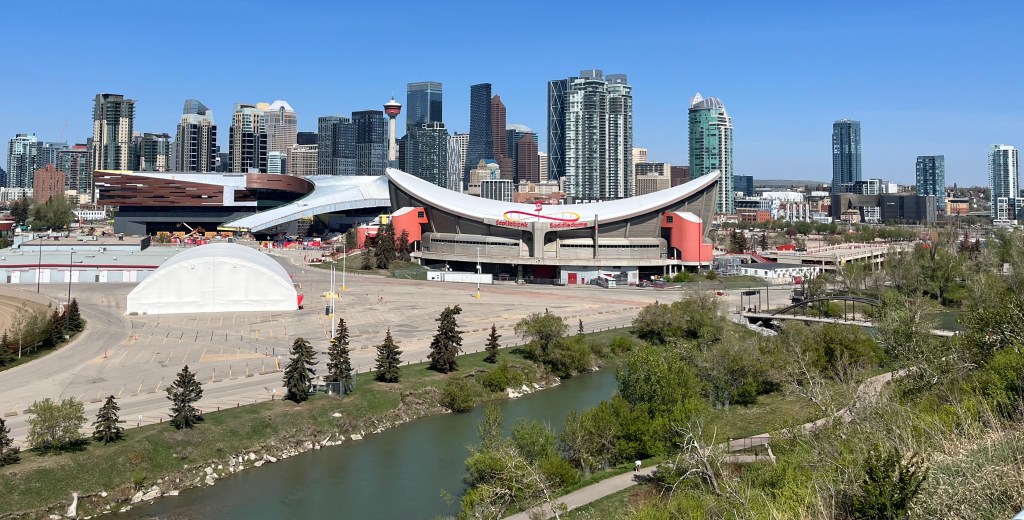
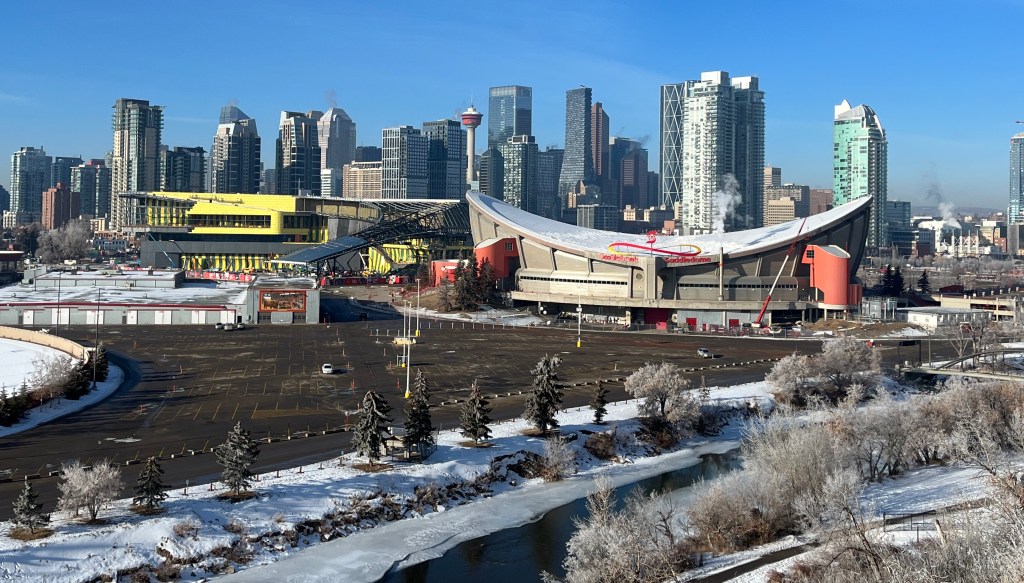
The Saddledome has been called a dinosaur in the modern age of event venues.
The plan to create a Culture & Entertainment District anchored by the new $1.22 billion Scotia Place will transform Victoria Park. In this evolving landscape the Saddledome appears destined for extinction.
Scotsman’s Hill is a popular vantage point to capture the city skyline or a gathering spot for fireworks. For a more active experience, below the embankment is pathway along the Elbow River. Part of a 900 km network you can use to explore destinations like Stampede Park and the iconic Saddledome.
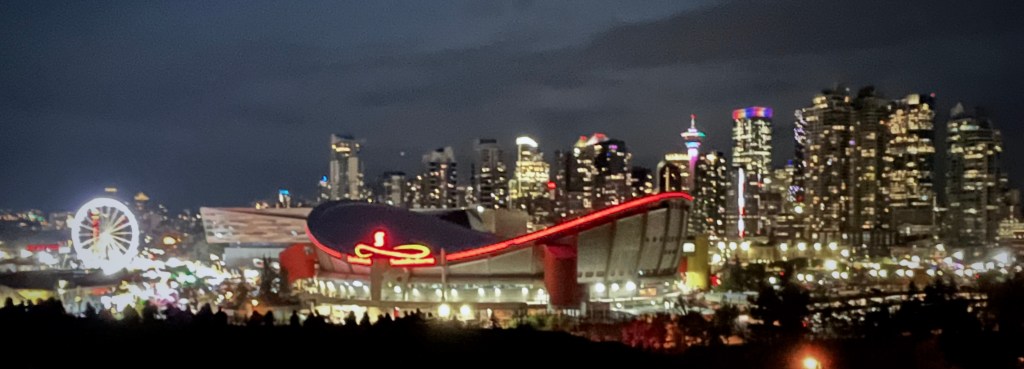
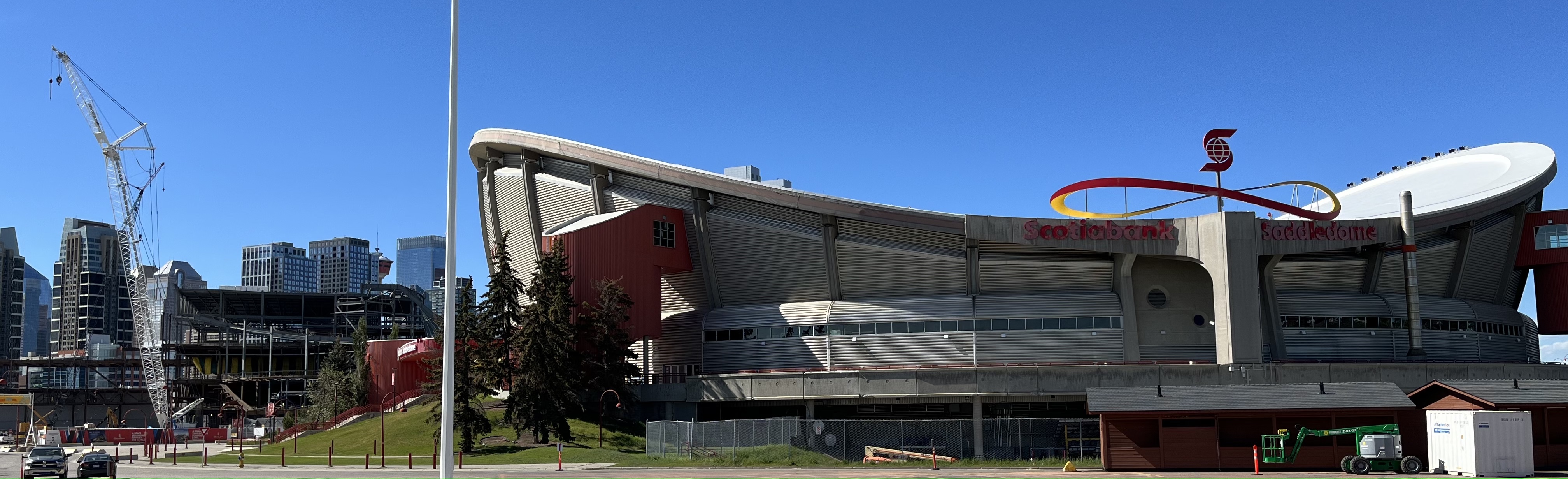
Originally the Olympic Saddledome, it has been a landmark since it opened on October 15, 1983. In 2024, the decision was made to replace the oldest Canadian NHL arena. It no longer met the standards of the National Hockey League. Ironically, the unique saddle shape design that brought its early acclaim also limited its ability to secure other “A-class” events and its future.
The battle for a new arena has persisted for over a decade. The linked article from the Calgary Herald provides a timeline of events that started in 2009. The debate seems to be coming to an end. Sealing the fate of what many consider to be a reflection of our Western heritage and Olympic legacy.
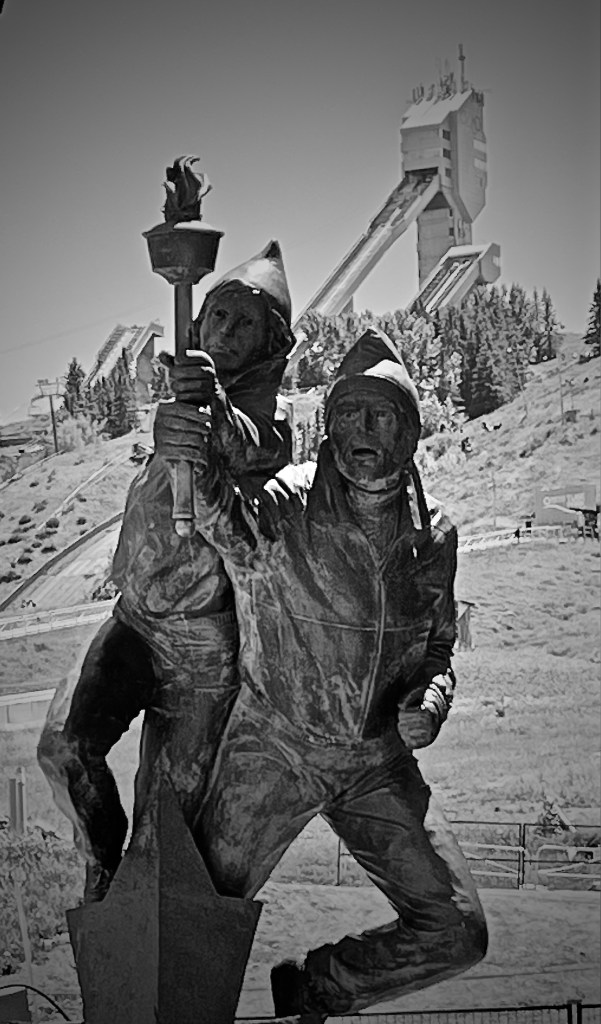
The Oval and Canada Olympic Park are the other remaining prominent landmarks from this era. The end of 2024 marked a symbolic brick by brick dismantling of our Olympic legacy. Read more from The City of Calgary Newsroom.
While making preparations for the Arts Commons Transformation project that will include Olympic Plaza. The City of Calgary received requests from 8000 citizens asking for their personalized brick back. The City responded by lifting all 33,000 bricks. Successfully recovering approximately 5,600 in an effort to return them to original purchasers.
A building condition assessment report, obtained by CBC News from December 2018 stated that $48.7 million was required for repair work. That number ballooned over time until The City declared it no longer feasible to update the facility.
Calgary has not let sentimentality get in the way of new projects. The original home of the Flames was the Stampede Coral. When it was constructed in 1950, it was the largest arena in Canada west of Toronto. It was also the first in the region without support columns obscuring the lines of sight.
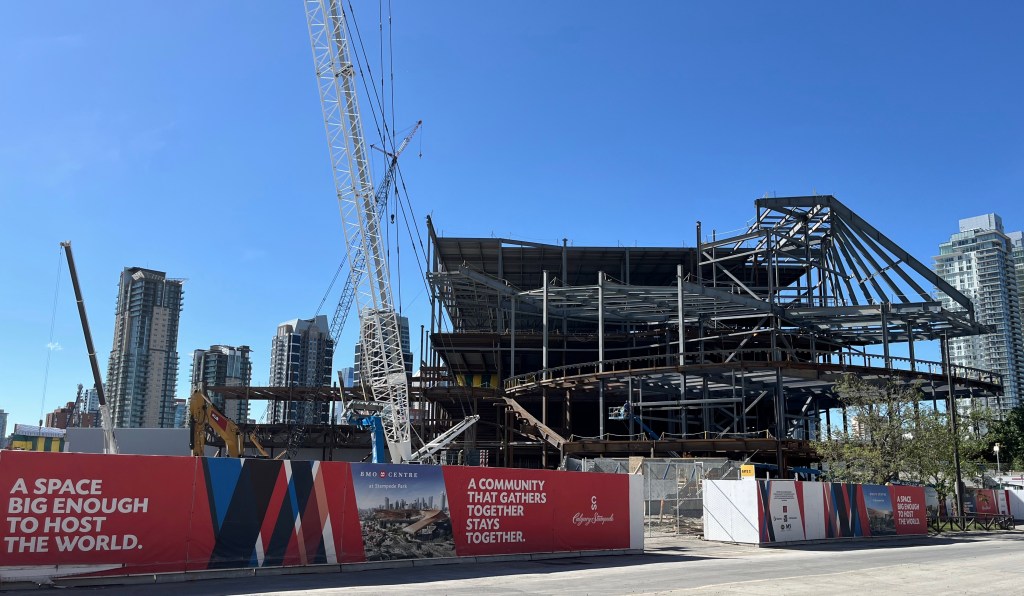
The Stampede Coral was demolished to make way for the BMO Center Expansion project.
The BMO Center has over one million square feet and is the most modern convention center in Western Canada.
Graham McCourt Architects designed the reverse hyperbolic paraboloid roof of the Saddledome. A world record holder for the longest-spanning concrete shell at that time. It was a design feature allowing for a pillar-free view from every seat, never intended to have a Western theme.
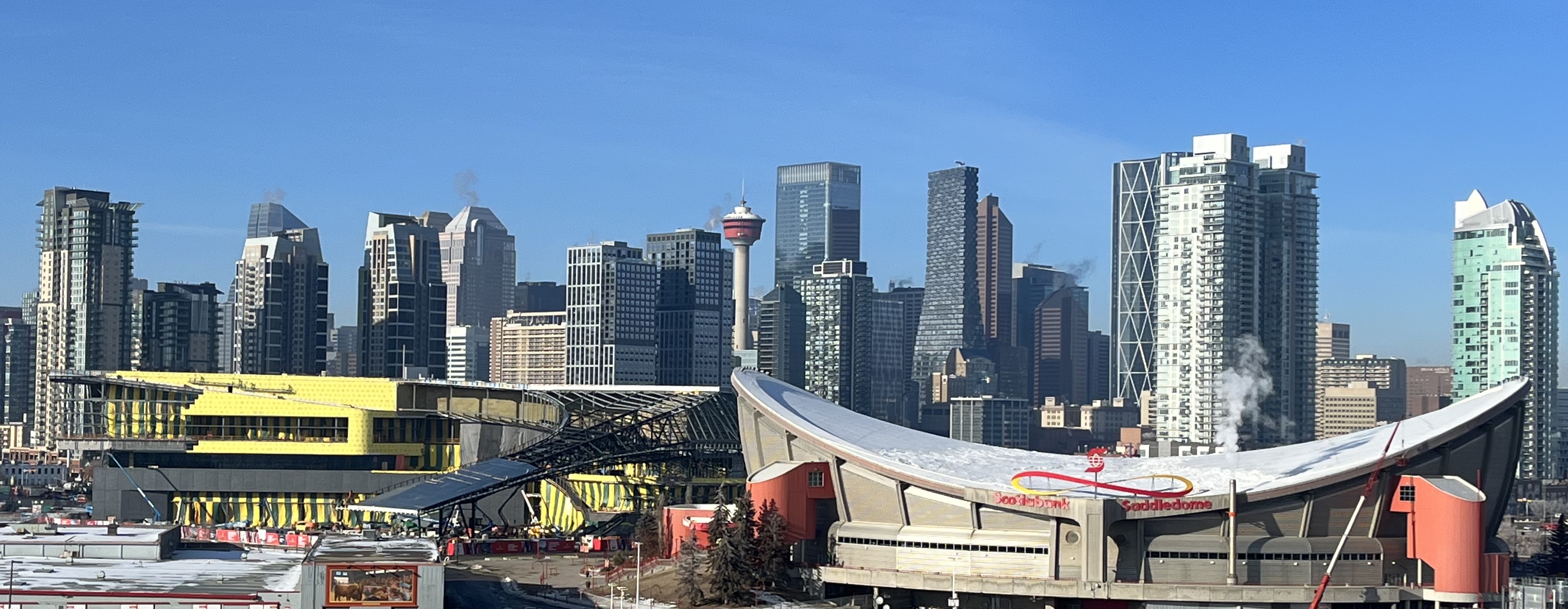
Only after the design was released did it start to be referred to as saddle-shaped. In a contest to name the new building, 735 of the 1,270 entries submitted involved the word saddle. The winning name, Olympic Saddledome, was drawn from a hat.
The design has won several architectural and engineering awards. It was honoured by the Royal Architectural Institute of Canada in 2000. Time magazine featured it on the cover on September 27, 1987, for an article discussing the 1988 Olympics.

Barry Graham, the man who designed the building, said in an interview that appeared in the Calgary Herald on Sunday, October 12, 2008:
“I have mixed emotions. I really like the building, but I realize things don’t last forever…..if it has to come down, take it down. Don’t leave it up for the wrong reasons.”
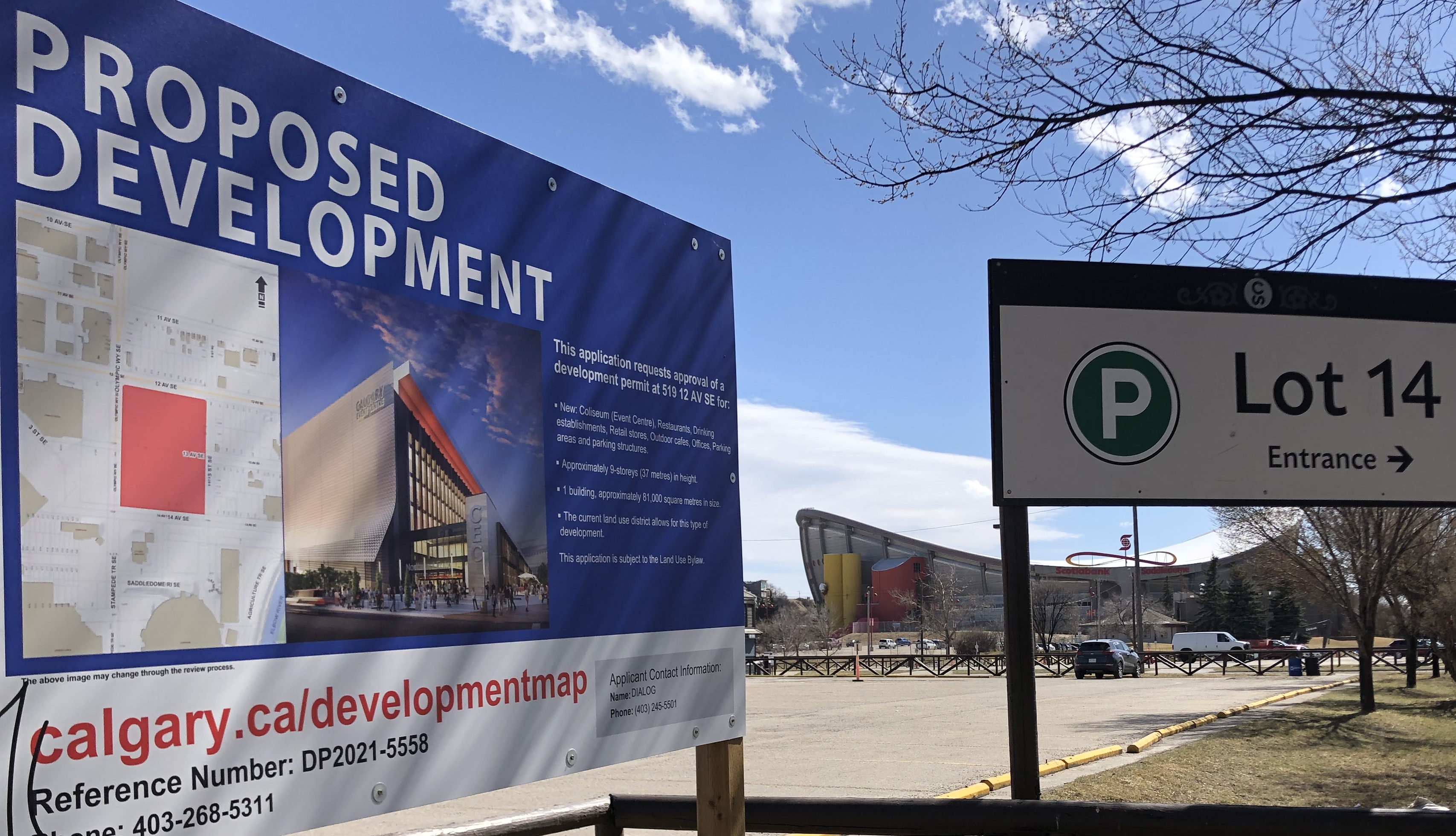
The City is preparing the site at 14th Avenue and 5th Street S.E. Follow the construction of Scotia Place on their website.
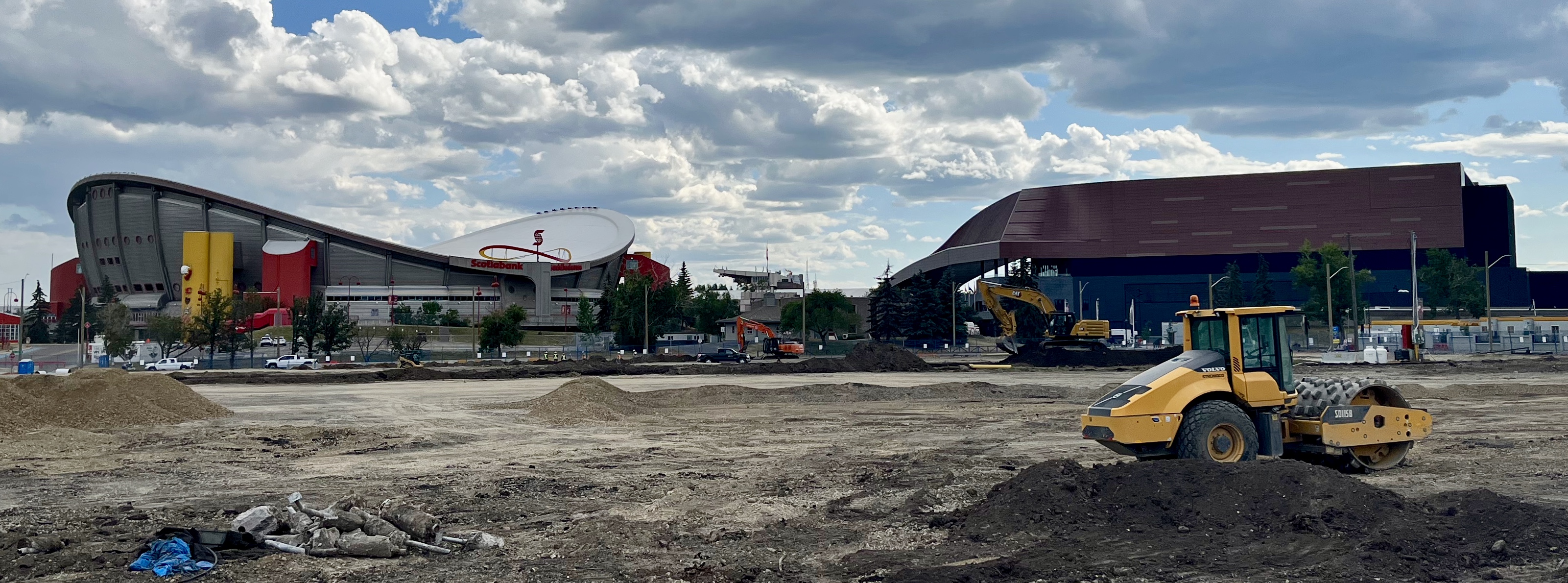
Learn more about the Scotia Place Experience. Alberta’s newest premier sports and entertainment venue is set to open in Fall 2027. It will play a defining role in transforming Calgary’s downtown, the emerging Culture & Entertainment District and the nearby spaces.
URBAN REVITALIZATION
The Culture & Entertainment District and the new Scotia Place development will transform an underutilized neighbourhood of Victoria Park. It will attract new businesses and residents; driving economic growth by establishing restaurants, entertainment venues, and retail spaces.
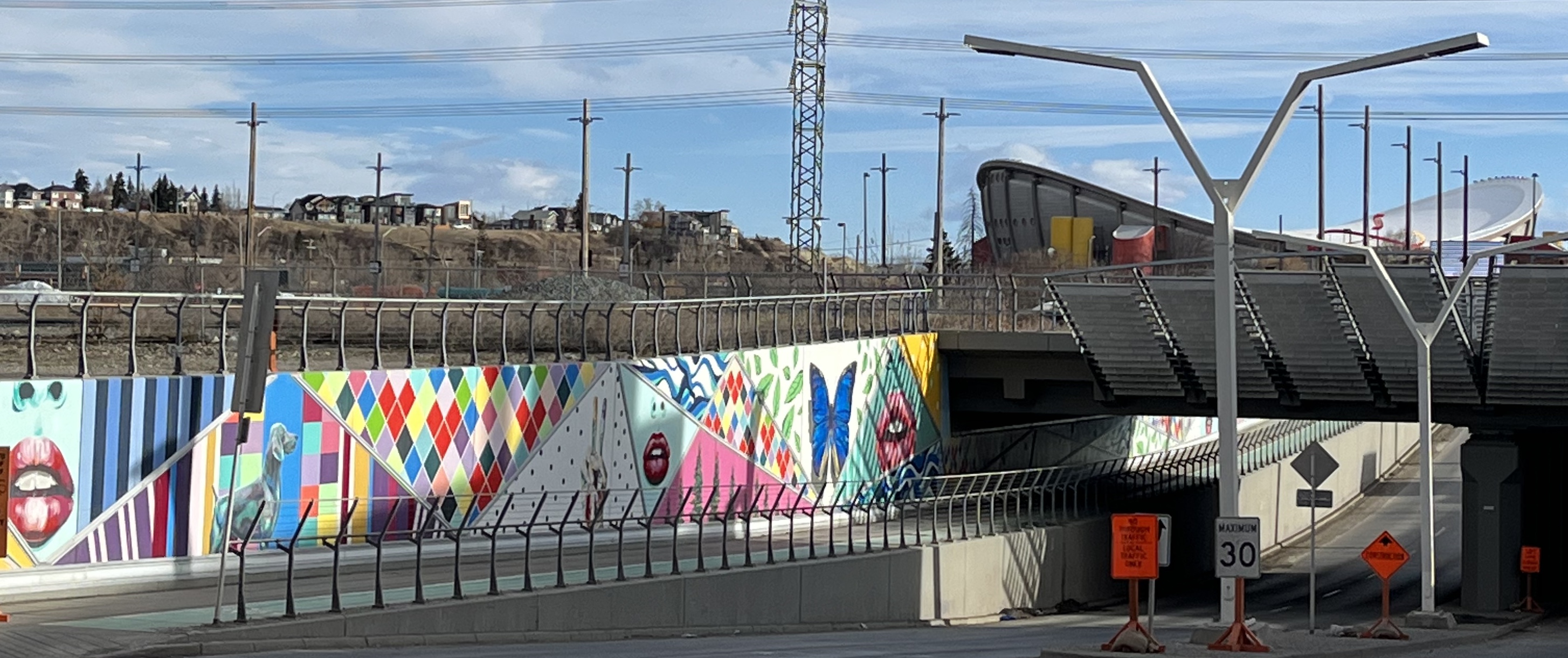
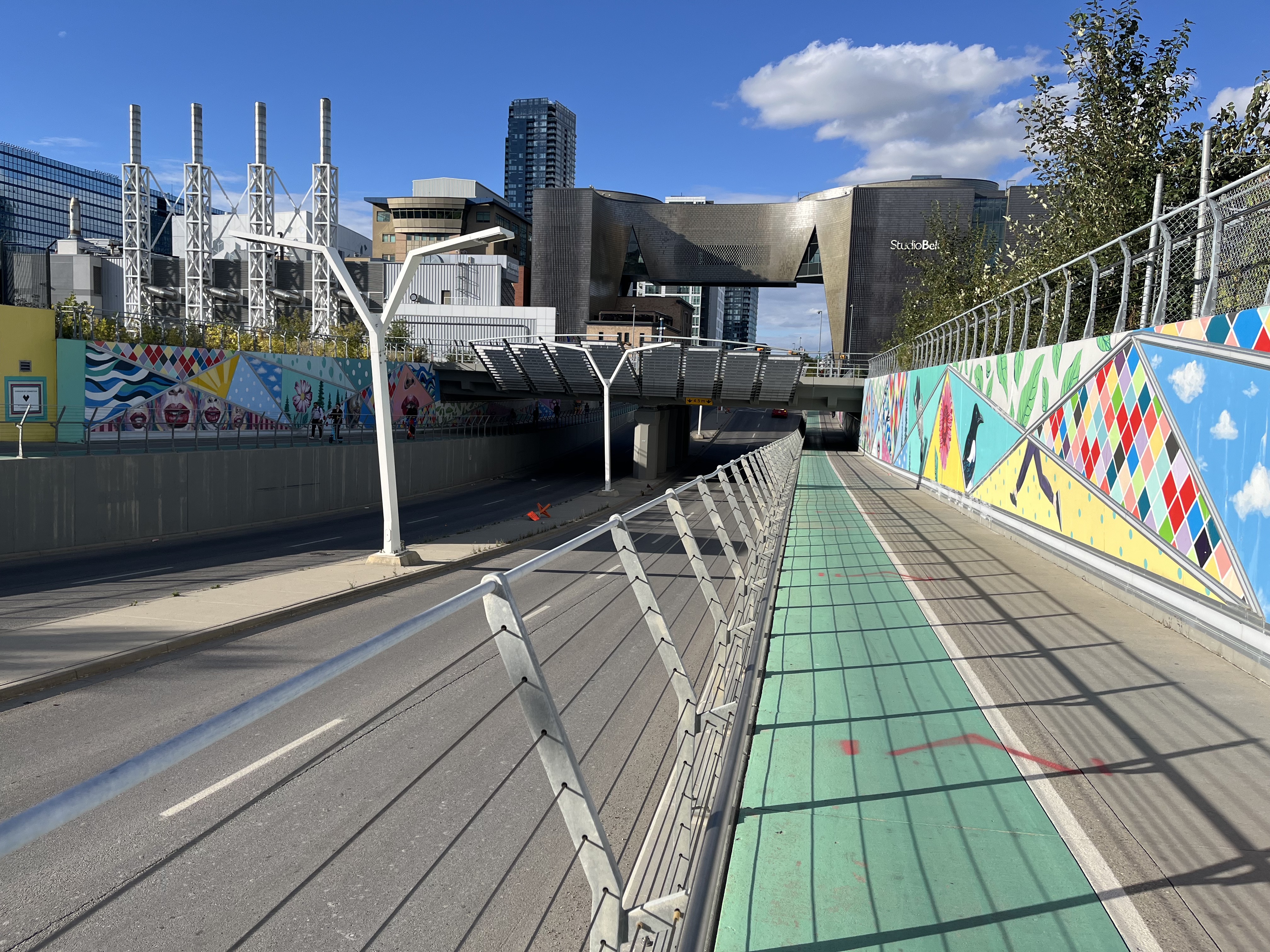
The development of the surrounding infrastructure, like public transportation, has already begun. Heading north on Olympic Way, the mural-lined underpass takes you to the East Village.
PUBLIC ART and Parks
There is plenty of public art in Stampede Park. The By the Banks of the Bow sculpture was installed by the main entrance of the Saddledome in 2012. It highlights the curved architecture as a backdrop like a setting sun on the horizon of a classic Western movie.

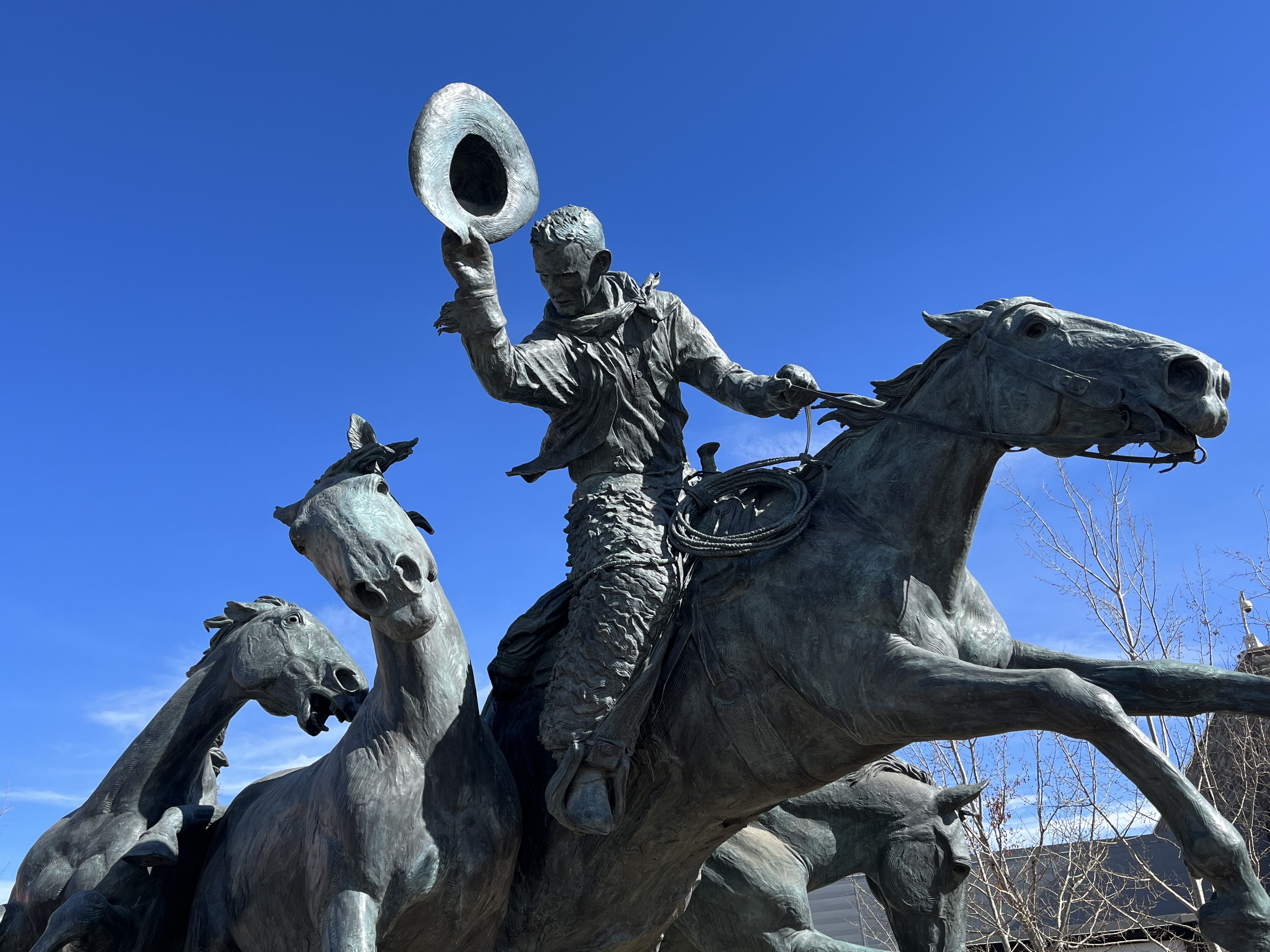
Created by local artists and ranchers Bob Spaith and Rich Roenisch. This bronze narrative is one of the largest sculptures of its kind in North America. It includes 15 horses and two riders. From inspiration to installation it took four years to finish.
A mural of the first 1901 Bull Sale is on the opposite side of the Agriculture Building. It is situated between the Dome and the Grandstand. It was created by artist Keith Holmes in 2000.
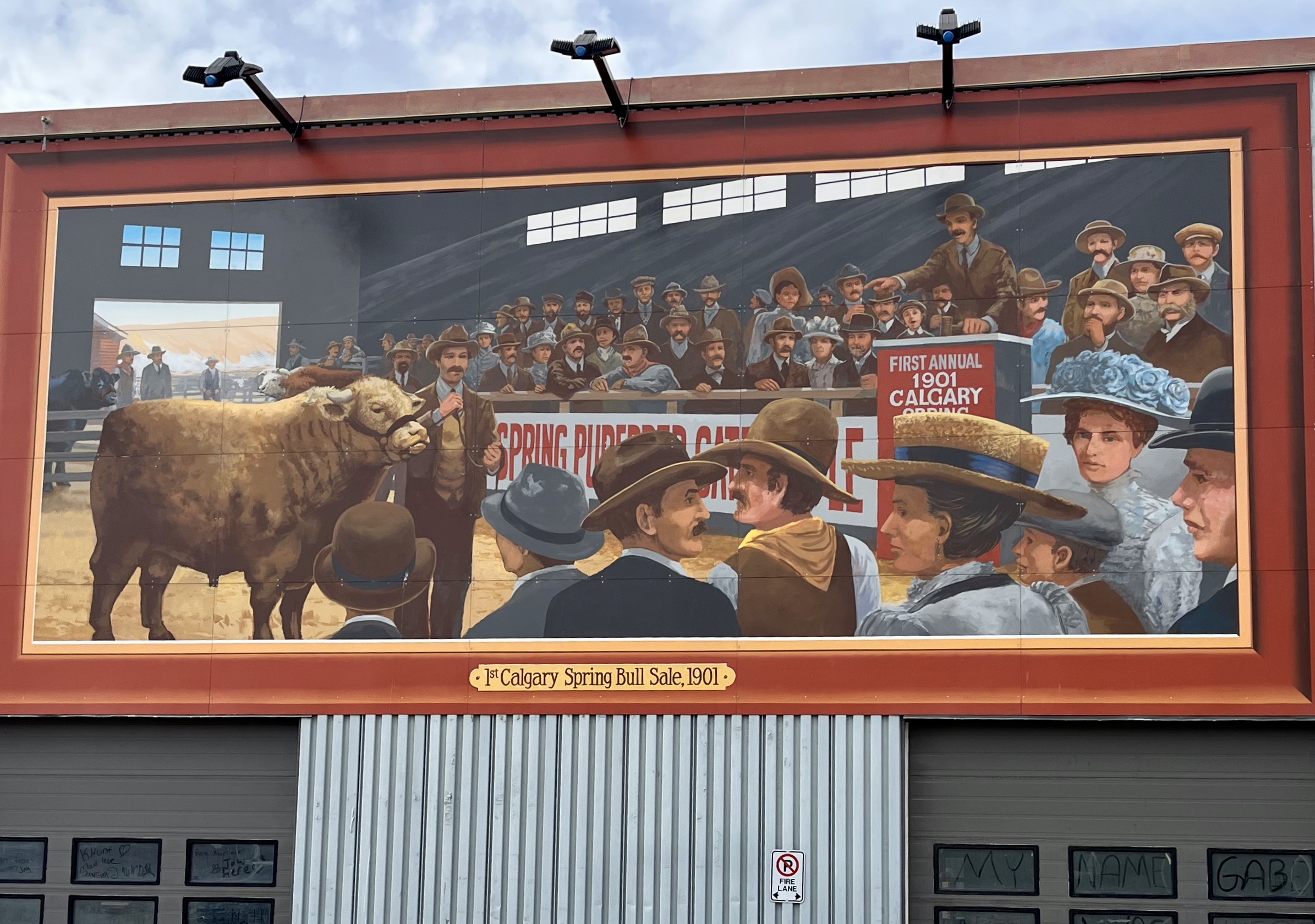
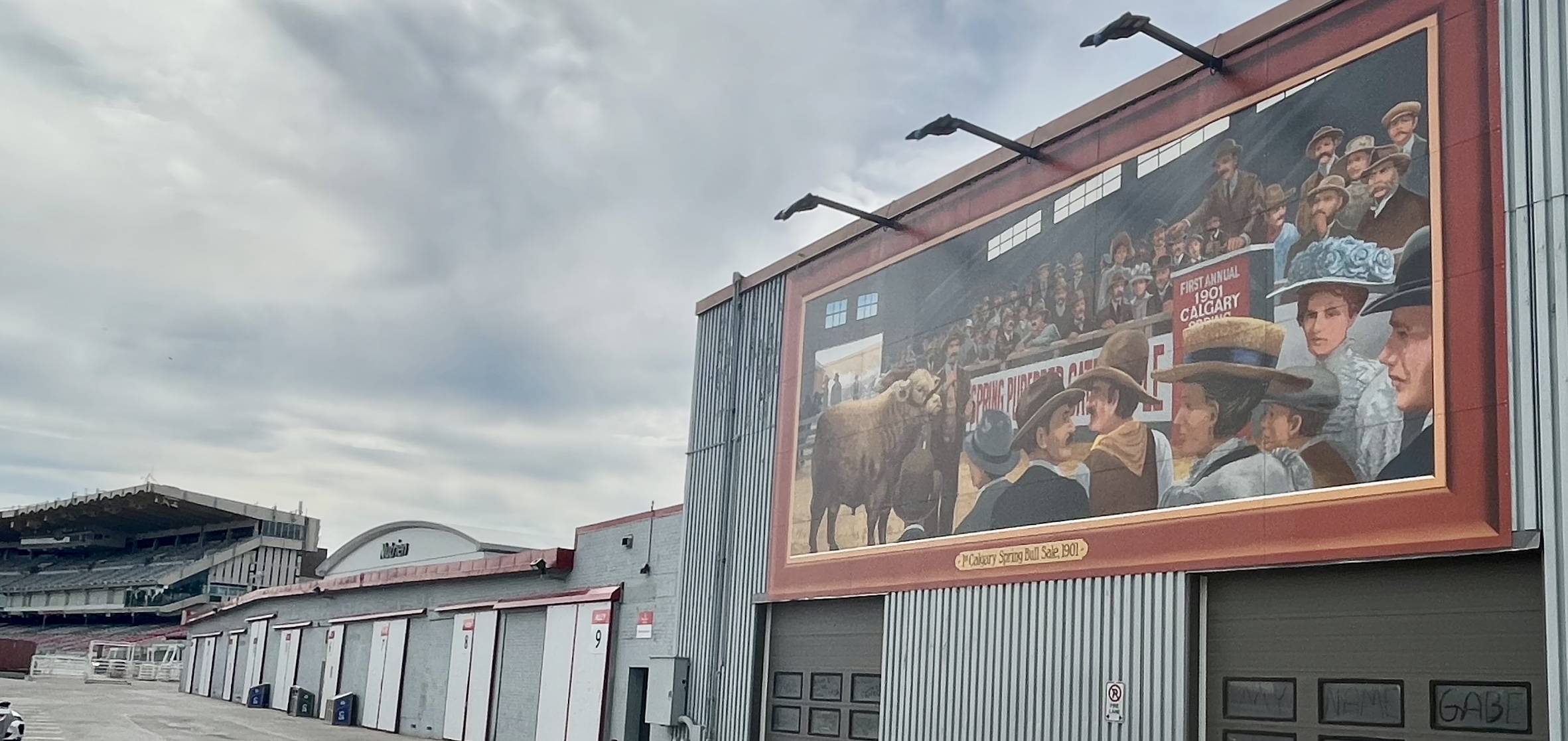
The mural commemorates the 100th anniversary of the 64 head of purebred cattle sold. The Territorial Purebred Cattle Breeders Association held the first bull sale on April 12, 1901.
Behind the Saddledome, across the bridge to the east, is ENMAX Park. A 16 acre green space along the Elbow River with an art installation Tipi. The semi-circle piece was unveiled at the Victoria Park Station entrance in 2012. The Calgary Stampede centennial year celebrated the relationship between First Nations families from Treaty 7 nations and the Calgary Stampede.
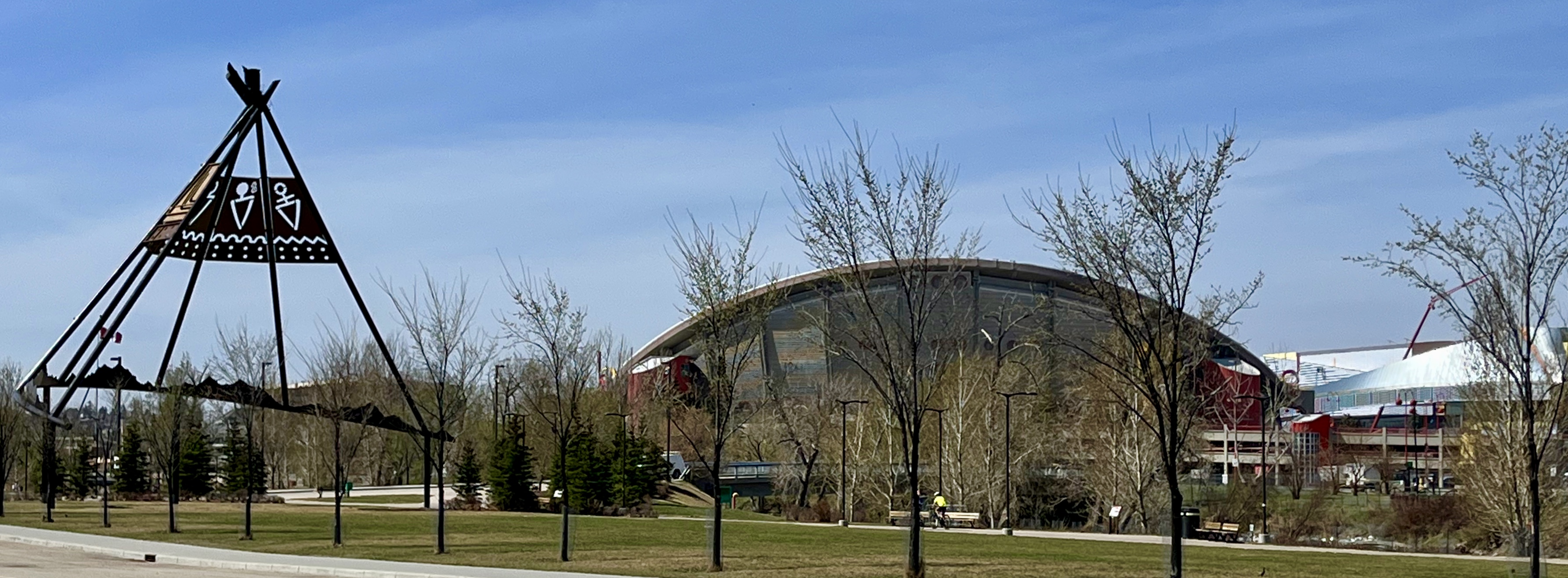
The BMO Center construction facilitated the relocation of the Tipi sculpture. It was moved closer to Elbow River Camp in ENMAX Park in 2022.
Biking Mohkinstsis
ENMAX Park connects to the 29,000 kilometer Trans Canada Trail. It also links to the 900 kilometer pathway system, allowing you to explore more of the area by bike.
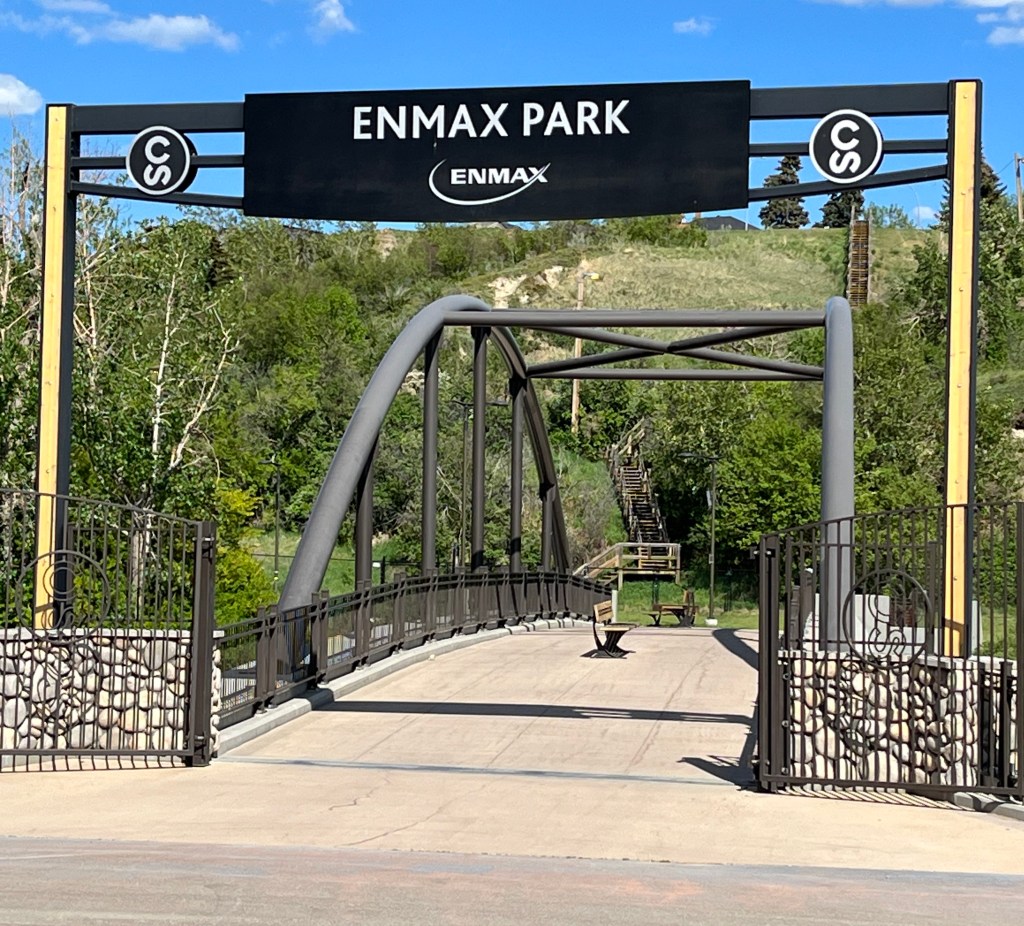
There are stairs up to Scotsman’s Hill. You can step up an urban workout or relax and appreciate an iconic view of downtown Calgary from the summit.
The park also features the 650 meter-long Cenovus Legacy Trail. This trail tells the story of the area through the lenses of First Nations People, Calgary, and the Stampede. The space is home to the historic Elbow River Camp. This camp features tipis arranged in a traditional circle.
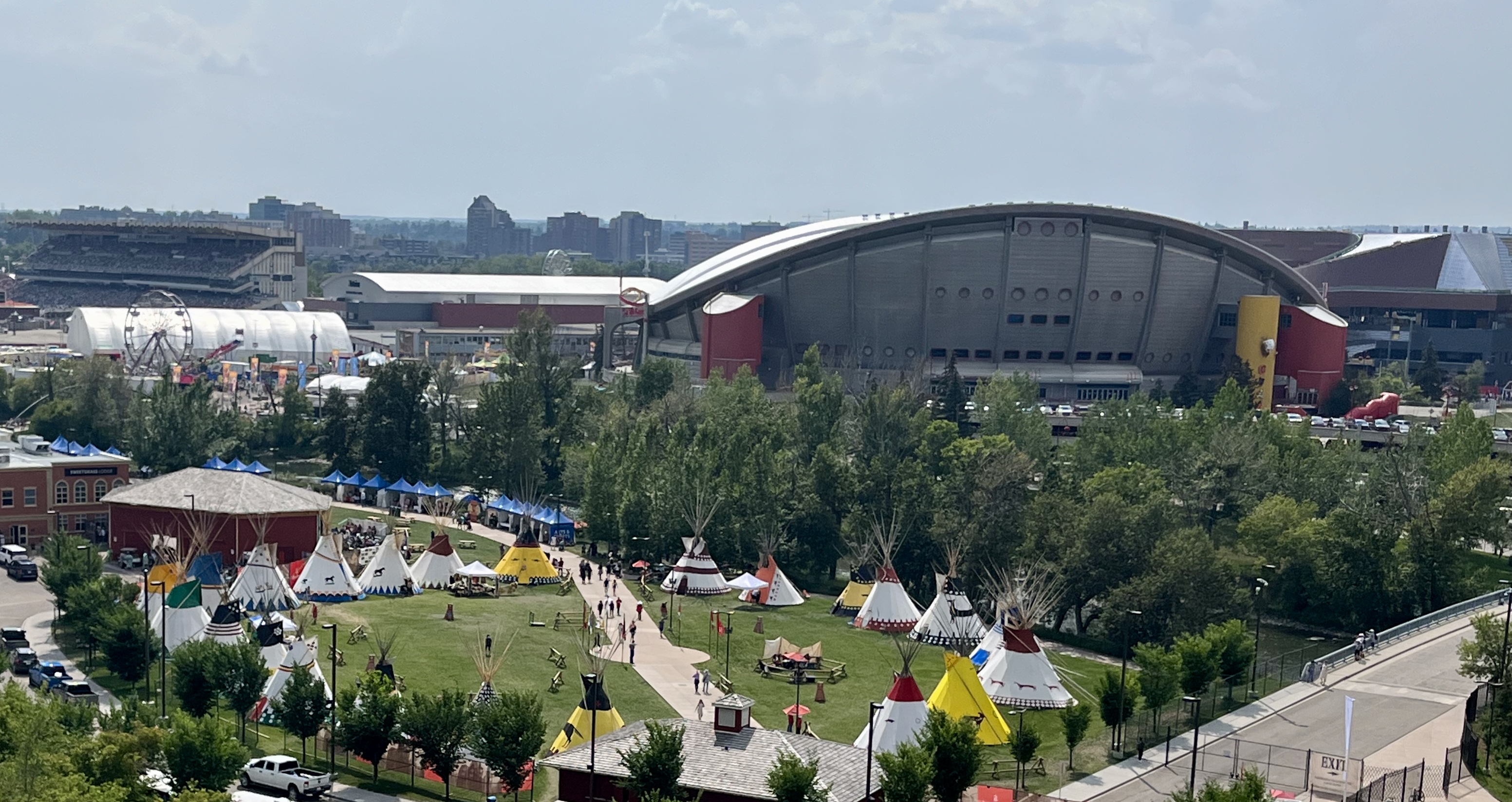
The land along the Elbow River is a significant space in Calgary. Indigenous peoples gathered and held ceremonies long before settlers established a community here. They knew it as Mohkinstsis, or “Elbow” in the Blackfoot language. It remains a place to gather today.
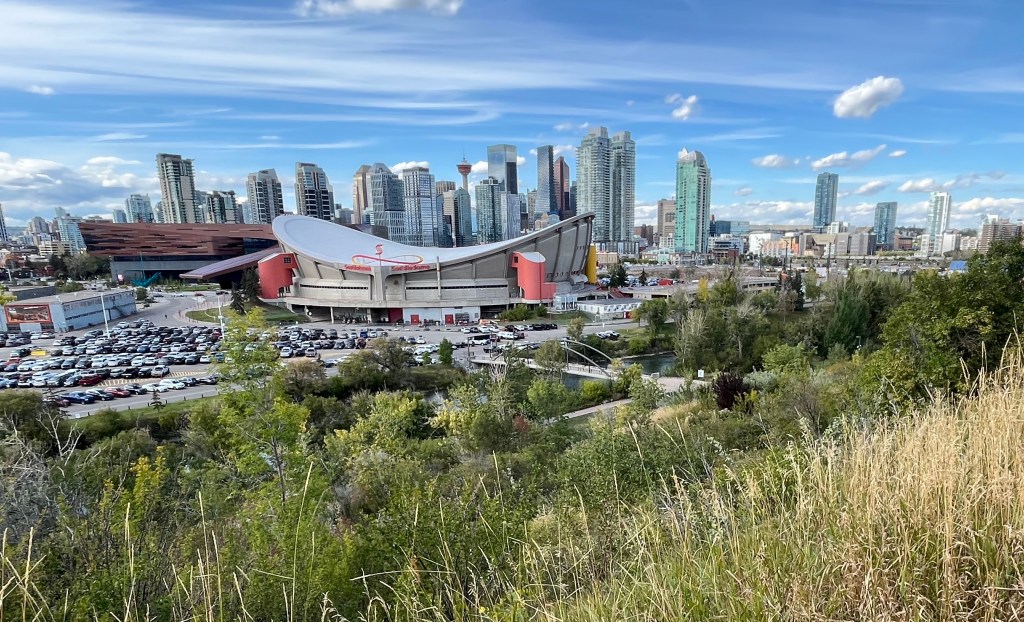
Discover more about these gathering places and communities along the Elbow River pathway. Explore: Biking Mohkinstsis – Where Calgary Comes Together.
 The Urban Explorer