
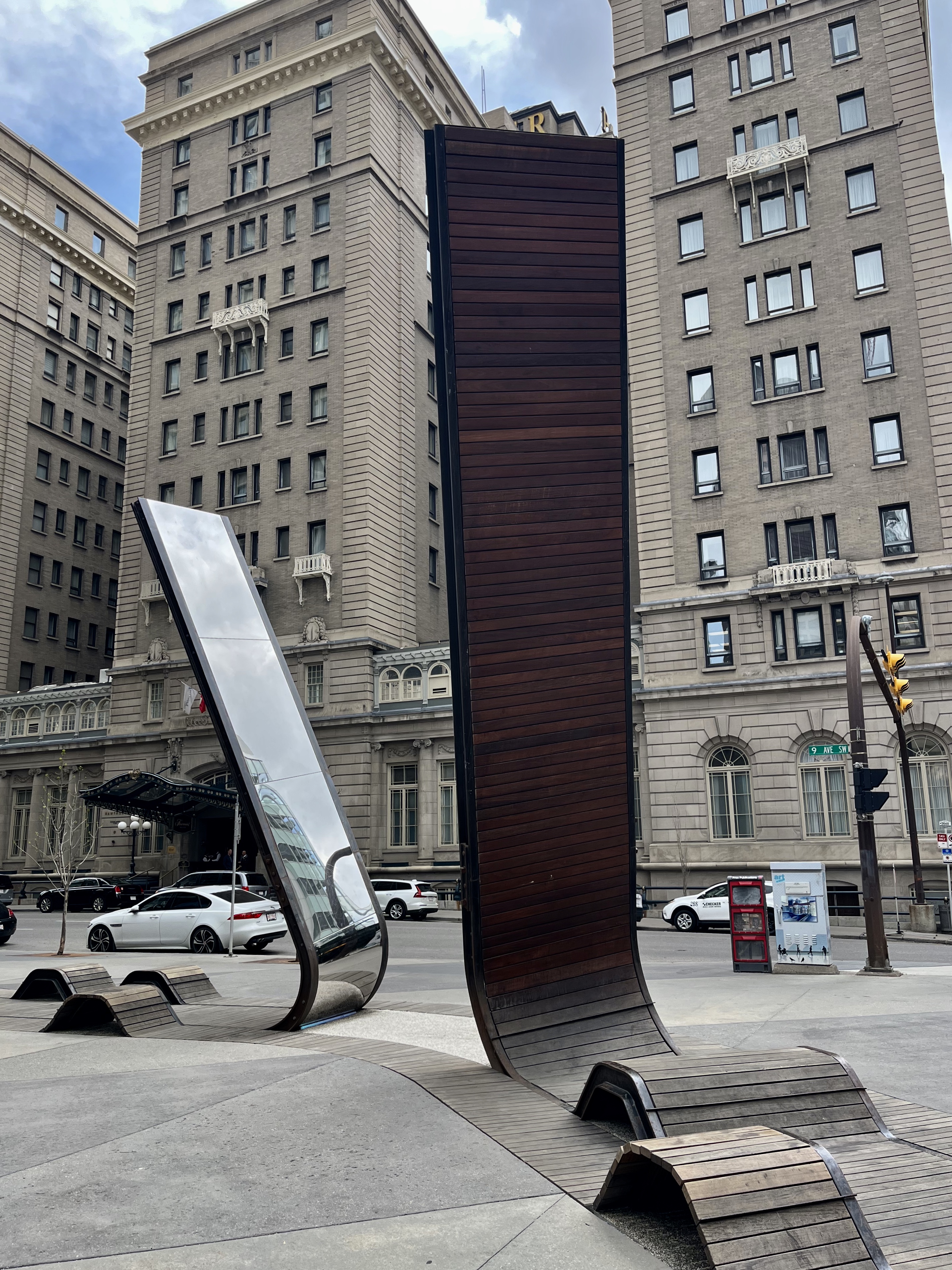
The plaza at 9th Avenue and 1st Street SW is a great urban lookout. You can explore the emergence of Calgary as an urban centre. It is reflected in the mirrored surfaces of a public art installation called Emergent (2017) by Jill Anholt.
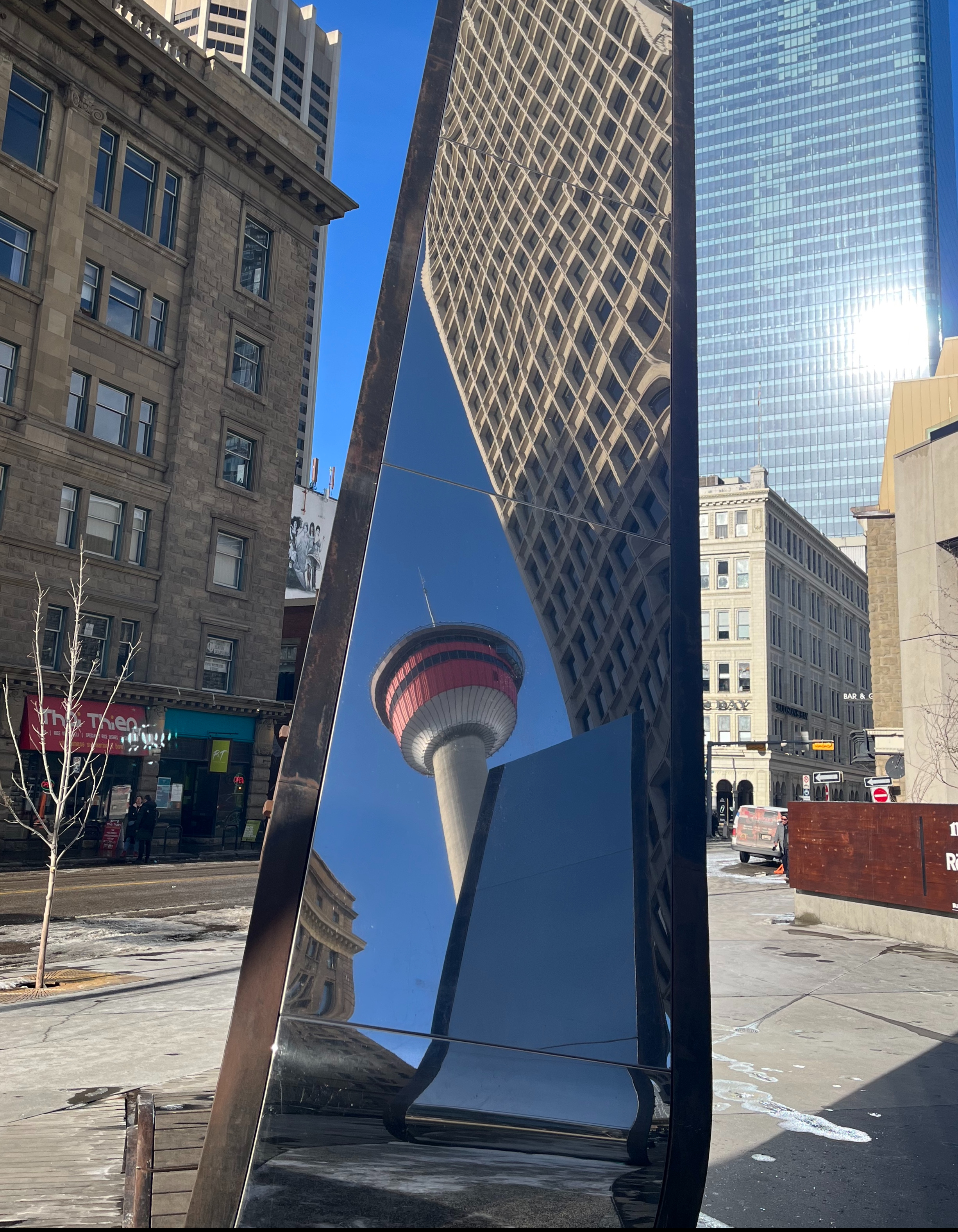
Have a seat. Picture yourself with the sculpture. Capture the city’s heritage and success as you’re surrounded by some of the tallest buildings in Calgary at their completion.
Each new tower symbolized the community’s progress and aspirations. They served as an inspiration for the future and encouraged developers to envision and create taller buildings.
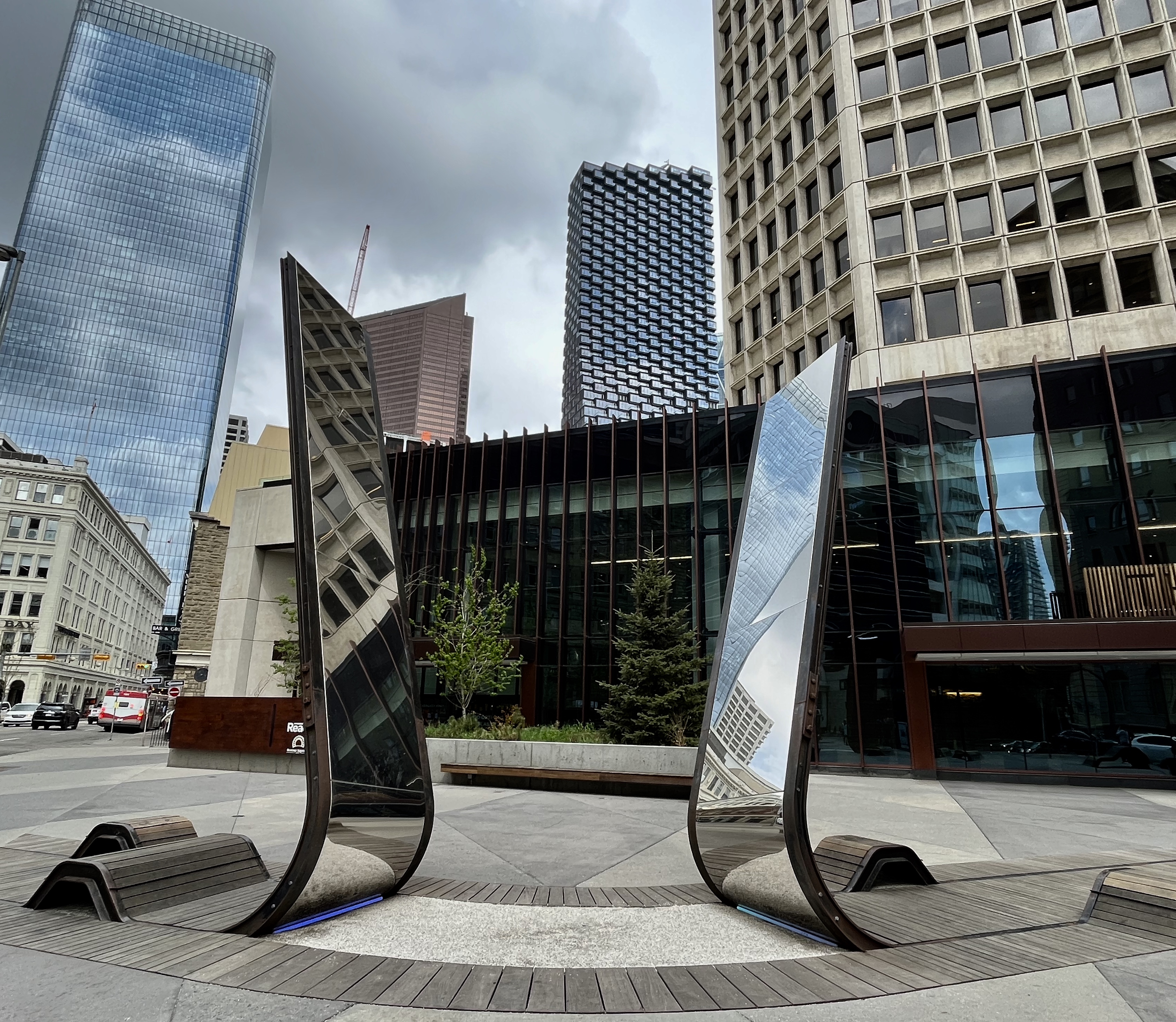
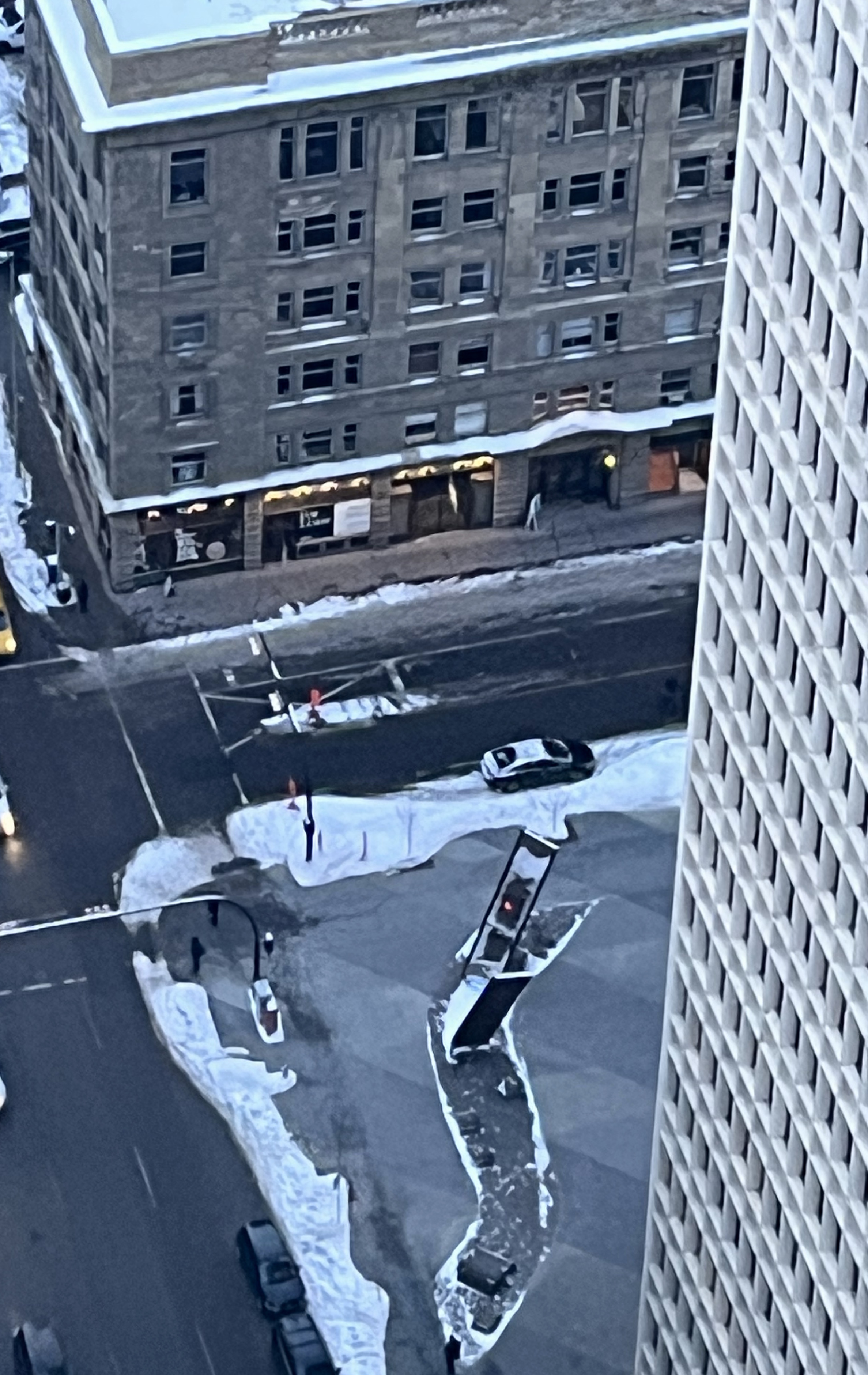
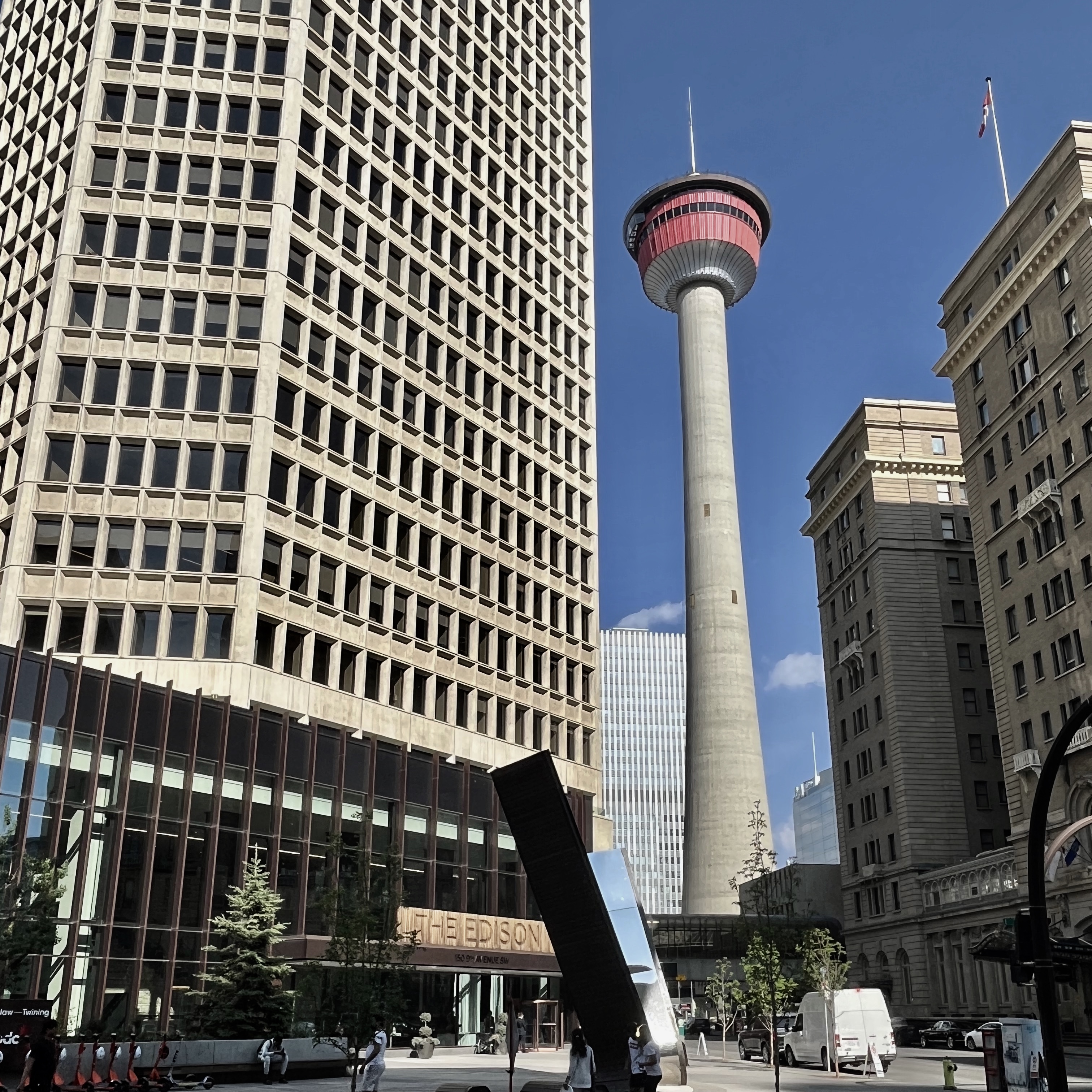
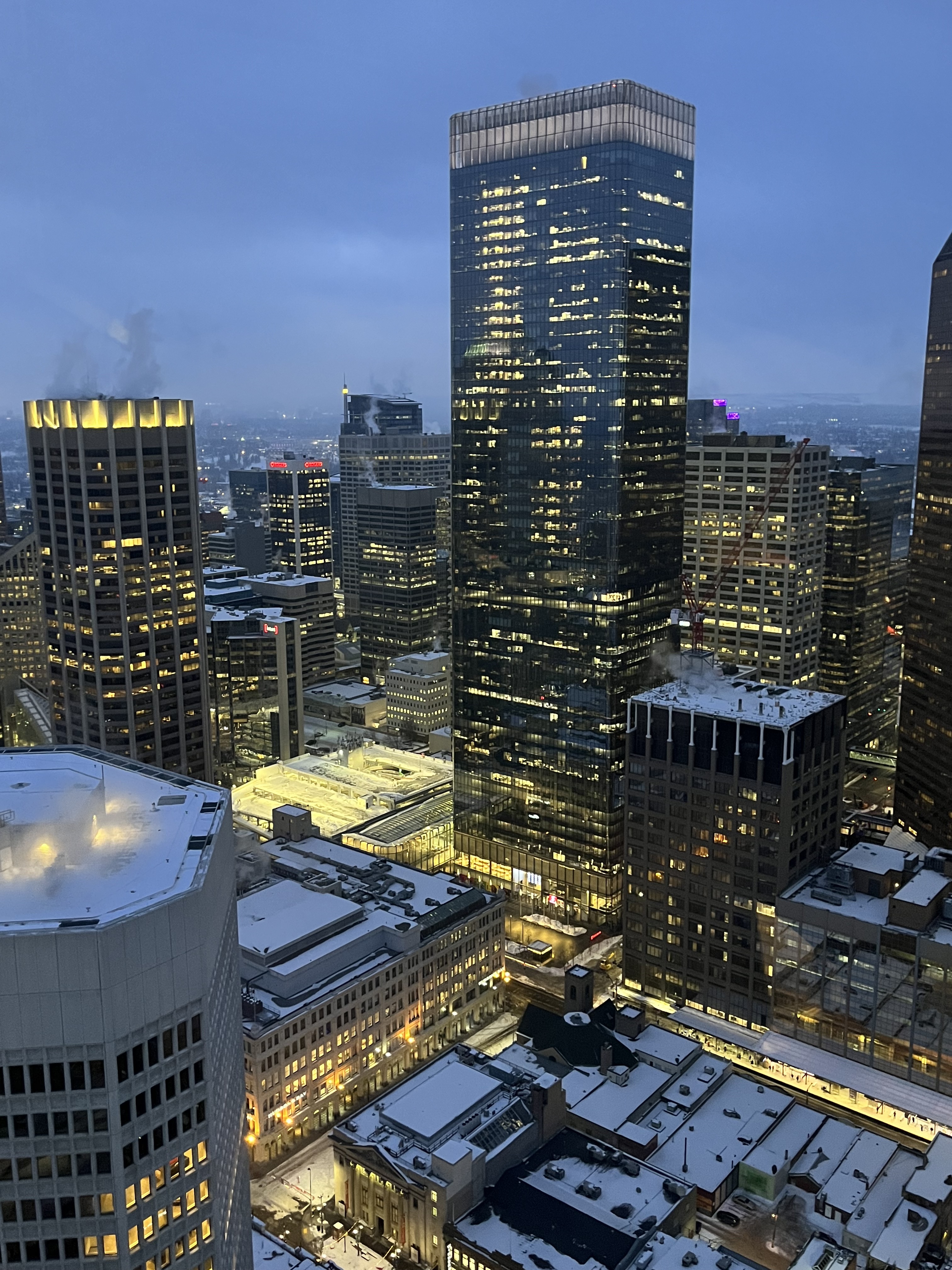
Brookfield Place, the tallest building today, towers 200 m over the first skyscraper, the Grain Exchange (1910)
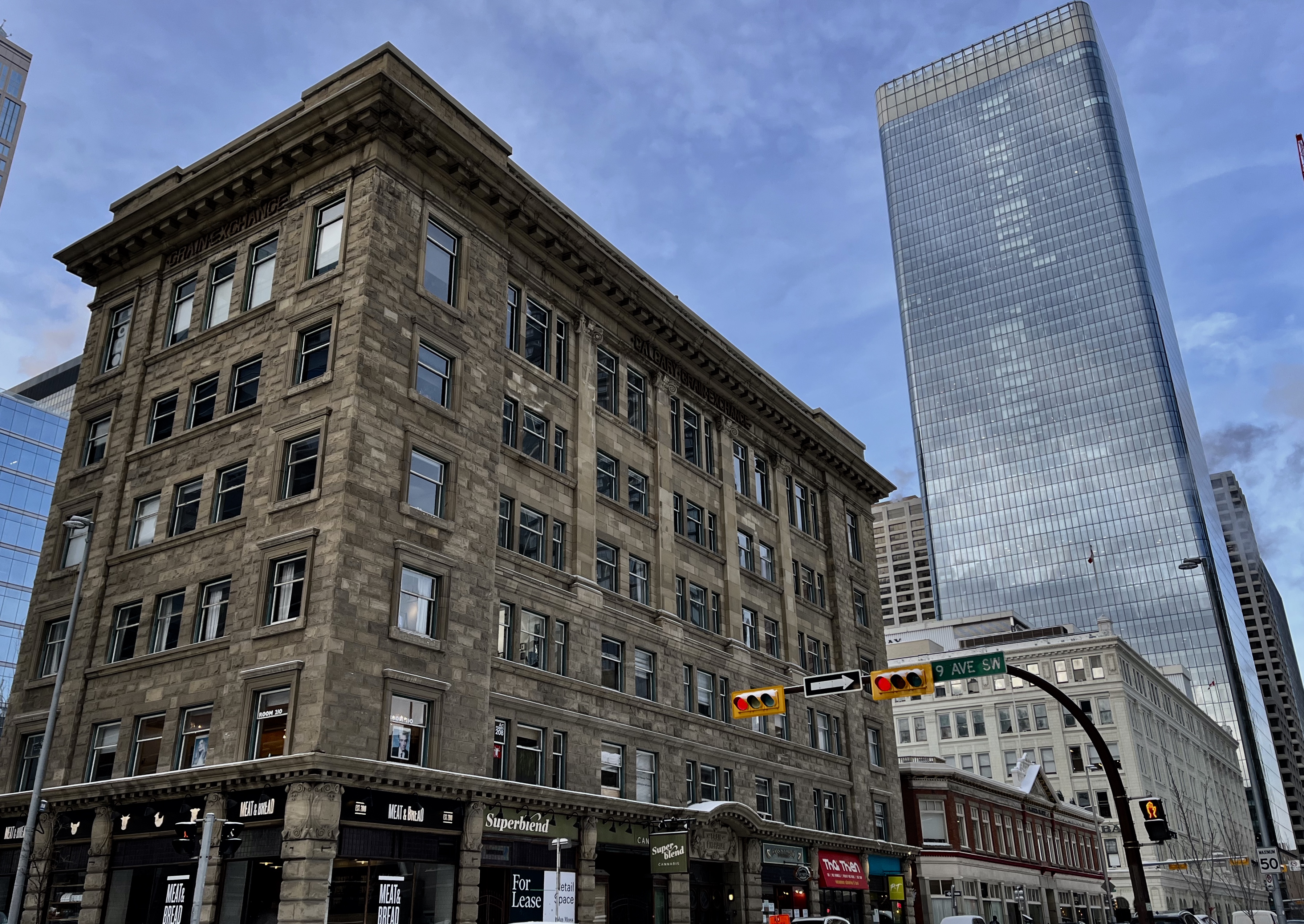
Brookfield Place
The site was initially called “225 Sixth.” It was imagined as a full-block development with a 56-storey East office tower. There was also a 41-storey west office tower planned that never materialized.
The tallest building in Calgary since its completion in 2017 at 810 ft (247 m).
The project was renamed Brookfield Place and scaled back with a parkade in the location of the proposed west tower.
Grain Exchange
The Grain Exchange is a prominent example of the city’s sandstone construction era. VOTE for your favourite building HERE.
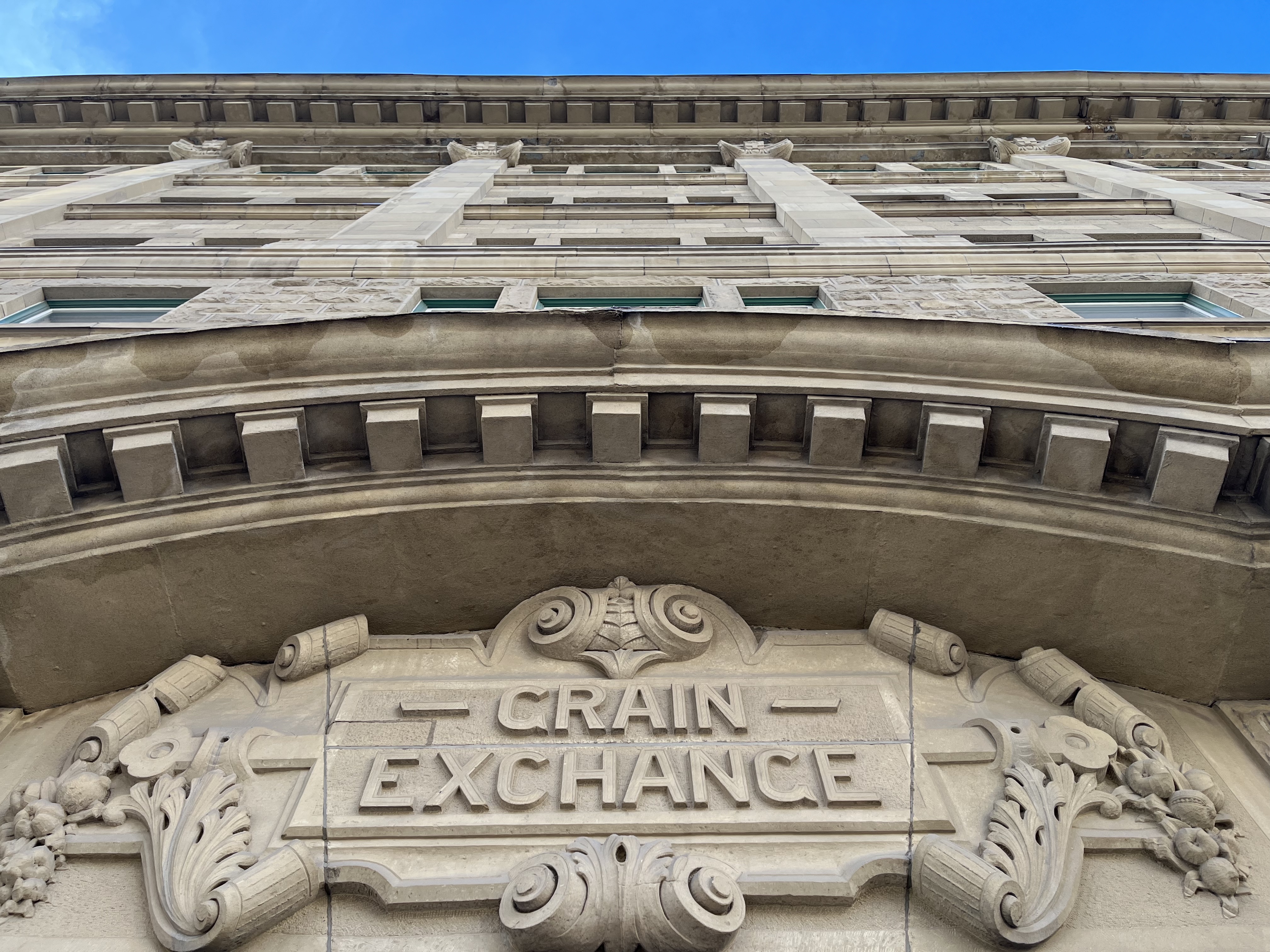
Constructed 1909-10. The tallest building in Calgary until 1914 at 130 ft (40 m).
A speculative venture by William Roper Hull, it was the first building to extend the business section off 8th Avenue. It was considered the first skyscraper in the city and the most up-to-date business block in the province.
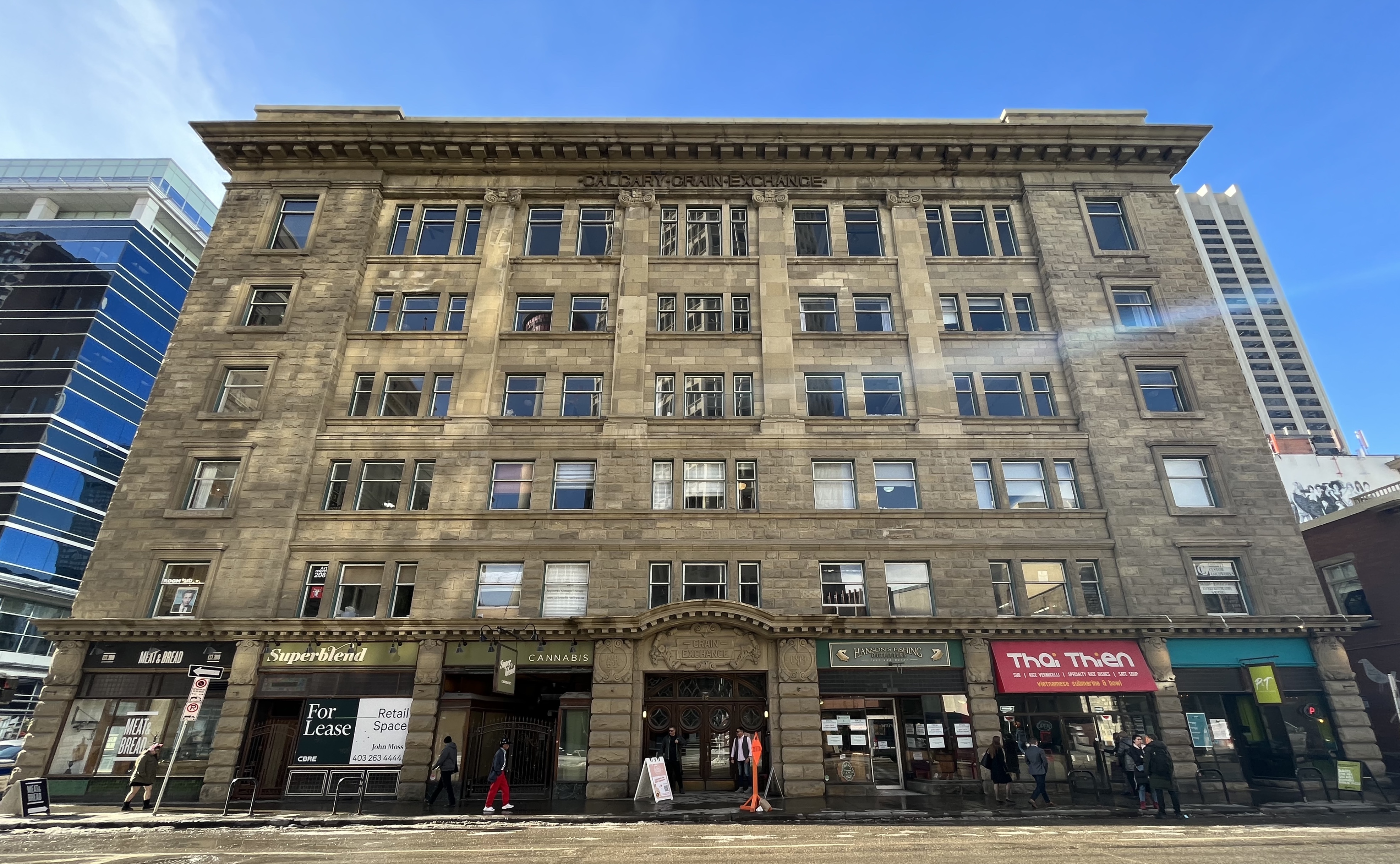
It contained the city’s first passenger elevator. It was also the first building in the town to be built using the “Kahn” reinforced concrete construction method.
The Edwardian Classical design accentuates its height with pillars, columns and the vertical lines of the windows.
Palliser Hotel
Emergent takes inspiration from the history of the Canadian Pacific Railway. The CPR also built the Palliser Hotel across the street on 9th Avenue.
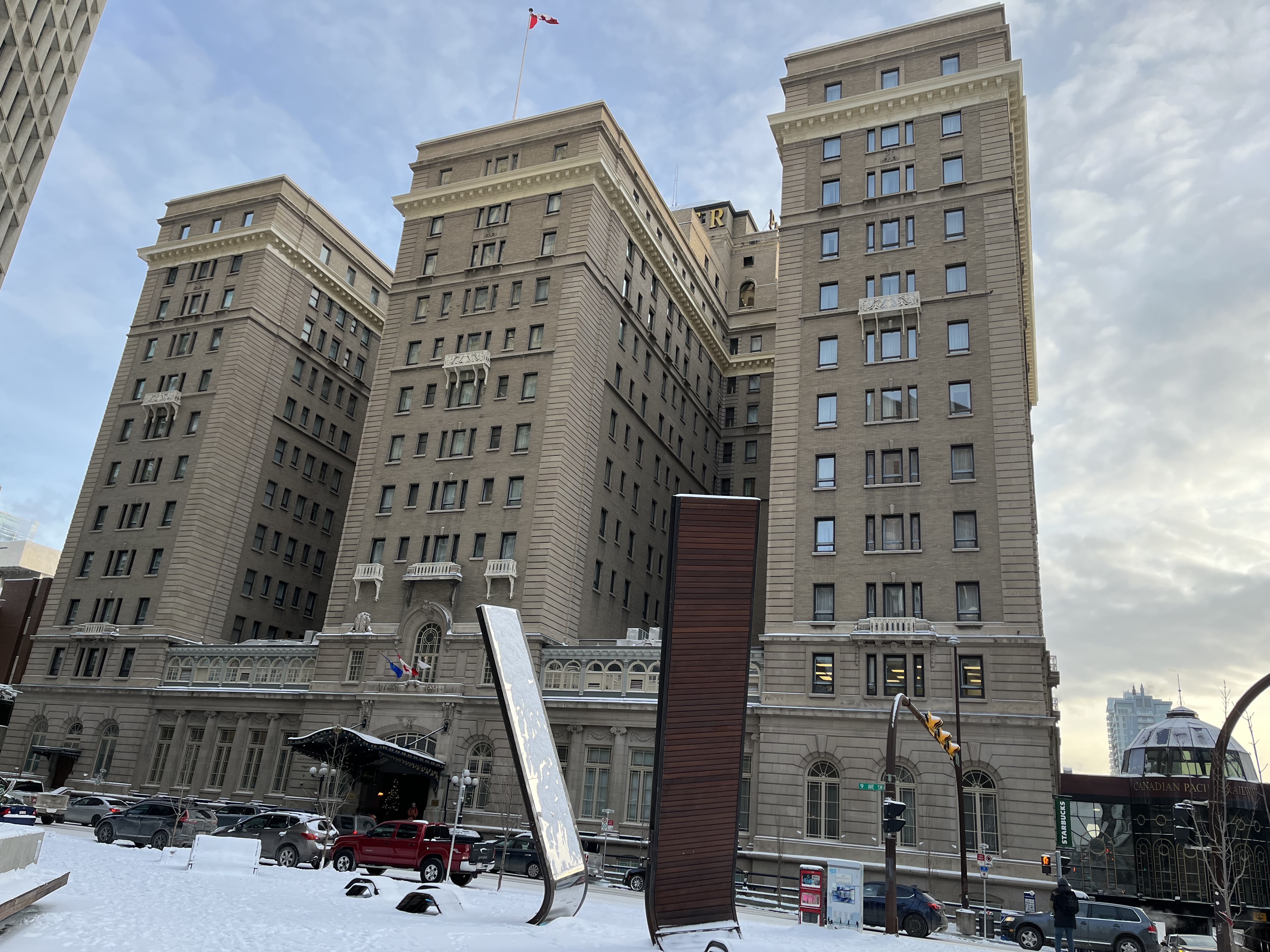
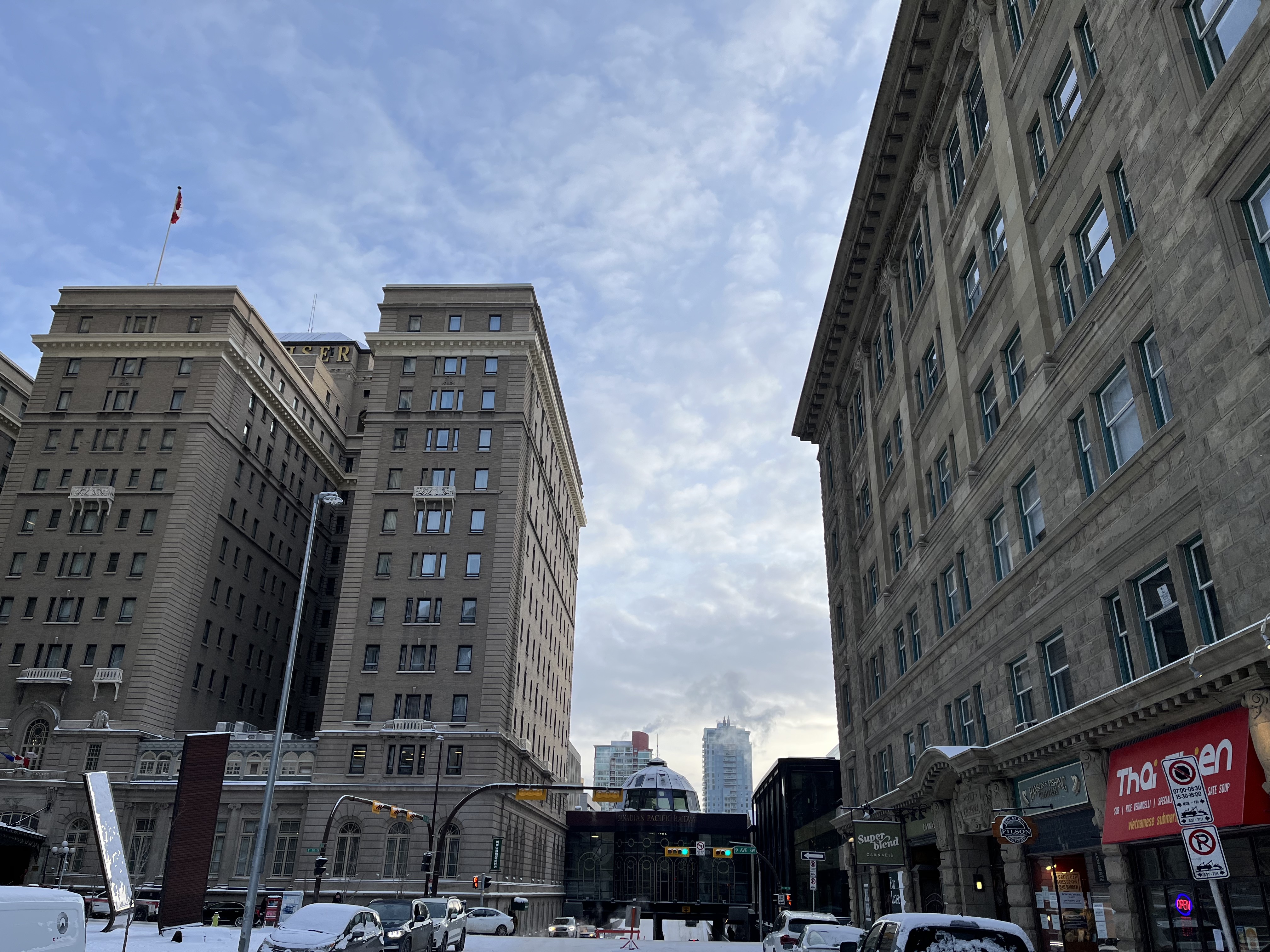
Constructed between 1911-14. Four storeys were added in 1929, making it the tallest building until 1958 at 196 ft (60 m).
Constructed for $1 million, cast in Edwardian Commercial-style architecture and inspired by prairie grain elevators. It is a break from the traditional Chateau-style hotels for which the CPR is famed.
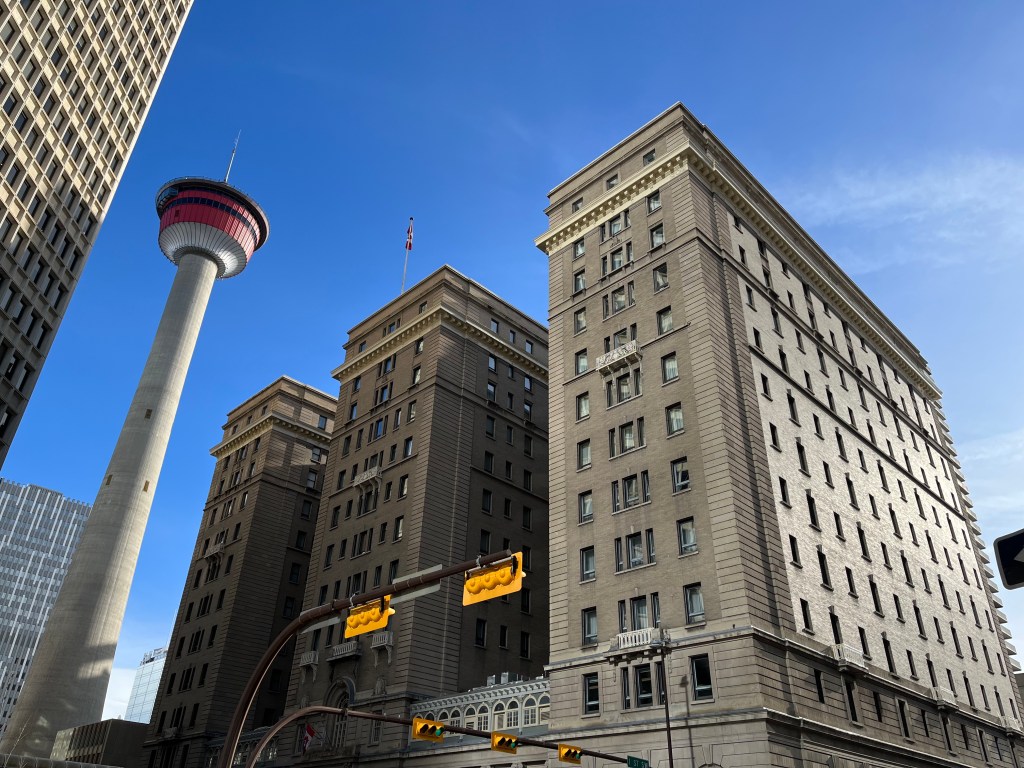
Calgary Tower
Originally named Husky Tower, it was a joint venture between Marathon Realty Company Limited and Husky Oil. It was conceived as part of an urban renewal project and to celebrate Canada’s centennial of 1967.
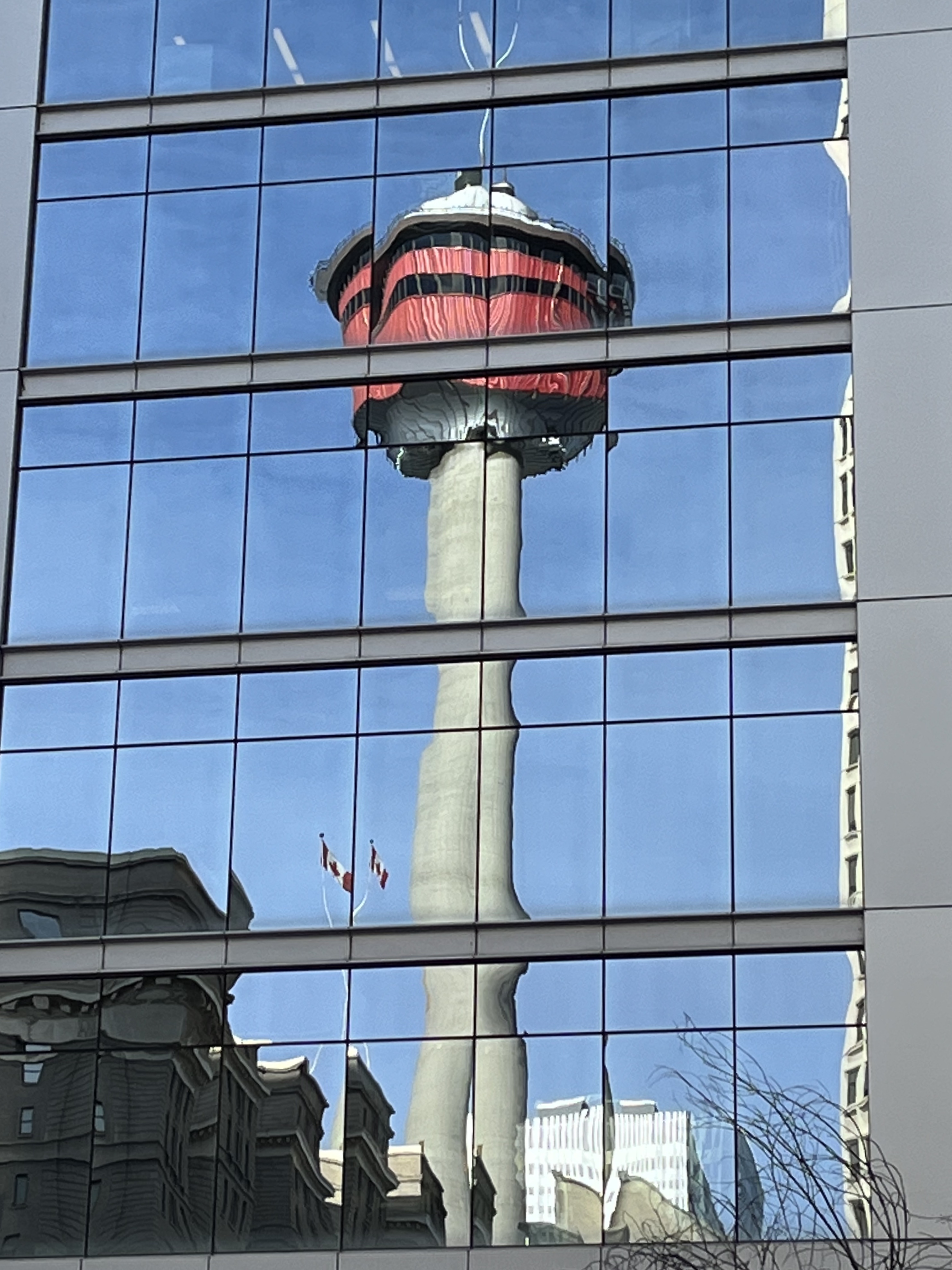
Construction began on February 19, 1967, and was completed in 15 months from an unprecedented continual pour of concrete. Pouring began May 15, 1967, and was completed 24 days later at an average growth of 25 ft (7.6 m) per day for $3.5 million.
Opened June 30, 1968. The tallest structure until 1984 at 626 ft. (190.8 m).
It was renamed Calgary Tower in 1971 and remained the tallest structure until 1983. That year, the Suncor Energy Centre West (then Petro-Canada Centre) topped out at 705 ft (215 m). The building was completed and opened in 1984.
Next steps – WHERE TO GO FROM HERE
The Palliser Hotel and Hudson’s Bay store were Calgary’s most costly commercial buildings during the boom years. Walk one block north and explore what’s Behind Stephen Avenue, one of only three National Historic Districts in Western Canada.
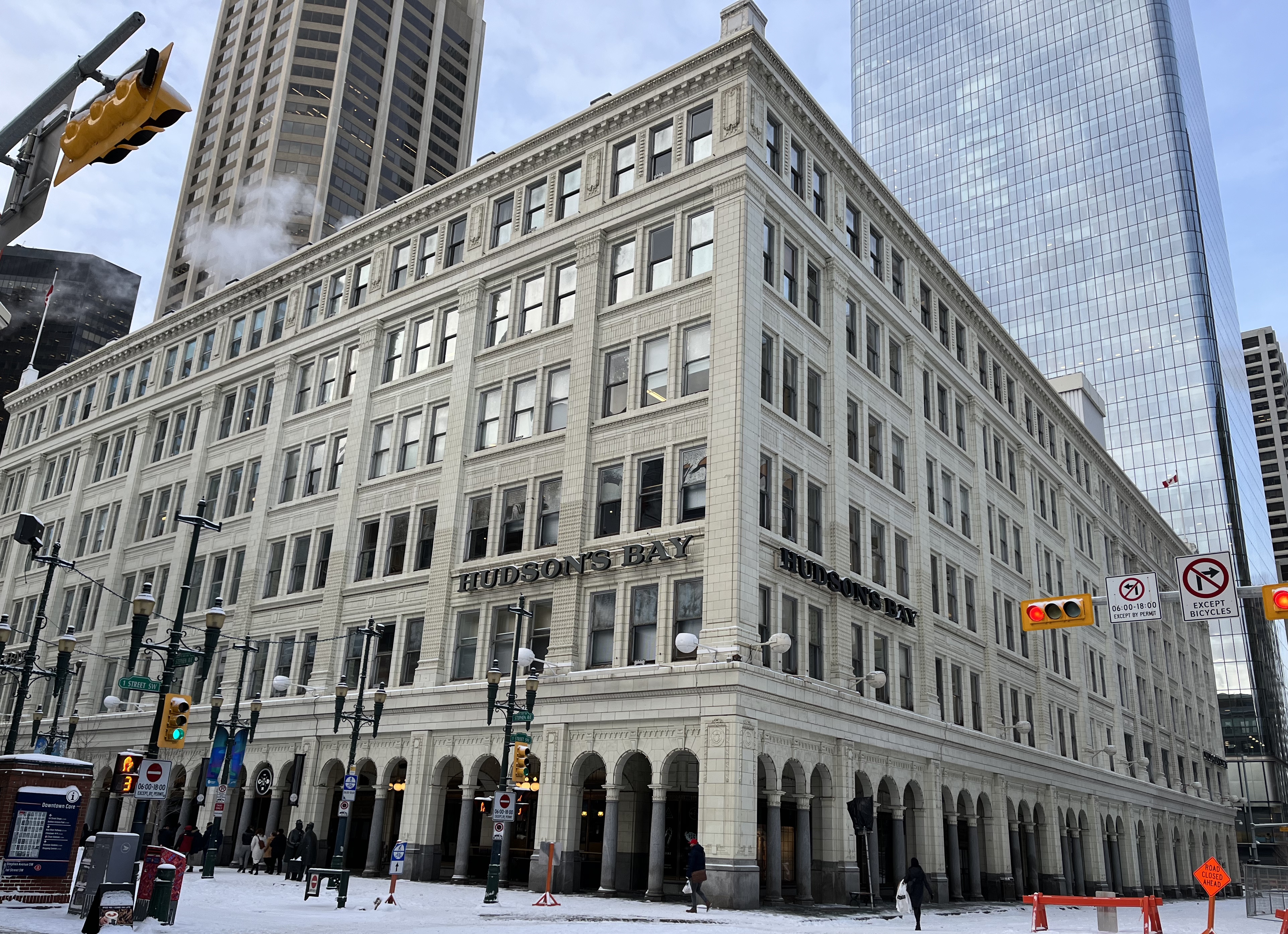
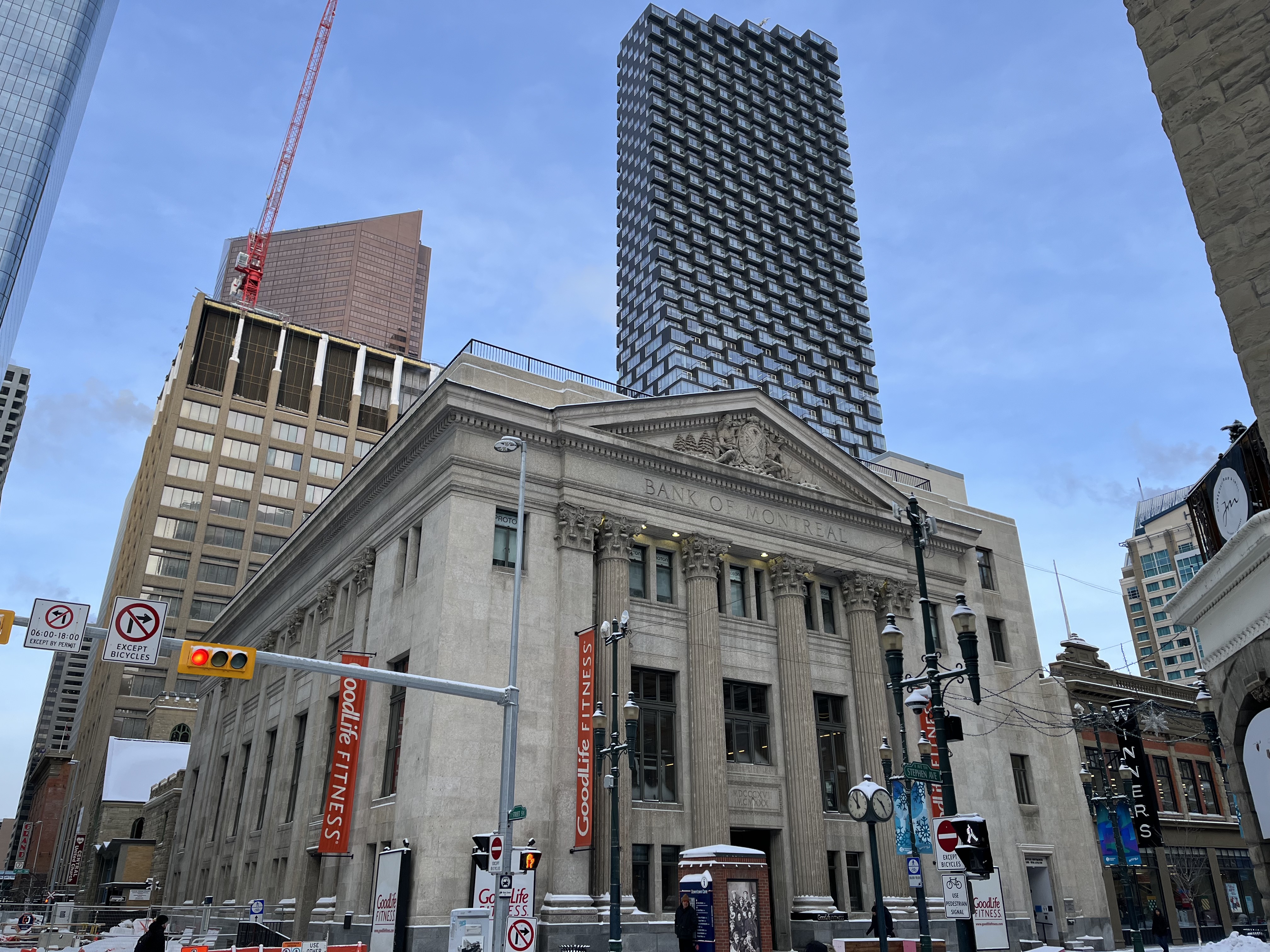
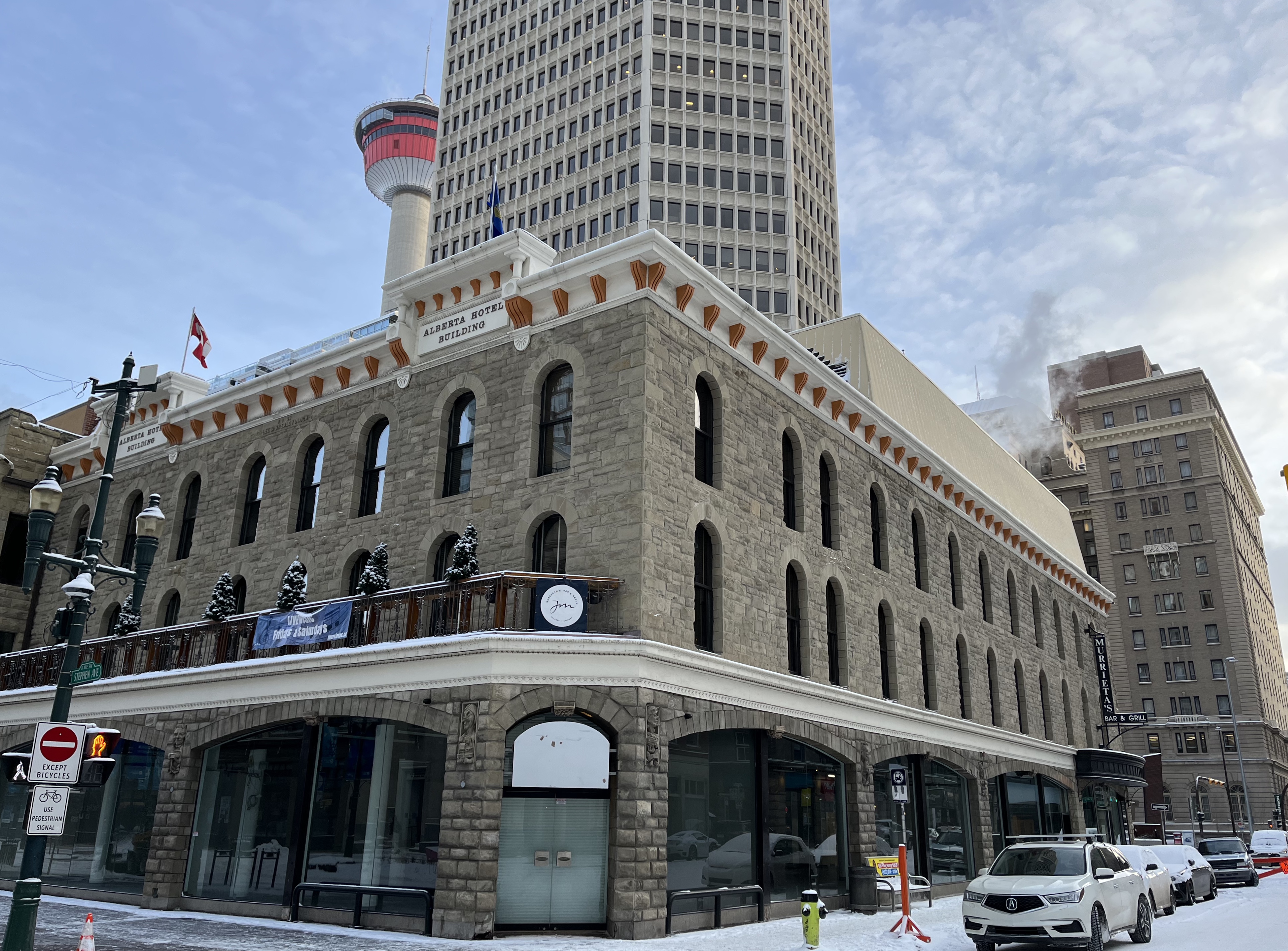
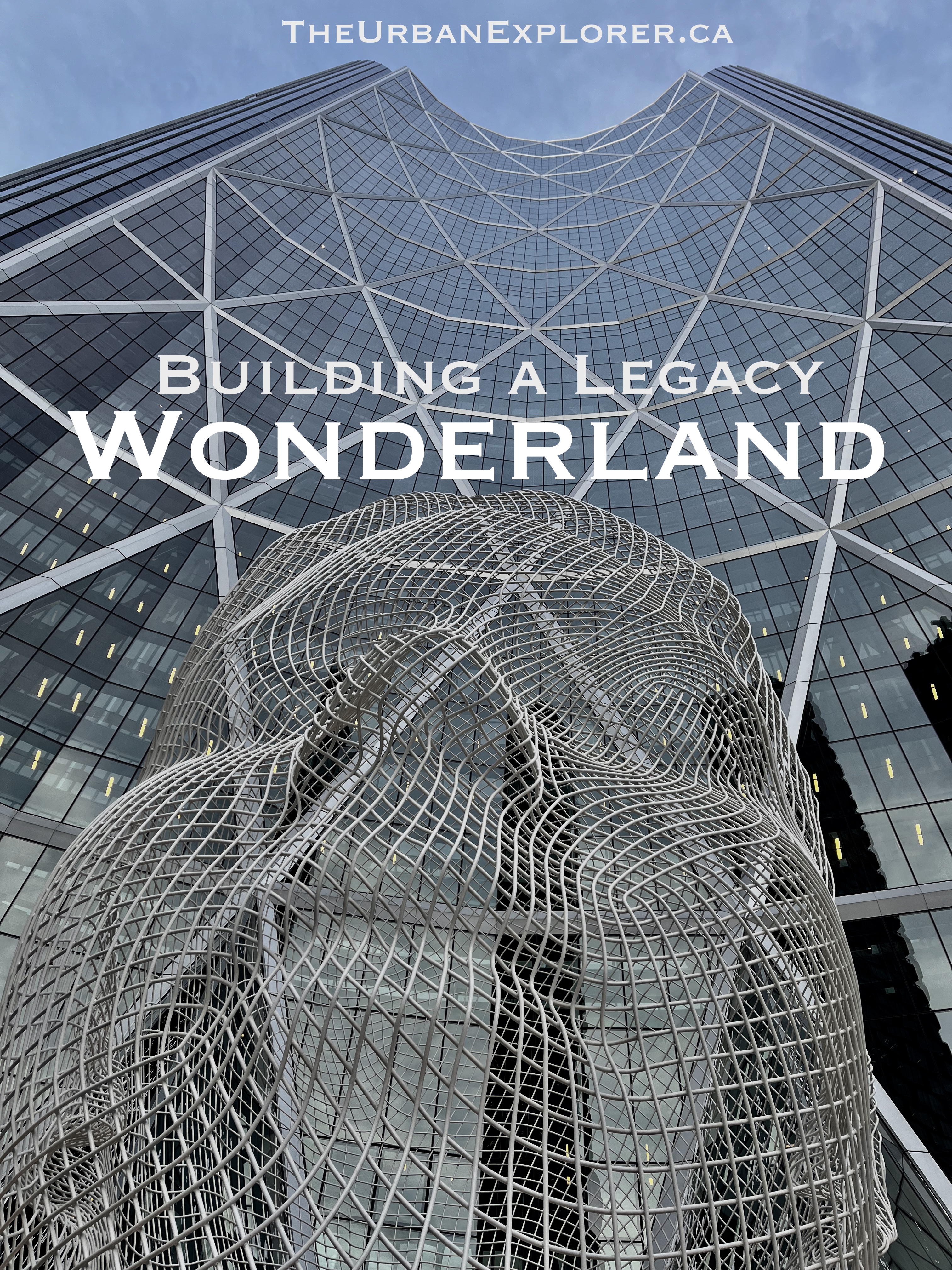
Three buildings have been the tallest in the city since the Calgary Tower was surpassed in 1983. They can all be seen from an urban art installation called Wonderland (2012) by artist Jaume Plensa.
Explore the cityscape and your imagination in a Monopoly-styled, choose your adventure.
On the Story City App
 The Urban Explorer